
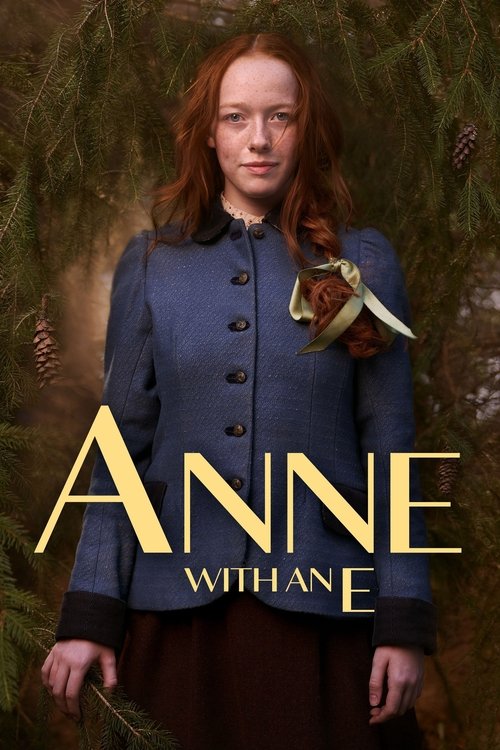
"Welcome back to Green Gables."
Anne with an E - Symbolism & Philosophy
Symbols & Motifs
Red Hair
Anne's red hair symbolizes her outsider status, her fiery spirit, and her perceived otherness. Initially, it's the source of her greatest insecurity and the target of teasing (most notably by Gilbert Blythe). Over time, as she gains confidence, her red hair becomes a defining feature of her unique and passionate identity, a visual representation of the very spirit that makes her extraordinary.
Throughout the series, Anne laments her red hair, calling it her "lifelong sorrow." Gilbert's teasing of her as "Carrots" in Season 1, Episode 3 is a pivotal moment that ignites their rivalry and connection. Her attempts to dye it black, which result in it turning green, is another iconic scene from the books that highlights her deep-seated desire to fit in.
The Lake of Shining Waters
The Lake of Shining Waters represents the power of imagination and Anne's ability to find beauty and magic in the ordinary. By giving the Barry's pond a poetic name, she transforms a simple body of water into a place of wonder and escape. It is a sanctuary for her and Diana, a physical manifestation of her inner world and her romantic view of life.
Anne names the pond shortly after her arrival in Season 1, much to Marilla's practical bemusement. It becomes a key location for her and Diana, the backdrop for their oath of friendship and many of their adventures, including the dramatic reenactment of "Lancelot and Elaine" which nearly ends in disaster.
The Green Gables House
Green Gables is the ultimate symbol of home, safety, and belonging. For Anne, who has never had a real home, the house represents the stability and unconditional love she has always craved. It is more than a building; it is the heart of her found family and the foundation upon which she can finally begin to heal and grow.
From the moment she arrives in Season 1, Anne is enchanted by Green Gables. The threat of being sent away from it is the primary source of conflict in the early episodes. Officially becoming a part of the family by signing her name in the Cuthbert family bible inside the house is a key turning point for her character at the end of Season 1, Episode 2.
Philosophical Questions
Does our past trauma define who we become, or can it be overcome through love and environment?
The series constantly explores this question through Anne. Her traumatic past is ever-present in Season 1, manifesting in flashbacks and emotional outbursts. She is initially defined by her history as an abused orphan. However, the stable, loving environment provided by Matthew and Marilla allows her to slowly heal. The series suggests that while trauma leaves indelible scars and shapes one's coping mechanisms (like her vivid imagination), it does not have to be a life sentence. Through the unconditional love of a found family and the forging of strong friendships, a person can build a new identity and future not in spite of their past, but by integrating it into a resilient and empathetic self.
What constitutes a 'family'?
"Anne with an E" dismantles the traditional definition of family centered on blood relatives. Anne, Matthew, and Marilla form a family unit based on choice, commitment, and deep affection. The series expands this idea further: Bash, a Black man, becomes part of Gilbert's family and the larger Avonlea community; Cole, rejected by his own parents, finds a chosen family with Aunt Josephine. The show posits that the strongest families are forged by 'kindred spirits'—people who connect on a soul-deep level, offering acceptance and support where biological families may have failed.
How does a community react to ideas that challenge its long-held traditions?
This question is explored throughout the series as Anne and other progressive figures clash with the conservative mindset of Avonlea. Miss Stacy's unconventional teaching methods are met with suspicion and a desire to have her fired. Anne's articles on feminism and free speech lead to censorship and outrage. Bash's presence in the town exposes its underlying racism. The series shows that change is often met with fear and hostility, but it also demonstrates that through persistence, courage, and dialogue, even the most deeply entrenched communities can slowly evolve toward greater acceptance and understanding.
Core Meaning
The core meaning of "Anne with an E" revolves around the transformative power of love, acceptance, and finding one's chosen family. The series posits that belonging is not necessarily about blood ties but about finding 'kindred spirits' who see and cherish you for who you are. It is a profound exploration of resilience in the face of trauma, arguing that one's past does not have to define their future. Through Anne's journey, the show champions the importance of imagination as a tool for survival and joy, and the courage it takes to challenge societal norms, fight for justice, and embrace one's own unique identity, flaws and all. The series ultimately suggests that even in the most rigid of worlds, one person's spirit can inspire profound change and create a more compassionate community.