"This is the end..."
Apocalypse Now - Symbolism & Philosophy
Symbols & Motifs
The River
The Nung River symbolizes a journey into the depths of the human psyche and the 'heart of darkness.' It represents the passage from the structured, albeit chaotic, world of the military into a primal, lawless state. The further upriver the crew travels, the further they move from civilization, sanity, and conventional morality. The river also symbolizes transformation, ultimately leading Willard to a place of death and despair, but also serving as his escape route.
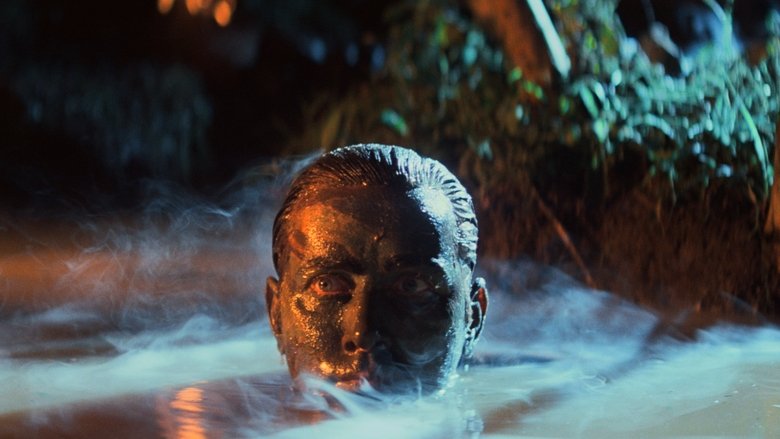
The entire narrative is structured around the journey up the river. Willard's narration often reflects on the river's symbolic meaning. A key line is his musing, 'Never get out of the boat,' suggesting the river is a fragile sanctuary from the true darkness that lies in the jungle and within themselves. Willard's final emergence from the water to kill Kurtz symbolizes a baptism or rebirth into a new, darker understanding of himself and humanity.
Fog and Smoke
Fog and smoke are consistently used to symbolize confusion, moral ambiguity, and the surreal, dreamlike nature of the war. They obscure vision, representing the characters' blurred understanding of their situation and the unclear line between right and wrong. This visual motif emphasizes the fear of the unknown and the psychological disorientation experienced by the soldiers.
Scenes at the Do Lung Bridge are shrouded in smoke and fog, reflecting the chaos and lack of leadership at this final outpost of the American military. As Willard's boat moves deeper into Kurtz's territory, the air becomes thick with a mystical fog, signaling their entry into a different realm of existence, one governed by Kurtz's twisted philosophy.
Kurtz's Compound
The compound, an ancient temple adorned with severed heads and populated by a cult-like following, symbolizes the complete regression from civilization to a primitive, brutal state. The stone statues and macabre decorations represent Kurtz's self-deification and his creation of a new world order based on fear and primal worship. It is the physical manifestation of his philosophy—a place where 'horror' is embraced and conventional morality has been completely abandoned.
The final act of the film takes place entirely within this compound. Willard's arrival and subsequent imprisonment and conversations with Kurtz occur amidst this backdrop of savagery. The climactic scene intercuts Willard's execution of Kurtz with the ritualistic slaughter of a water buffalo by the tribespeople, visually linking Kurtz's death to a primitive, sacrificial act.
Face Paint and Masks
The application of camouflage paint or masks symbolizes the abandonment of one's former self and the adoption of a new, primal identity suited for the savagery of war. It represents a symbolic killing of the old self and an external manifestation of the characters' internal transformation as they shed the constraints of civilization.
Lance, the California surfer, increasingly covers his face in camouflage paint as he descends into a drug-addled, detached state. Kurtz's face is often obscured by shadow or he appears wearing face paint. Most significantly, Willard covers his own face in mud as he emerges from the river to assassinate Kurtz, signifying his transformation and acceptance of the primal role required to complete his mission.
Philosophical Questions
What is the true nature of 'horror' and 'madness' in war?
The film explores whether madness is an individual failing or the only sane response to an insane situation like the Vietnam War. Colonel Kurtz argues that one must embrace 'horror and moral terror' to win, suggesting that the refusal to acknowledge and utilize the darkest parts of human nature is a form of hypocrisy. The film asks if Kurtz is truly insane, or if he is simply the most honest participant in a brutal conflict. It questions the very definition of sanity in a world where organized, large-scale violence is considered rational policy.
Does civilization's morality have any place in the primal chaos of war?
Apocalypse Now constantly questions the applicability of conventional morality in extreme circumstances. Kurtz believes that 'judgment... defeats us' and that victory requires men who are moral but can also kill without passion or judgment. The journey upriver represents a shedding of societal rules. The film suggests that the moral codes of peacetime are lies that soldiers tell themselves to cope, and that the true nature of conflict requires a descent into a more primal, amoral state.
Can one confront the darkness within humanity without being consumed by it?
This is the central question of Willard's journey. He is sent to destroy a man who has succumbed to his darkest instincts, but in the process, he comes to understand and even identify with him. The film's ambiguous ending leaves this question open. Does Willard's act of killing Kurtz make him the new vessel for that darkness, or does his subsequent departure represent a successful confrontation and rejection of it? The film suggests that the journey into the 'heart of darkness' is transformative, and that one can never fully return to the person they were before.
Core Meaning
Francis Ford Coppola's Apocalypse Now is a profound and haunting exploration of the darkness that lies within human nature, exposed and amplified by the horrors of war. The film posits that the veneer of civilization is incredibly thin, and when stripped away by extreme violence and moral ambiguity, primal instincts and madness take over. It critiques the absurdity and hypocrisy of war, particularly the Vietnam War, where conventional morality and logic cease to apply. The central message is a philosophical reflection on the duality of man—the conflict between good and evil, rationality and insanity, and civilization and savagery. Ultimately, the film suggests that the 'horror' Kurtz speaks of is not just the brutality of war, but the terrifying realization of humanity's inherent capacity for darkness when removed from societal constraints.