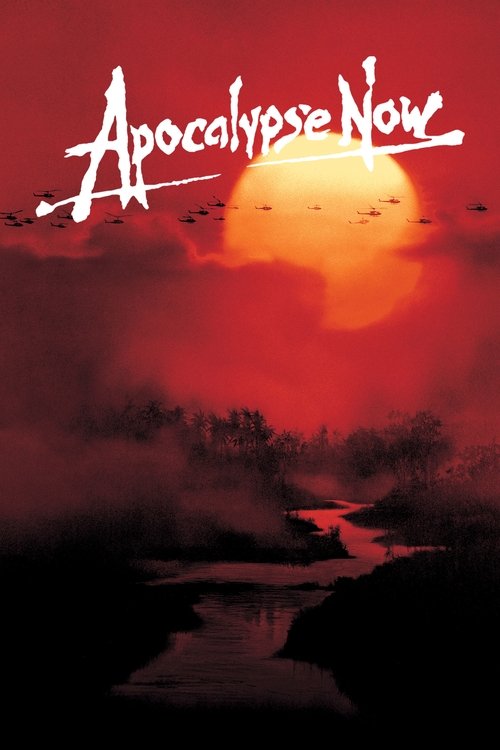
Apocalypse Now
A hallucinatory war epic that plunges into the heart of darkness, where the jungle's fever dream mirrors the madness of the human soul.
Apocalypse Now

Apocalypse Now

"This is the end..."

19 May 1979 United States of America 147 min ⭐ 8.3 (8,669)
Director: Francis Ford Coppola
Cast: Martin Sheen, Marlon Brando, Frederic Forrest, Albert Hall, Laurence Fishburne
Drama War
The Madness of War The Duality of Human Nature (Civilization vs. Savagery) Moral Ambiguity and Hypocrisy Critique of American Imperialism and Culture
Budget: $31,500,000
Box Office: $150,000,000

Overview

At the height of the Vietnam War, Captain Benjamin Willard (Martin Sheen), a U.S. Army special operations officer, is tasked with a clandestine mission. He is ordered to travel up the Nung River into Cambodia to find and assassinate Colonel Walter E. Kurtz (Marlon Brando), a highly decorated Green Beret officer who has reportedly gone insane and now commands his own private army of local tribespeople.

Willard joins the crew of a Navy patrol boat: the stoic Chief (Albert Hall), the laid-back surfer Lance (Sam Bottoms), the uptight Chef (Frederic Forrest), and the young Mr. Clean (Laurence Fishburne). Their journey upriver is a descent into the surreal and chaotic vortex of the war. They encounter a range of bizarre and terrifying situations, from a cavalier, surf-obsessed Lieutenant Colonel named Kilgore (Robert Duvall) who blasts Wagner during helicopter assaults, to a chaotic USO show with Playboy Playmates that descends into anarchy.

As they venture deeper into the jungle, the crew is slowly picked off, and the line between civilization and savagery blurs. Willard, reading Kurtz's dossier, becomes increasingly fascinated by his target, questioning the nature of his mission and his own sanity. The river journey becomes a metaphor for a voyage into the darkest recesses of the human psyche, culminating in a final, fateful confrontation with the enigmatic Kurtz in his macabre, temple-like compound.
Core Meaning

Francis Ford Coppola's Apocalypse Now is a profound and haunting exploration of the darkness that lies within human nature, exposed and amplified by the horrors of war. The film posits that the veneer of civilization is incredibly thin, and when stripped away by extreme violence and moral ambiguity, primal instincts and madness take over. It critiques the absurdity and hypocrisy of war, particularly the Vietnam War, where conventional morality and logic cease to apply. The central message is a philosophical reflection on the duality of man—the conflict between good and evil, rationality and insanity, and civilization and savagery. Ultimately, the film suggests that the 'horror' Kurtz speaks of is not just the brutality of war, but the terrifying realization of humanity's inherent capacity for darkness when removed from societal constraints.

Thematic DNA

The Madness of War 35%
The Duality of Human Nature (Civilization vs. Savagery) 30%
Moral Ambiguity and Hypocrisy 20%
Critique of American Imperialism and Culture 15%

The Madness of War

The film portrays war not as a glorious or heroic endeavor, but as a nightmarish descent into collective and individual insanity. This is shown through surreal and absurd episodes: Kilgore's obsession with surfing amidst a brutal battle, the chaotic USO show, and the disorienting, drug-fueled atmosphere at the Do Lung Bridge. As the characters travel upriver, they move further from reality and their own sanity, with each member of the PBR crew experiencing a mental breakdown. Kurtz represents the ultimate endpoint of this journey—a man who has fully embraced the madness of war to the point of becoming a godlike, savage figure.

The Duality of Human Nature (Civilization vs. Savagery)

Apocalypse Now is fundamentally about the conflict between the 'civilized' self and the 'savage' instincts that war unleashes. The journey up the river is a journey into the 'heart of darkness,' both geographically and psychologically. Characters like Kurtz have abandoned the moral constraints of society, believing that one must embrace 'horror and moral terror' to win a war. Willard's mission forces him to confront this same darkness within himself, and the film questions whether anyone can remain unchanged by such an experience. The central philosophical question is whether savagery is an aberration or a fundamental part of the human condition.

Moral Ambiguity and Hypocrisy

The film is saturated with moral ambiguity, challenging clear distinctions between right and wrong. Willard is an assassin sent by generals who condemn Kurtz's methods as 'unsound,' yet they order Willard to 'terminate with extreme prejudice.' This highlights the hypocrisy of the military establishment, which demonizes Kurtz for taking the war to its logical, albeit brutal, conclusion. Kurtz himself despises the lies of the military command, believing his own transparent brutality is a more honest form of warfare. The film forces the audience to question the morality of the entire conflict, where acts of extreme violence are sanctioned and heroes and villains are indistinguishable.

Critique of American Imperialism and Culture

The film subtly critiques American arrogance and the imposition of its culture in a foreign land. Kilgore's squadron surfs and has barbecues on a conquered beach, completely detached from the reality of the Vietnamese people whose village they just destroyed. The USO show, featuring Playboy Playmates airlifted into the jungle, highlights the bizarre and empty values the American soldiers are supposedly fighting for. These scenes portray the American presence as a surreal and destructive force, imposing its own culture and entertainment on a landscape of death and suffering, suggesting a fundamental disconnect and lack of understanding of the conflict they are engaged in.

Character Analysis

Captain Benjamin L. Willard

Martin Sheen

Archetype: Antihero / The Seeker
Key Trait: Introspective and Observant

Motivation

Initially, his motivation is simply to have a mission, an escape from the limbo of civilization where he no longer fits. He tells himself, 'I wanted a mission, and for my sins, they gave me one.' As the film progresses, his motivation shifts from simply following orders to a profound, personal need to understand Kurtz and the darkness he represents.

Character Arc

Willard begins as a burnt-out, introspective assassin, already psychologically damaged by the war. He is a passive observer for much of the journey, soaking in the insanity around him. As he travels upriver and learns more about Kurtz, he develops a grudging respect and a deep, obsessive connection to his target, questioning his own mission. By confronting and killing Kurtz, he is forced to confront the darkness within himself. His final act of leaving the compound, rather than taking Kurtz's place, suggests a rejection of that ultimate descent into madness, though he is forever changed by the experience.

Colonel Walter E. Kurtz

Marlon Brando

Archetype: The Shadow / The Mad Prophet
Key Trait: Charismatic and Philosophical

Motivation

Kurtz is motivated by a desire to transcend what he sees as the 'timid lying morality' of conventional warfare. He seeks to wage war with a pure, unconflicted will, free from judgment and hypocrisy. By the time Willard finds him, he seems to be motivated by a desire to have his story told and understood, and perhaps, to find a successor or an end to his own existence.

Character Arc

Kurtz's arc has already happened by the time the film begins; we only learn about it through his dossier and the accounts of others. He was once a brilliant, model officer, destined for the top ranks. However, his experiences in Vietnam led him to conclude that the military's methods were hypocritical and ineffective. He embraced a philosophy of absolute, brutal will, believing one must make a friend of 'horror and moral terror' to achieve victory. This led him to break from the chain of command, establish his own fiefdom, and become a charismatic, godlike figure to the local tribes, descending into what the military calls madness but what he sees as clarity.

Lieutenant Colonel Bill Kilgore

Robert Duvall

Archetype: The Warrior / The Jester
Key Trait: Flamboyant and Fearless

Motivation

Kilgore is motivated by the thrill of battle and the imposition of his will on the world. He loves his men and he loves the smell of napalm. His immediate motivation in the film is to secure a beach for surfing, a goal for which he is willing to call in a massive helicopter airstrike, perfectly encapsulating his skewed priorities and larger-than-life personality.

Character Arc

Kilgore is a static character who experiences no significant arc; he is a force of nature that Willard and the crew encounter. He represents a particular brand of American insanity in the war—bombastic, cheerful, and utterly detached from the horror he inflicts. He treats war as a grand adventure, a backdrop for his personal passions like surfing and barbecues. He is both terrifying in his destructive power and absurd in his priorities. His character serves as a benchmark for the 'acceptable' madness of the war, making Willard wonder what Kurtz could have possibly done to be considered any more insane.

The Photojournalist

Dennis Hopper

Archetype: The Herald / The Mad Disciple
Key Trait: Manic and Sycophantic

Motivation

His primary motivation is to serve Kurtz and explain his greatness to Willard. He is desperate for others to understand Kurtz as he does, seeing him as an enlightened man who has transcended conventional understanding. He is driven by a manic energy and a need to document and be part of Kurtz's world.

Character Arc

A hyperactive, motormouthed American freelance photographer who has become a devoted follower of Kurtz. He has completely succumbed to Kurtz's charisma and philosophy, acting as a bridge between Willard and the enigmatic Colonel. He serves as Kurtz's fool, rationalizing his master's brutality and praising his genius. He represents a mind fractured by the war and captivated by Kurtz's madness, unable to process the horror around him except through the lens of hero-worship. His character is reportedly based in part on real-life war correspondents like Sean Flynn and Tim Page.

Symbols & Motifs

The River

Meaning:

The Nung River symbolizes a journey into the depths of the human psyche and the 'heart of darkness.' It represents the passage from the structured, albeit chaotic, world of the military into a primal, lawless state. The further upriver the crew travels, the further they move from civilization, sanity, and conventional morality. The river also symbolizes transformation, ultimately leading Willard to a place of death and despair, but also serving as his escape route.

Context:

The entire narrative is structured around the journey up the river. Willard's narration often reflects on the river's symbolic meaning. A key line is his musing, 'Never get out of the boat,' suggesting the river is a fragile sanctuary from the true darkness that lies in the jungle and within themselves. Willard's final emergence from the water to kill Kurtz symbolizes a baptism or rebirth into a new, darker understanding of himself and humanity.

Fog and Smoke

Meaning:

Fog and smoke are consistently used to symbolize confusion, moral ambiguity, and the surreal, dreamlike nature of the war. They obscure vision, representing the characters' blurred understanding of their situation and the unclear line between right and wrong. This visual motif emphasizes the fear of the unknown and the psychological disorientation experienced by the soldiers.

Context:

Scenes at the Do Lung Bridge are shrouded in smoke and fog, reflecting the chaos and lack of leadership at this final outpost of the American military. As Willard's boat moves deeper into Kurtz's territory, the air becomes thick with a mystical fog, signaling their entry into a different realm of existence, one governed by Kurtz's twisted philosophy.

Kurtz's Compound

Meaning:

The compound, an ancient temple adorned with severed heads and populated by a cult-like following, symbolizes the complete regression from civilization to a primitive, brutal state. The stone statues and macabre decorations represent Kurtz's self-deification and his creation of a new world order based on fear and primal worship. It is the physical manifestation of his philosophy—a place where 'horror' is embraced and conventional morality has been completely abandoned.

Context:

The final act of the film takes place entirely within this compound. Willard's arrival and subsequent imprisonment and conversations with Kurtz occur amidst this backdrop of savagery. The climactic scene intercuts Willard's execution of Kurtz with the ritualistic slaughter of a water buffalo by the tribespeople, visually linking Kurtz's death to a primitive, sacrificial act.

Face Paint and Masks

Meaning:

The application of camouflage paint or masks symbolizes the abandonment of one's former self and the adoption of a new, primal identity suited for the savagery of war. It represents a symbolic killing of the old self and an external manifestation of the characters' internal transformation as they shed the constraints of civilization.

Context:

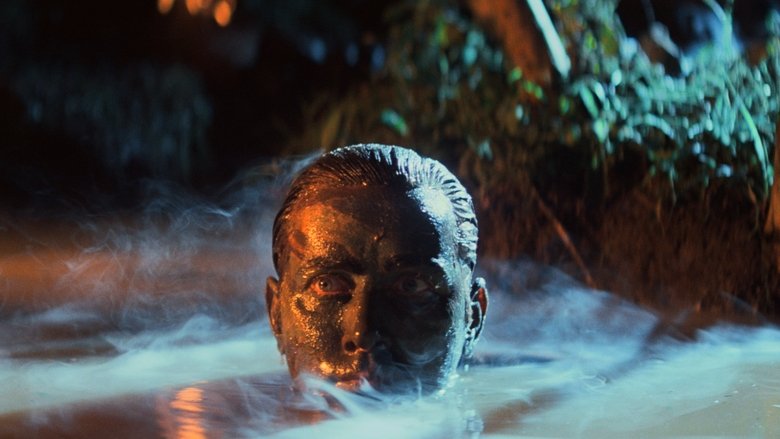
Lance, the California surfer, increasingly covers his face in camouflage paint as he descends into a drug-addled, detached state. Kurtz's face is often obscured by shadow or he appears wearing face paint. Most significantly, Willard covers his own face in mud as he emerges from the river to assassinate Kurtz, signifying his transformation and acceptance of the primal role required to complete his mission.

Memorable Quotes

I love the smell of napalm in the morning.

— Lieutenant Colonel Bill Kilgore

Context:

Spoken on a beach after the Air Cavalry, under his command, has just laid waste to a Viet Cong outpost. The purpose of the attack was primarily to clear the area so that his men, particularly the famous surfer Lance, could enjoy the waves. The line is delivered matter-of-factly as explosions continue in the background.

Meaning:

This iconic line encapsulates the character of Kilgore and the film's theme of the madness of war. It's delivered with a casual, almost cheerful tone after a devastating helicopter attack on a Vietnamese village. The quote chillingly illustrates how war has warped his mentality, allowing him to find aesthetic pleasure in the scent of horrific destruction, which he equates with 'victory.' It highlights the surreal and detached way in which some participants experienced the conflict.

The horror... the horror.

— Colonel Walter E. Kurtz

Context:

After Willard has attacked him with a machete in his chamber, Kurtz falls to the ground and utters these two words. The scene is intercut with the ritual sacrifice of a water buffalo outside. The words are repeated in voiceover by Willard as his boat sails away from the compound at the end of the film.

Meaning:

These are Kurtz's final words, whispered as he lies dying. The quote is a direct reference to Joseph Conrad's Heart of Darkness. Its meaning is ambiguous and profound. It can be interpreted as Kurtz's final judgment on his own actions, the nature of war, the darkness inherent in the human soul, or the totality of his experiences. It is the ultimate expression of a man who has journeyed to the absolute extremity of human experience and found only an abyss.

Charlie don't surf!

— Lieutenant Colonel Bill Kilgore

Context:

Kilgore shouts this line to his men on the beach to motivate them to clear the area of Viet Cong soldiers. He is frustrated that the enemy's presence is preventing Lance Johnson from surfing the excellent waves at the mouth of the Nung River.

Meaning:

A succinct and arrogant dismissal of the enemy, used as a justification for taking their beach. The line exposes the ethnocentric and dehumanizing attitude of the American forces. It reduces the complex conflict to a simple, almost comical clash of cultures, where the enemy is deemed unworthy of the territory simply because they don't share American leisure pursuits. It's a stark example of the absurdity and arrogance that permeates the war effort as depicted in the film.

You're an errand boy, sent by grocery clerks, to collect a bill.

— Colonel Walter E. Kurtz

Context:

Spoken to a captive Willard inside Kurtz's compound. Kurtz is in shadow, philosophizing and interrogating Willard, trying to understand the man who has been sent to kill him while simultaneously asserting his own intellectual and moral superiority over the system that condemned him.

Meaning:

With this line, Kurtz dismisses Willard and the authority he represents. He sees the generals who sent Willard as insignificant bureaucrats ('grocery clerks') who lack the will and understanding to truly wage war. He belittles Willard's mission, framing it not as a righteous act of justice, but as a mundane, cowardly transaction. It is a powerful statement of Kurtz's contempt for the military hierarchy and its perceived hypocrisy.

Never get out of the boat.

— Captain Benjamin L. Willard (narration)

Context:

Willard reflects on this idea in his narration after Chef has a terrifying encounter with a tiger in the jungle while searching for mangoes. The phrase is later repeated by Chef himself. Willard's full thought is, 'Never get out of the boat. Absolutely goddamn right. Unless you were going all the way.'

Meaning:

This becomes a recurring mantra and a central metaphor in the film. On a literal level, leaving the relative safety of the PBR boat leads to death and danger, as when Chef encounters a tiger. Metaphorically, 'the boat' represents the fragile structure of civilization, sanity, and mission protocol. To 'get out of the boat' is to stray into the primal chaos of the jungle and the human soul. Kurtz is the man who 'got off the boat' and went 'all the way.'

Philosophical Questions

What is the true nature of 'horror' and 'madness' in war?

The film explores whether madness is an individual failing or the only sane response to an insane situation like the Vietnam War. Colonel Kurtz argues that one must embrace 'horror and moral terror' to win, suggesting that the refusal to acknowledge and utilize the darkest parts of human nature is a form of hypocrisy. The film asks if Kurtz is truly insane, or if he is simply the most honest participant in a brutal conflict. It questions the very definition of sanity in a world where organized, large-scale violence is considered rational policy.

Does civilization's morality have any place in the primal chaos of war?

Apocalypse Now constantly questions the applicability of conventional morality in extreme circumstances. Kurtz believes that 'judgment... defeats us' and that victory requires men who are moral but can also kill without passion or judgment. The journey upriver represents a shedding of societal rules. The film suggests that the moral codes of peacetime are lies that soldiers tell themselves to cope, and that the true nature of conflict requires a descent into a more primal, amoral state.

Can one confront the darkness within humanity without being consumed by it?

This is the central question of Willard's journey. He is sent to destroy a man who has succumbed to his darkest instincts, but in the process, he comes to understand and even identify with him. The film's ambiguous ending leaves this question open. Does Willard's act of killing Kurtz make him the new vessel for that darkness, or does his subsequent departure represent a successful confrontation and rejection of it? The film suggests that the journey into the 'heart of darkness' is transformative, and that one can never fully return to the person they were before.

Alternative Interpretations

The ending of Apocalypse Now is famously ambiguous and has prompted numerous interpretations. Two primary readings dominate the discussion:

1. Willard Becomes the New Kurtz: In this interpretation, by killing Kurtz, Willard does not end the cycle of madness but inherits it. The native followers bow to Willard after he emerges from Kurtz's chamber, suggesting they see him as their new god-king. His journey was not just to kill a man but to replace him, completing his descent into the 'heart of darkness.' This reading emphasizes the corrupting nature of power and the idea that the savagery Kurtz embodied is a transferable, almost viral, force.

2. Willard Transcends the Darkness: An alternative view posits that Willard's final act is one of rejection. After killing Kurtz and being offered the mantle of leadership, he drops his weapon, takes Lance, and returns to the boat, sailing away from the compound. This suggests that while he has confronted and understood the darkness within himself and Kurtz, he makes a conscious choice to turn away from it and return to some semblance of civilization. It's seen as a testament to his ability to retain his humanity amidst the horror.

Francis Ford Coppola himself struggled with the ending, filming multiple versions. One alternate ending, shown in some early releases, featured Willard calling in an airstrike that obliterates the compound, a more definitive but less philosophical conclusion that Coppola later removed because he felt it was misinterpreted as Willard's own act of annihilation.

Cultural Impact

Apocalypse Now was released in 1979 to a polarized critical reception, with some hailing it as a masterpiece and others finding it pretentious and incoherent. Despite the initial mixed reviews, the film was a box office success and has since been reassessed as one of the greatest films ever made. It helped to shape the cinematic portrayal of the Vietnam War, moving beyond straightforward combat narratives to explore the conflict's psychological and philosophical dimensions. Its influence can be seen in numerous subsequent war films, such as Platoon and Full Metal Jacket, which also explored themes of madness and moral decay.

The film has had an immense impact on popular culture, with its iconic lines ('I love the smell of napalm in the morning,' 'Charlie don't surf') and imagery (the helicopter attack set to 'Ride of the Valkyries') being endlessly quoted, parodied, and referenced in other films, television shows like The Simpsons and Seinfeld, and music. The film's surreal, hallucinatory style and its unflinching look at the darkness of the human soul have cemented its place as a cultural touchstone, a definitive statement on the nature of modern war and its consequences.

Audience Reception

Upon its release, audience reception for Apocalypse Now was deeply divided, mirroring the critical response. Many viewers were awestruck by its epic scale, stunning cinematography, and immersive sound design, hailing it as a powerful and visceral cinematic experience. The film's unflinching portrayal of the chaos and psychological toll of war resonated with audiences grappling with the legacy of Vietnam. However, a significant portion of the audience found the film to be slow, pretentious, and confusing, particularly its philosophical and ambiguous final act featuring Marlon Brando's esoteric performance. Some viewers criticized it for being overly long and self-indulgent. Over time, public opinion has largely shifted, and the film is now widely regarded by audiences as a masterpiece and a classic of American cinema, with its ambition and complexity being celebrated rather than criticized.

Interesting Facts

  • The notoriously difficult production in the Philippines was plagued by problems, including a typhoon destroying expensive sets, Martin Sheen suffering a near-fatal heart attack, and Marlon Brando arriving on set overweight and unprepared. The chaotic filming is chronicled in the documentary 'Hearts of Darkness: A Filmmaker's Apocalypse'.
  • Laurence Fishburne, who plays the teenage gunner Mr. Clean, lied about his age to get the part. He was only 14 when casting began, and the lengthy production meant he was 17 by the time filming concluded.
  • Harvey Keitel was originally cast as Captain Willard but was fired by Francis Ford Coppola after only a week of filming, with Coppola feeling his performance was too 'active.' Martin Sheen was brought in to replace him.
  • The opening scene of Willard having a drunken breakdown in a Saigon hotel room was unscripted. Martin Sheen was actually drunk and punched a real mirror, cutting his hand. He insisted Coppola keep filming, and the raw, intense footage made it into the final cut.
  • The U.S. military refused to cooperate with the production. The helicopters and pilots used in the film were loaned by the Philippine Army, which was then fighting its own rebel insurgency. At times, the helicopters had to be recalled from the film set for actual combat missions.
  • The ritualistic slaughter of the water buffalo at the film's climax was real. Coppola filmed a genuine ritual performed by the local Ifugao tribe and intercut it with Kurtz's assassination. This led to the film being deemed 'unacceptable' by the American Humane Association.
  • The film's title, 'Apocalypse Now,' was conceived by screenwriter John Milius as a parody of a popular hippie button from the 1960s that read 'Nirvana Now.'
  • Dennis Hopper and Marlon Brando reportedly did not get along on set, with Brando eventually refusing to be on set at the same time as Hopper.
  • George Lucas was originally slated to direct the film in a pseudo-documentary style, but he became busy with 'Star Wars' and passed the project to Coppola.

Easter Eggs

Harrison Ford's character is named Colonel G. Lucas.

This is a direct and playful reference to George Lucas, who was a close friend of Coppola's and was originally supposed to direct Apocalypse Now. Ford had, of course, starred in Lucas's films American Graffiti and Star Wars.

The graffiti 'Our Motto: Apocalypse Now' is visible in Kurtz's compound.

This is a literal in-film appearance of the movie's title. It suggests that Kurtz and his followers have fully embraced the chaotic and destructive philosophy that the title implies, seeing the end of the old world and the creation of their new one as an immediate, ongoing event.

In an outtake from Marlon Brando's monologue, a bug flew into his mouth.

During one of his intense, improvised monologues, a bug flew into Marlon Brando's mouth, to which he calmly ad-libbed, 'I swallowed a bug.' The moment, featured in the documentary Hearts of Darkness, has become legendary among fans and was later referenced in the film Good Will Hunting when Casey Affleck's character says the line.

⚠️ Spoiler Analysis

Click to reveal detailed analysis with spoilers

Frequently Asked Questions

Explore More About This Movie

Dive deeper into specific aspects of the movie with our detailed analysis pages

Comments (0)

Leave a comment

No comments yet. Be the first to share your thoughts!