L'Armée des ombres
"Betrayal. Loyalty. Collaboration. Resistance."
Army of Shadows - Symbolism & Philosophy
Symbols & Motifs
Shadows and Darkness
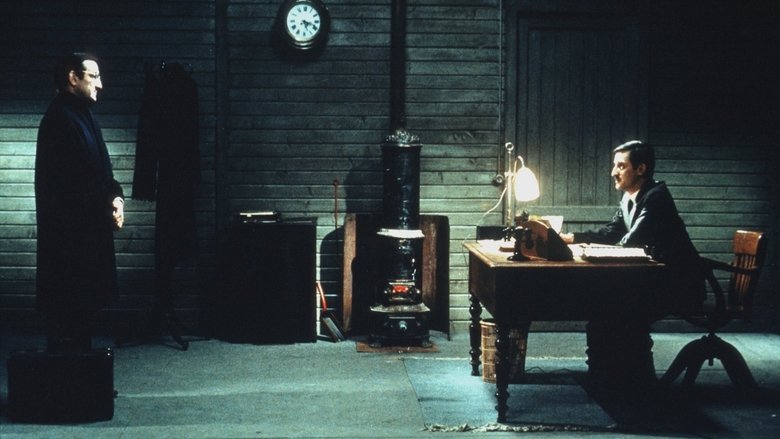
Shadows are a dominant visual motif symbolizing the secrecy, danger, and clandestine nature of the Resistance. The characters are the titular "Army of Shadows," operating outside the bounds of normal society, their lives hidden and identities obscured. The darkness represents both their protection and their prison, a world of moral ambiguity where they must commit terrible acts for a greater good.
Director Jean-Pierre Melville and cinematographer Pierre Lhomme deliberately used a muted, desaturated color palette, dominated by blues and greys, with most scenes set at night, dusk, or dawn. This visual style envelops the characters in a perpetual twilight, visually trapping them in their covert and dangerous world.
Coats and Hats
The trench coats and fedoras worn by the male characters are a signature of Melville's cinematic style, linking the film to his gangster noirs. They function as a kind of uniform for his protagonists, whether criminals or freedom fighters, symbolizing a shared code of honor, professionalism, and a detached, fatalistic worldview. The clothing provides a fragile layer of anonymity and protection in a hostile world.
Throughout the film, characters are seen donning or changing coats. After his initial escape, a barber provides Gerbier with a different overcoat to help him disappear. The costumes are integral to the film's cool, understated aesthetic and connect the Resistance fighters to the archetypal Melville hero: isolated, professional, and condemned.
The Cyanide Pill
The cyanide pill represents the ultimate sacrifice and the ever-present risk of capture. It is a symbol of the characters' control over their own fate in the face of inevitable defeat and torture. Possessing the pill is an acknowledgment of their grim reality and their commitment to protecting the network, even at the cost of their own lives.
The pill appears at a critical moment when a rescue attempt for the tortured Félix fails. Jean-François, having intentionally gotten himself arrested to aid the escape, gives his only cyanide pill to Félix to end his suffering and prevent him from breaking under further torture.
The Photograph of a Daughter
The photograph symbolizes the intrusion of the past and personal attachment into the cold, detached world of the Resistance. It represents a vulnerability, a link to a life that must be forsaken for the cause. It is a fatal weakness in a world that demands absolute emotional severance.
Mathilde, despite being an exceptionally competent and careful operative, is captured because she carries a photograph of her daughter. The Gestapo uses this emotional connection to blackmail her, leading to her betrayal and eventual execution by her own comrades, tragically demonstrating that personal ties are a liability that cannot be afforded in the shadows.
Philosophical Questions
What is the true cost of fighting for a moral cause?
The film relentlessly explores the idea that engaging in a righteous struggle against an evil force requires one to adopt the enemy's brutal methods. The Resistance fighters must murder informants, sacrifice comrades, and betray their own humanity to survive and continue their fight. The execution of the young traitor and, most devastatingly, of their colleague Mathilde, forces the audience to confront the question of whether a cause can remain pure when its methods are so morally compromised. The film suggests that the cost is the soul of the fighter, leaving them forever haunted and changed, even if their cause prevails.
How does one maintain humanity in the face of dehumanizing circumstances?
"Army of Shadows" presents a world where survival depends on suppressing emotion, trust, and personal connection. Characters are reduced to their function within the network. Yet, the film finds subtle moments where their humanity persists. Mathilde's refusal to part with her daughter's photo, Jean-François's selfless sacrifice for a friend, and the visible anguish on the faces of the executioners after killing Mathilde all speak to the enduring, if tragically vulnerable, nature of the human spirit. The central philosophical question is whether their stoicism is a loss of humanity or the only way to preserve a deeper, internal integrity in a world that seeks to destroy it.
Can an individual's actions have meaning in the face of overwhelming historical forces?
The film is deeply fatalistic, emphasizing the isolation and frequent failure of the Resistance cell. Their victories are small and temporary, and the narrative constantly reminds the viewer of their ultimate doom through its oppressive atmosphere and the final text detailing their deaths. This raises the question of whether their sacrifices had any meaning. The film seems to argue that meaning is found not in the outcome, but in the act of resistance itself. It is an existential assertion of freedom and dignity, a refusal to submit, even when the struggle seems hopeless.
Core Meaning
The core meaning of "Army of Shadows" is an existential exploration of resistance, sacrifice, and the human condition under extreme duress. Director Jean-Pierre Melville sought to move beyond a simplistic depiction of heroism to convey the somber, unglamorous reality of the French Resistance. The film posits that true resistance is not a political act but an existential one—a fundamental human response to oppression. It dissects the harrowing moral compromises required for survival and the fight for freedom, suggesting that in such a conflict, the lines between hero and executioner become terrifyingly blurred. The film's message is deeply pessimistic, highlighting the futility of individual actions against an overwhelming force and the immense personal cost of commitment to a cause. Ultimately, it is a meditation on honor, loyalty, and the struggle to maintain one's humanity in a world stripped of it, where the only certainty is death.