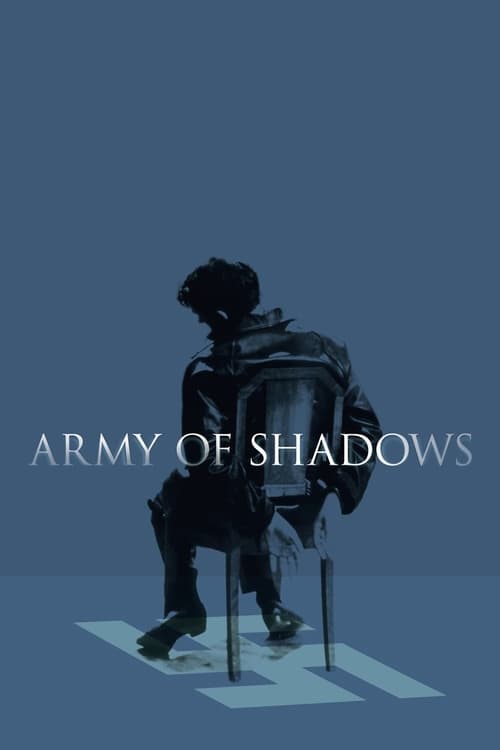
Army of Shadows
A haunting, atmospheric thriller, embodying the chilling solitude of the French Resistance, where courage is a silent, desperate flicker in an abyss of betrayal.
Army of Shadows

Army of Shadows

L'Armée des ombres

"Betrayal. Loyalty. Collaboration. Resistance."

10 September 1969 France 145 min ⭐ 7.9 (694)
Director: Jean-Pierre Melville
Cast: Lino Ventura, Paul Meurisse, Jean-Pierre Cassel, Simone Signoret, Claude Mann
Drama War Thriller
Betrayal and Loyalty The Nature of Heroism Existentialism and Fatalism The Psychology of Fear and Secrecy
Box Office: $906,133

Overview

"Army of Shadows" (L'Armée des ombres), directed by Jean-Pierre Melville, is a stark and unromanticized portrayal of a small French Resistance cell operating in 1942 Nazi-occupied France. The film follows Philippe Gerbier (Lino Ventura), a civil engineer and a leader within the network, as he navigates a treacherous world of safe houses, clandestine meetings, and the constant threat of capture, torture, and death. After being arrested and escaping, Gerbier and his comrades, including the resourceful Mathilde (Simone Signoret) and the stoic Félix Lepercq (Paul Crauchet), must carry out their dangerous missions while confronting betrayal from within their own ranks.

Unlike many war films, "Army of Shadows" forgoes scenes of glorious combat and patriotic speeches. Instead, it focuses on the psychological toll and moral ambiguities of underground warfare. The narrative unfolds through a series of tense, meticulously crafted episodes that highlight the mundane yet life-threatening realities of their existence: executing an informant, rescuing a captured colleague, and constantly moving to evade the Gestapo. Melville, a veteran of the Resistance himself, creates a palpable atmosphere of paranoia and fatalism, where every decision carries the weight of life and death, and survival is a fleeting victory.
Core Meaning

The core meaning of "Army of Shadows" is an existential exploration of resistance, sacrifice, and the human condition under extreme duress. Director Jean-Pierre Melville sought to move beyond a simplistic depiction of heroism to convey the somber, unglamorous reality of the French Resistance. The film posits that true resistance is not a political act but an existential one—a fundamental human response to oppression. It dissects the harrowing moral compromises required for survival and the fight for freedom, suggesting that in such a conflict, the lines between hero and executioner become terrifyingly blurred. The film's message is deeply pessimistic, highlighting the futility of individual actions against an overwhelming force and the immense personal cost of commitment to a cause. Ultimately, it is a meditation on honor, loyalty, and the struggle to maintain one's humanity in a world stripped of it, where the only certainty is death.

Thematic DNA

Betrayal and Loyalty 35%
The Nature of Heroism 30%
Existentialism and Fatalism 20%
The Psychology of Fear and Secrecy 15%

Betrayal and Loyalty

Betrayal is a constant, lurking threat that permeates every level of the Resistance, often coming from within. The film opens with Gerbier's betrayal by a young agent, forcing the cell to carry out a grim execution. This internal violence is depicted as more disturbing than the conflict with the Nazis. The theme culminates in the agonizing decision to execute Mathilde, a valued and courageous member, after she is compromised by the Gestapo through threats against her daughter. This act underscores the unforgiving code of survival where loyalty to the network must supersede personal feelings and even gratitude. The characters' unwavering loyalty to their cause and to each other, even unto death, is the fragile glue holding their world together.

The Nature of Heroism

Melville deliberately subverts the traditional cinematic depiction of heroism. The characters in "Army of Shadows" are not gallant figures engaged in spectacular acts of sabotage. They are ordinary people—engineers, housewives, philosophers—forced into extraordinary circumstances. Their heroism is quiet, stoic, and defined by endurance and professionalism under constant pressure. The film presents a bleak view where heroic acts often end in failure and the most significant struggles are moral and internal. The characters are portrayed as anti-heroes, burdened by the morally compromising actions they must take to survive and continue their fight, challenging the very definition of what it means to be a hero in wartime.

Existentialism and Fatalism

The film is steeped in an existentialist ethos, focusing on individuals making choices in an oppressive and seemingly meaningless world. The characters operate with little hope for the future, their actions dictated by the immediate, life-or-death present. A profound sense of fatalism pervades the narrative; death is not a possibility but an inevitability. This is explicitly stated in the film's closing text, which details the eventual deaths of the surviving protagonists. The characters accept their fate with a stoic resolve, their struggle becoming an assertion of human dignity in the face of annihilation.

The Psychology of Fear and Secrecy

Melville masterfully creates an atmosphere of constant tension and paranoia. The characters live in the shadows, their identities concealed and their lives built on a foundation of secrecy. The film emphasizes the psychological toll of this existence, where every stranger is a potential threat and every routine action, like visiting a barber, is fraught with danger. The suspense is derived not from action sequences, but from quiet, drawn-out moments of observation and waiting, reflecting the mental state required to survive in a world of constant surveillance and imminent peril.

Character Analysis

Philippe Gerbier

Lino Ventura

Archetype: The Stoic Antihero
Key Trait: Pragmatic and Resolute

Motivation

Gerbier's motivation is rooted in a deep, unspoken commitment to resisting oppression. It is less a political conviction and more an existential imperative. He is driven by a professional code and a sense of duty to his comrades and the cause, carrying out his grim tasks with methodical precision because it is what the situation demands. His primary goal is the survival and effectiveness of the network, even if it requires sacrificing its members, including himself.

Character Arc

Philippe Gerbier's arc is not one of transformation but of grim endurance. He begins the film as a pragmatic and resolute leader of a Resistance cell, and he ends it in the same way, albeit more haunted by the necessary atrocities he has committed. His journey is a descent into deeper moral compromise, culminating in the order to execute Mathilde, the woman who saved his life. He maintains his composure and professionalism throughout, but the weight of his decisions is visible in Ventura's subtle, contained performance. The film's final text reveals his eventual fate: he is captured and "decided not to run this time," suggesting a final, fatalistic acceptance of his destiny.

Mathilde

Simone Signoret

Archetype: The Capable Loyalist
Key Trait: Resourceful and Courageous

Motivation

Mathilde is motivated by a fierce dedication to the Resistance. She is practical, cool-headed, and utterly reliable. However, her ultimate motivation is complicated by her love for her daughter. This dual loyalty places her in an impossible position when captured, leading to her tragic downfall.

Character Arc

Mathilde is introduced as an incredibly resourceful, intelligent, and courageous member of the Resistance, a master of disguise and planning. She quickly proves herself to be one of the most capable members of the group, orchestrating daring rescue plans. Her arc is tragic; her greatest strength—her humanity and connection to her daughter—becomes her fatal flaw. After being arrested, the threat to her daughter forces her to betray her comrades. Fully aware of the consequences, she accepts her fate, and her execution by her own cell is the film's most devastating moment.

Luc Jardie

Paul Meurisse

Archetype: The Mentor/Hidden Leader
Key Trait: Intellectual and Enigmatic

Motivation

Jardie's motivation appears to be deeply philosophical, rooted in a defense of freedom and human dignity. As a man of logic and reason, he represents the intellectual foundation of the Resistance, contrasting with Gerbier's more hands-on, pragmatic leadership. He is driven to unify and guide the disparate elements of the movement.

Character Arc

Luc Jardie, known to most only as "le patron" (the boss), is the enigmatic and intellectual head of the network. He remains mostly in the background, a figure of authority and quiet contemplation. His arc is minimal, as he serves more as the philosophical anchor of the Resistance. He is shown to be a man of deep thought who must make agonizing, life-and-death decisions, such as condemning Mathilde. The final text reveals he was eventually captured and, under torture, gave only one name: his own.

Jean-François Jardie

Jean-Pierre Cassel

Archetype: The Idealistic Sacrifice
Key Trait: Self-Sacrificing

Motivation

Jean-François is motivated by a strong sense of duty and honor. He is deeply committed to the cause and to his comrades. His decision to sacrifice himself demonstrates a profound courage that transcends the fear of death and torture, showing he is willing to give everything to save a friend and protect the network.

Character Arc

Jean-François, the younger brother of Luc Jardie, begins as a handsome, somewhat carefree-seeming man who joins the Resistance. His youthful idealism is quickly confronted by the brutal realities of their work. His arc is one of noble self-sacrifice. Upon learning of a dangerous rescue mission for Félix, he feigns cowardice to withdraw, only to then deliberately get himself arrested by the Gestapo in a selfless attempt to aid Félix from the inside. He is tortured and ultimately gives Félix his cyanide pill, a final act of mercy and comradeship.

Symbols & Motifs

Shadows and Darkness

Meaning:

Shadows are a dominant visual motif symbolizing the secrecy, danger, and clandestine nature of the Resistance. The characters are the titular "Army of Shadows," operating outside the bounds of normal society, their lives hidden and identities obscured. The darkness represents both their protection and their prison, a world of moral ambiguity where they must commit terrible acts for a greater good.

Context:

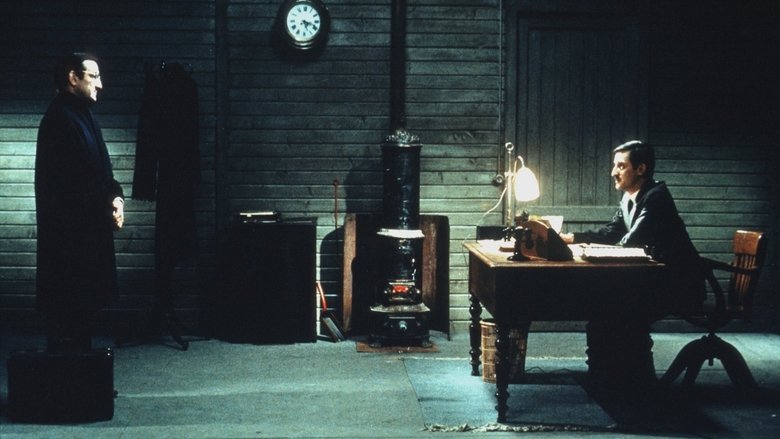
Director Jean-Pierre Melville and cinematographer Pierre Lhomme deliberately used a muted, desaturated color palette, dominated by blues and greys, with most scenes set at night, dusk, or dawn. This visual style envelops the characters in a perpetual twilight, visually trapping them in their covert and dangerous world.

Coats and Hats

Meaning:

The trench coats and fedoras worn by the male characters are a signature of Melville's cinematic style, linking the film to his gangster noirs. They function as a kind of uniform for his protagonists, whether criminals or freedom fighters, symbolizing a shared code of honor, professionalism, and a detached, fatalistic worldview. The clothing provides a fragile layer of anonymity and protection in a hostile world.

Context:

Throughout the film, characters are seen donning or changing coats. After his initial escape, a barber provides Gerbier with a different overcoat to help him disappear. The costumes are integral to the film's cool, understated aesthetic and connect the Resistance fighters to the archetypal Melville hero: isolated, professional, and condemned.

The Cyanide Pill

Meaning:

The cyanide pill represents the ultimate sacrifice and the ever-present risk of capture. It is a symbol of the characters' control over their own fate in the face of inevitable defeat and torture. Possessing the pill is an acknowledgment of their grim reality and their commitment to protecting the network, even at the cost of their own lives.

Context:

The pill appears at a critical moment when a rescue attempt for the tortured Félix fails. Jean-François, having intentionally gotten himself arrested to aid the escape, gives his only cyanide pill to Félix to end his suffering and prevent him from breaking under further torture.

The Photograph of a Daughter

Meaning:

The photograph symbolizes the intrusion of the past and personal attachment into the cold, detached world of the Resistance. It represents a vulnerability, a link to a life that must be forsaken for the cause. It is a fatal weakness in a world that demands absolute emotional severance.

Context:

Mathilde, despite being an exceptionally competent and careful operative, is captured because she carries a photograph of her daughter. The Gestapo uses this emotional connection to blackmail her, leading to her betrayal and eventual execution by her own comrades, tragically demonstrating that personal ties are a liability that cannot be afforded in the shadows.

Memorable Quotes

Mauvais souvenirs, soyez pourtant les bienvenus... vous êtes ma lointaine jeunesse.

— Opening text (from Georges Courteline)

Context:

This quote appears on screen before the film's first scene, which shows German soldiers marching past the Arc de Triomphe. It prepares the audience for a film that is as much a meditation on memory and loss as it is a depiction of historical events.

Meaning:

"Bad memories, I welcome you anyway... you are my long-lost youth." This opening quote sets the deeply personal and nostalgic, yet somber, tone of the film. It immediately frames the narrative not as a triumphant war story, but as a painful recollection—a "retrospective reverie" for director Jean-Pierre Melville, who was himself a member of the Resistance. It acknowledges the trauma of the past while recognizing it as a formative period.

Il faut que je la retrouve et que je la tue.

— Philippe Gerbier

Context:

Gerbier delivers this line to Luc Jardie after Jardie explains that Mathilde was arrested and released, and that several networks were dismantled shortly after. They conclude she was forced to talk and is now a liability. The decision is made with cold, tragic necessity, highlighting the immense psychological cost of their struggle.

Meaning:

"I have to find her and kill her." This stark, chilling line reveals the brutal and unforgiving logic of the Resistance. Gerbier says this about Mathilde, the woman who had previously saved his life, after learning she has been compromised by the Gestapo. It encapsulates the film's central theme of how the war forces characters to abandon personal feelings, loyalty, and even basic morality for the survival of the group.

S'il croyait mourir pour la patrie, il se trompait. Il est mort pour un passe-partout.

— Philippe Gerbier (voiceover)

Context:

This is Gerbier's thought after he successfully escapes from the Gestapo headquarters in Paris. His escape plan required a diversion, and a young fellow captive, whom Gerbier enlisted, was killed in the attempt. The line highlights Gerbier's detached, pragmatic assessment of the brutal calculus of their war.

Meaning:

"If he thought he was dying for his country, he was wrong. He died for a passkey." This internal thought from Gerbier reflects the unglamorous and often futile reality of their actions. The sacrifice of the young man who helped him escape the Gestapo headquarters wasn't for a grand ideal, but for a small, practical gain in a long, attritional struggle. It underscores the film's anti-romantic view of the Resistance, where deaths are often grimly pragmatic rather than noble.

Philosophical Questions

What is the true cost of fighting for a moral cause?

The film relentlessly explores the idea that engaging in a righteous struggle against an evil force requires one to adopt the enemy's brutal methods. The Resistance fighters must murder informants, sacrifice comrades, and betray their own humanity to survive and continue their fight. The execution of the young traitor and, most devastatingly, of their colleague Mathilde, forces the audience to confront the question of whether a cause can remain pure when its methods are so morally compromised. The film suggests that the cost is the soul of the fighter, leaving them forever haunted and changed, even if their cause prevails.

How does one maintain humanity in the face of dehumanizing circumstances?

"Army of Shadows" presents a world where survival depends on suppressing emotion, trust, and personal connection. Characters are reduced to their function within the network. Yet, the film finds subtle moments where their humanity persists. Mathilde's refusal to part with her daughter's photo, Jean-François's selfless sacrifice for a friend, and the visible anguish on the faces of the executioners after killing Mathilde all speak to the enduring, if tragically vulnerable, nature of the human spirit. The central philosophical question is whether their stoicism is a loss of humanity or the only way to preserve a deeper, internal integrity in a world that seeks to destroy it.

Can an individual's actions have meaning in the face of overwhelming historical forces?

The film is deeply fatalistic, emphasizing the isolation and frequent failure of the Resistance cell. Their victories are small and temporary, and the narrative constantly reminds the viewer of their ultimate doom through its oppressive atmosphere and the final text detailing their deaths. This raises the question of whether their sacrifices had any meaning. The film seems to argue that meaning is found not in the outcome, but in the act of resistance itself. It is an existential assertion of freedom and dignity, a refusal to submit, even when the struggle seems hopeless.

Alternative Interpretations

While the film is a direct portrayal of the French Resistance, some interpretations view it through the lens of Jean-Pierre Melville's other major preoccupation: the gangster film. The Resistance fighters operate with the same codes of honor, loyalty, and professionalism as the criminals in films like "Le Samouraï" and "Le Cercle Rouge." In this reading, the film is less a historical document and more another of Melville's explorations of closed, masculine worlds governed by ritual, silence, and a fatalistic code. The political context of the Occupation serves as an extreme backdrop for his recurring themes of betrayal and existential solitude.

Another interpretation, suggested by Melville himself, is that the film should be seen not as a realistic depiction of WWII, but as a more universal, existential drama about resistance to oppression in a fundamental human sense. By stripping away most specific political discourse, the film becomes an allegory for any small group fighting a seemingly insurmountable force, focusing on the universal human experiences of fear, sacrifice, and the struggle to maintain integrity under pressure.

A more political, revisionist reading, especially in light of its initial reception, suggests the film acts as a subtle critique of the Gaullist myth it was accused of celebrating. Charles de Gaulle's appearance is brief and somewhat stiff, and the overall tone is one of failure and immense loss, far from a triumphant national epic. The film's final dedication to the dead serves as a somber memorial rather than a celebration of victory, questioning the grand narratives of history and focusing on the forgotten sacrifices of individuals.

Cultural Impact

When "Army of Shadows" was released in France in 1969, its cultural impact was initially negative. In the wake of the May 1968 protests, French society was in a period of political upheaval and questioning of authority. The film, with its perceived Gaullist sympathies and solemn portrayal of the Resistance, was seen as out of step with the times and was criticized by influential publications like Cahiers du cinéma. This hostile reception effectively prevented its international distribution for decades.

However, the film's reputation grew over time. A critical reappraisal in France in the 1990s led to its restoration. Its eventual theatrical release in the United States in 2006 was a major cultural event, where it was immediately recognized as a long-lost masterpiece. Critics lauded its bleak realism, stylistic precision, and profound exploration of the moral complexities of war. Today, it is considered by many to be the definitive film about the French Resistance, praised for daring to deglamorize a period often mythologized in French history. Melville's film offered a crucial counter-narrative to more heroic depictions, influencing later war films with its focus on psychological tension and moral ambiguity. Its legacy is that of a film far ahead of its time, whose true power and importance could only be appreciated with historical distance.

Audience Reception

Upon its initial 1969 release in France, audience reception was lukewarm, mirroring the hostile critical response. The film was a box office disappointment, largely due to a political climate that viewed its subject matter as an outdated endorsement of Gaullism. However, when the film was finally released in the United States in 2006, audience reception was overwhelmingly positive. Viewers and critics alike hailed it as a profound and gripping masterpiece. Audiences praised its tense, atmospheric direction, its unsentimental realism, and the powerful, understated performances, particularly by Lino Ventura. The main points of praise focused on its refusal to romanticize war, its intelligent and morally complex narrative, and its masterful creation of suspense through quiet, psychological moments rather than action. There is little record of significant criticism or controversy following its international release; the consensus was that it was a tragically overlooked classic.

Interesting Facts

  • Director Jean-Pierre Melville was himself a member of the French Resistance during World War II, which heavily informed the film's authentic and personal tone.
  • The film is based on the 1943 novel of the same name by Joseph Kessel, who also drew from his own experiences in the Resistance.
  • Upon its initial release in France in 1969, "Army of Shadows" was met with a poor critical and commercial reception. In the political climate following the May 1968 student protests, the film was seen by many critics as a glorification of Charles de Gaulle, who was unpopular at the time.
  • The film was not released in the United States until 2006, 37 years after its French premiere. Upon its American release, it was hailed as a masterpiece by critics and appeared on many "top ten" lists for that year.
  • Melville had wanted to adapt Kessel's novel for over 25 years before he was finally able to make the film.
  • The character of Luc Jardie was partly inspired by Jean Cavaillès, a real-life philosopher and Resistance leader, and Jean Moulin, who was tasked by de Gaulle with unifying the Resistance.
  • Cinematographer Pierre Lhomme stated that filming was a 'daily challenge' due to Melville's exacting standards, particularly in achieving the film's signature desaturated palette of blues and greys.

⚠️ Spoiler Analysis

Click to reveal detailed analysis with spoilers

Frequently Asked Questions

Explore More About This Movie

Dive deeper into specific aspects of the movie with our detailed analysis pages

Comments (0)

Leave a comment

No comments yet. Be the first to share your thoughts!