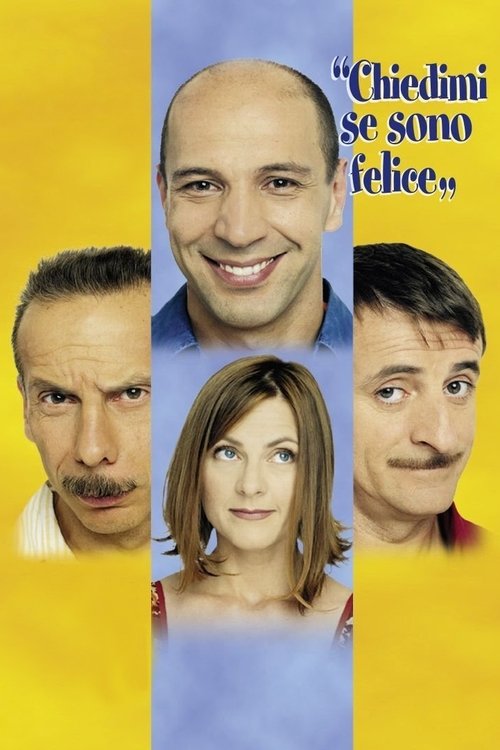
Chiedimi se sono felice
Director: Giacomo Poretti, Giovanni Storti, Aldo Baglio, Massimo Venier
Cast: Aldo Baglio, Giovanni Storti, Giacomo Poretti, Marina Massironi, Silvana Fallisi
Ask Me If I'm Happy — Movie Quotes
Memorable Quotes
Avete mai sentito di qualcuno che era felice mentre stava morendo?
Context
Delivered during the opening monologue, referencing the beginning of American Beauty, as Aldo seemingly faces his own death.
Meaning
This quote establishes the film's central philosophical paradox: finding profound joy and peace even in the face of absolute tragedy, specifically because of the presence of true friends [3.1].
Mio nonno diceva sempre: è meglio una bugia detta a fin di bene che 500 verità.
Context
Spoken by Aldo to justify why he and Marina faked his terminal illness to force the friends to reunite.
Meaning
It encapsulates the moral justification for the film's major plot twist, suggesting that sometimes deception is necessary to mend broken hearts.
Ma cos'hai nella testa? Le scimmie urlatrici?
Context
Yelled by Giovanni during one of the trio's classic bickering sessions.
Meaning
A hilarious display of Giovanni's famous short temper and exasperation with Aldo's bizarre logic.
Come Cyrano che confessa e muore a piedi del suo grande eterno amore, anch'io finito il mio cammino mi accascio e vado verso il mio destino...
Context
Recited by Aldo during the film's climax on the theater stage.
Meaning
This poetic rhyme blurs the line between Aldo's fake real-world death and the theatrical death of his character in the play.
Explore More About This Movie
Dive deeper into specific aspects of the movie with our detailed analysis pages