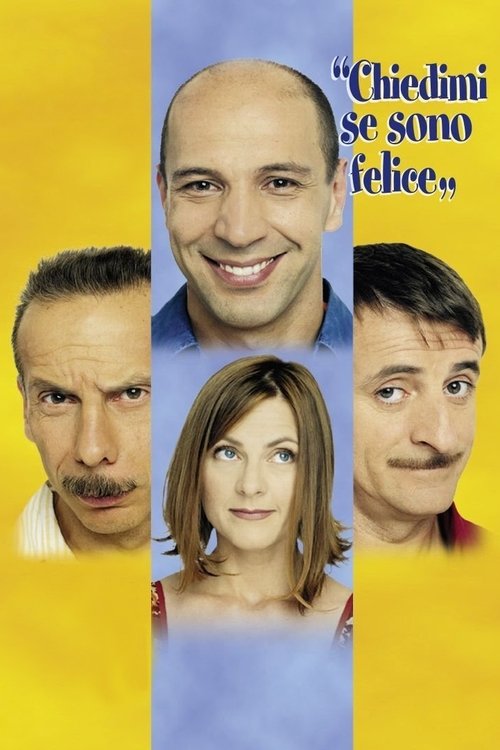
Ask Me If I'm Happy
Chiedimi se sono felice
Overview
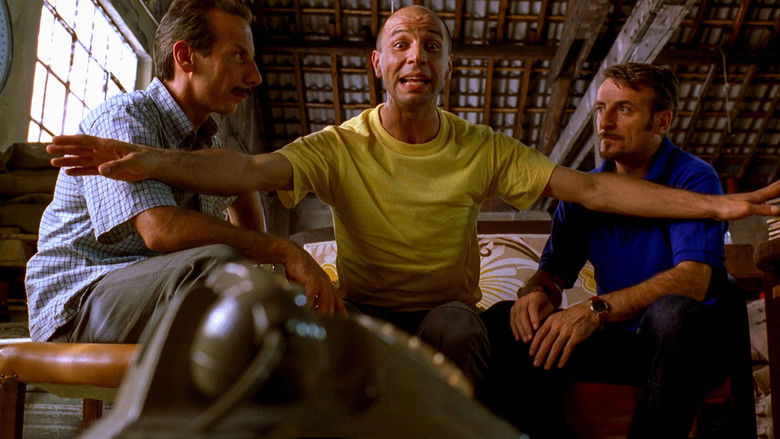
In Milan, three inseparable friends—Aldo, Giovanni, and Giacomo—struggle with precarious jobs while sharing a lofty dream: staging their own unique production of the classic play Cyrano de Bergerac. Aldo works as an extra in operas, Giacomo dubs minor characters, and Giovanni poses as a living statue in a mall. Their lives take a dramatic turn when Giovanni falls deeply in love with a charming flight attendant named Marina.
The trio's unbreakable bond fractures when a moment of weakness leads Giacomo and Marina to share an unexpected kiss. This betrayal devastates the stubborn Giovanni, causing a bitter falling out that shatters their friendship and permanently halts their theatrical aspirations. For three years, the men live separate, unfulfilled lives, burdened by unspoken grievances and lingering regrets.
The narrative is framed by a reunion three years later, as Giacomo and Giovanni are summoned to Sicily because Aldo is reportedly on his deathbed. The long train journey forces the estranged friends to confront their past, leading to a profoundly emotional and metatextual climax that blurs the lines between reality and the theater they once loved so much.
Core Meaning
The central message of the film revolves around the fragility and ultimate resilience of true friendship. The directors intended to show that human relationships, much like a theatrical performance, require vulnerability, forgiveness, and the willingness to look past one's pride. Through the lens of Cyrano de Bergerac, the film illustrates that unspoken feelings and stubborn resentment can ruin lives, but occasionally, a well-intentioned fiction—a white lie—can be the very thing needed to uncover the truth and heal old wounds. Ultimately, the movie declares that genuine connection is the true measure of happiness, even in the face of apparent tragedy.
Thematic DNA
Friendship and Forgiveness
This is the emotional core of the film. The deep bond between the three men is shattered by pride and a perceived betrayal [1.3]. The narrative emphasizes how difficult it is to forgive those we love most, and how a stubborn refusal to communicate can lead to years of wasted happiness. Their eventual reconciliation underscores that true friendship can survive even the deepest fractures.
The Blurring of Art and Life
The protagonists' ambition to stage Cyrano de Bergerac directly parallels their real-life situations. Just as Cyrano deals with hidden love, proxy romances, and tragic misunderstandings, Giacomo, Giovanni, and Marina find themselves trapped in a similar dynamic. The film's metatextual climax beautifully merges their theatrical dream with their real-world reconciliation.
Love and Misunderstanding
The romantic subplot acts as the catalyst for the tragedy. The film explores how love can be both beautiful and destructive. The love triangle formed by Giovanni, Marina, and Giacomo highlights how fleeting moments of vulnerability can create profound misunderstandings, causing pain to everyone involved.
Nostalgia and the Passage of Time
Told largely through flashbacks, the film is drenched in a bittersweet nostalgia. The three years the friends spend apart highlight the tragic waste of time caused by ego. The melancholic tone is perfectly amplified by Samuele Bersani's soundtrack, evoking a longing for simpler, happier days.
Character Analysis
Aldo
Aldo Baglio
Motivation
To keep his friends together, avoid conflict, and live life with joyful spontaneity.
Character Arc
Aldo begins as the eccentric, slightly naive friend trying to escape his clingy girlfriend [3.9]. However, he evolves into the emotional anchor of the group, orchestrating a massive theatrical ruse to save his fractured family of friends.
Giovanni
Giovanni Storti
Motivation
To find stability, respect in his career, and a pure, uncompromised romance.
Character Arc
Giovanni transforms from a rigid, frustrated worker into a man deeply in love. After his heart is broken by Giacomo's betrayal, he becomes bitter and isolated. His arc concludes with him learning to let go of his immense pride and forgive his best friend.
Giacomo
Giacomo Poretti
Motivation
To achieve artistic fulfillment and find a love that matches his romantic ideals.
Character Arc
Giacomo starts as a pedantic, somewhat pretentious voice actor longing for ideal love. His moment of weakness destroys the trio. He spends years carrying the guilt of his actions before finally seeking redemption at Aldo's "deathbed".
Marina
Marina Massironi
Motivation
To find genuine affection and repair the damage caused by the love triangle.
Character Arc
Marina enters as a charming flight attendant who brings light into Giovanni's life, but inadvertently causes the group's destruction. She later becomes the mastermind behind the plan to reunite them, proving her deep care for their bond.
Symbols & Motifs
Cyrano de Bergerac
The play symbolizes the characters' own hidden truths, unspoken affections, and the masks they wear in their daily lives [3.12]. It represents the idealized version of themselves they aspire to be.
It is the play the trio desperately wants to produce, and its plot directly mirrors the love triangle between Giovanni, Marina, and Giacomo. It eventually serves as the backdrop for the film's brilliant final twist.
Aldo's Illness
Aldo's supposed terminal condition symbolizes a theatrical deus ex machina—a necessary fiction required to resolve an impossible real-world conflict. It embodies the concept of a "white lie" told for a greater good.
The illness is the narrative frame that forces Giacomo and Giovanni to travel to Sicily together, ultimately breaking down their walls of resentment.
Midnight Bicycle Rides
The bicycles symbolize youth, freedom, and the carefree harmony of their friendship before it was tainted by romantic complications and betrayal.
Used in deeply melancholic and iconic visual montages set to Samuele Bersani's music, showing the trio riding through the empty streets of Milan.
Memorable Quotes
Avete mai sentito di qualcuno che era felice mentre stava morendo?
— Aldo
Context:
Delivered during the opening monologue, referencing the beginning of American Beauty, as Aldo seemingly faces his own death.
Meaning:
This quote establishes the film's central philosophical paradox: finding profound joy and peace even in the face of absolute tragedy, specifically because of the presence of true friends [3.1].
Mio nonno diceva sempre: è meglio una bugia detta a fin di bene che 500 verità.
— Aldo
Context:
Spoken by Aldo to justify why he and Marina faked his terminal illness to force the friends to reunite.
Meaning:
It encapsulates the moral justification for the film's major plot twist, suggesting that sometimes deception is necessary to mend broken hearts.
Ma cos'hai nella testa? Le scimmie urlatrici?
— Giovanni
Context:
Yelled by Giovanni during one of the trio's classic bickering sessions.
Meaning:
A hilarious display of Giovanni's famous short temper and exasperation with Aldo's bizarre logic.
Come Cyrano che confessa e muore a piedi del suo grande eterno amore, anch'io finito il mio cammino mi accascio e vado verso il mio destino...
— Aldo
Context:
Recited by Aldo during the film's climax on the theater stage.
Meaning:
This poetic rhyme blurs the line between Aldo's fake real-world death and the theatrical death of his character in the play.
Philosophical Questions
Is a lie justified if it ultimately heals a broken relationship?
The film explores this through Aldo and Marina's elaborate fabrication of a terminal illness. The movie suggests that a "white lie" can sometimes serve a greater moral good if it forces people to overcome their destructive pride and communicate [3.1].
Does art imitate life, or does life imitate art?
This is constantly examined through the parallels between the plot of Cyrano de Bergerac and the trio's real-world love triangle. The characters find themselves living out the very tragedy they are trying to stage, blurring the lines between their reality and the theater.
Can true friendship survive the ultimate betrayal of trust?
The film delves deeply into Giovanni's immense struggle to forgive Giacomo for kissing the woman he loved. It asks whether years of brotherhood can outweigh a single, devastating moment of weakness.
Alternative Interpretations
While the twist ending is generally accepted as a literal prank orchestrated by Marina and Aldo to force a reconciliation, some critics offer a more profound metatextual interpretation. In this reading, the final shift from the hospital room to the theater stage suggests that the "play" is the only safe space where Giacomo and Giovanni can express their repressed emotions and forgive one another. The stage becomes a psychological space rather than a literal one, implying that art and cinema are necessary fictions we use to resolve the unsolvable tragedies of real life. Additionally, some debate Giacomo's kiss with Marina: rather than an act of malicious betrayal, it is viewed as the inevitable tragedy of the Cyrano dynamic playing out in reality, where the proxy lover is doomed to fall for the subject of affection.
Cultural Impact
Released in 2000, Chiedimi se sono felice is widely regarded as the cinematic masterpiece of the legendary Italian comedic trio Aldo, Giovanni, and Giacomo. It marked a significant evolution from their earlier sketch-heavy films (like Tre uomini e una gamba) to a mature, structurally complex comedy-drama. The film had a massive impact on Italian pop culture, highly influencing a whole generation of Italian romantic comedies in the 2000s. Its brilliant use of metanarrative, combined with Samuele Bersani's poetic soundtrack, elevated it beyond standard slapstick, allowing it to resonate with audiences on a deeply emotional level. The quotes from the film have become ingrained in the everyday lexicon of Italians, and it remains one of the most beloved and re-watched "comfort movies" in Italian cinema history.
Audience Reception
Audience reception has been overwhelmingly positive, with the film maintaining a massive cult following more than two decades after its release. Viewers consistently praise the movie's delicate balance between hilarious, highly quotable comedic sketches and deeply touching, melancholic moments. The chemistry between Aldo, Giovanni, and Giacomo is widely considered to be at its absolute peak here. Critics and audiences alike laud the intelligent script, the brilliant meta-theatrical ending, and the emotional weight added by Samuele Bersani's soundtrack. While some purists of their earlier, purely chaotic sketch comedy occasionally find the dramatic elements slower, the overarching verdict is that this is the trio's most complete, mature, and beautiful film.
Interesting Facts
- The opening shot and circular narrative structure, where Aldo starts by announcing his 'death' but declares he is happy, was directly inspired by Sam Mendes's 1999 Oscar-winning film American Beauty [1.11].
- Silvana Fallisi, who plays Aldo's incredibly clingy ex-girlfriend Silvana in the movie, is actually Aldo Baglio's wife in real life.
- The children appearing in the film, specifically in the airplane scene and during other sequences, are the real-life children of Aldo and Giovanni.
- The film's melancholic and highly praised soundtrack was composed by the famous Italian singer-songwriter Samuele Bersani.
Easter Eggs
American Beauty Homage
The opening voiceover where Aldo talks about being dead but happy is a structural and thematic homage to Lester Burnham's opening monologue in American Beauty, setting a metanarrative tone [1.11].
The Doctor's Cameo in the Audience
The doctor who attends to Aldo in the Sicilian hospital is later spotted sitting in the audience during the Cyrano performance. This is a brilliant hidden detail that foreshadows the twist that the medical emergency was actually a theatrical setup.
Aldo's T-Shirt
In one scene, Aldo wears a T-shirt with the phrase "meglio calvo che biondo" ("bald is better than blonde"). This is a subtle visual gag playing on the trio's classic physical comedy and self-deprecating humor.
⚠️ Spoiler Analysis
Click to reveal detailed analysis with spoilers
Frequently Asked Questions
Explore More About This Movie
Dive deeper into specific aspects of the movie with our detailed analysis pages
Comments (0)
No comments yet. Be the first to share your thoughts!