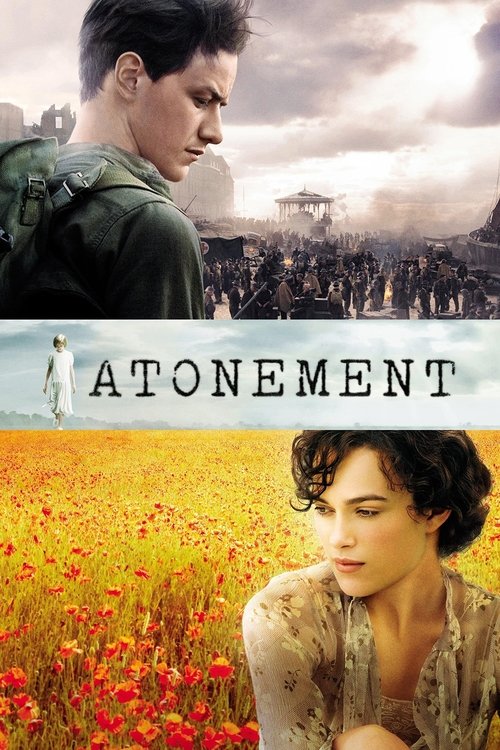
"Torn apart by betrayal. Separated by war. Bound by love."
Atonement - Ending Explained
⚠️ Spoiler Analysis
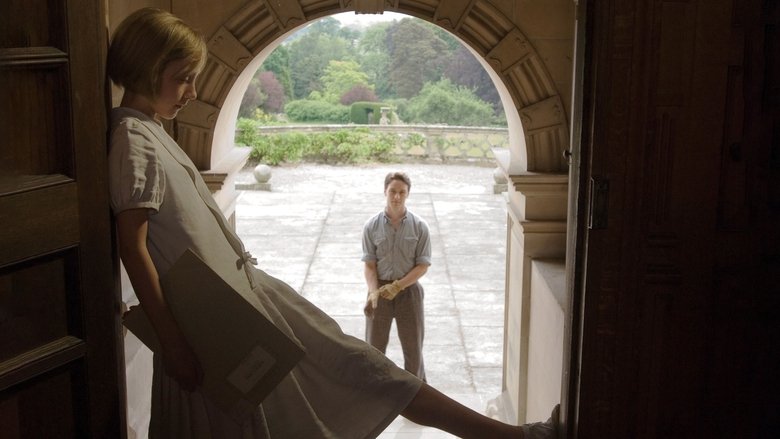
The emotional devastation of Atonement hinges entirely on its final, meta-fictional twist. For the majority of the film, the audience is led to believe that despite the horrors of war, Briony successfully visits Cecilia and Robbie in London, apologizes, and promises to clear Robbie's name. We are shown their survival and a glimpse of their eventual happy life in a seaside cottage. However, in the film's closing minutes, an elderly Briony reveals in a television interview that this entire reunion was fabricated for her final novel.
The crushing truth is that Robbie died of septicemia on the beaches of Dunkirk on exactly the day he was waiting to be evacuated, and Cecilia drowned shortly after in the Balham tube station bombing during the Blitz. They never saw each other again after Robbie was taken away in handcuffs in 1935. The scenes of Briony seeking their forgiveness, as well as the lovers' seaside cottage, were merely the wish-fulfillment of a dying, guilt-ridden author. Upon rewatching, the film transforms from a straightforward romantic tragedy into a haunting exploration of an unreliable narrator desperately using the medium of fiction to correct an unchangeable, fatal reality.
Alternative Interpretations
While the surface narrative suggests that Briony's final novel is a genuine, agonizing act of penance, many critics and viewers interpret her 'atonement' as an act of profound selfishness and arrogance. From this perspective, Briony never truly atones; instead, she uses Robbie and Cecilia's tragedy one last time for her own literary acclaim, playing god by giving them a fictitious happy ending merely to soothe her own guilty conscience. Her claim that she 'gave them their happiness' can be read as a final, narcissistic manipulation of reality.
Another interpretation questions the reliability of the entire film's structure. Since the elderly Briony reveals she wrote the story we just watched, it implies that the intensely romantic moments between Cecilia and Robbie—such as the library scene or Robbie's surreal, feverish final moments in Dunkirk—are entirely fabricated by Briony's imagination based on her adult understanding of love and war. Therefore, the depth of Robbie and Cecilia's actual relationship remains a mystery, accessible only through the biased, guilt-ridden lens of the woman who destroyed it.