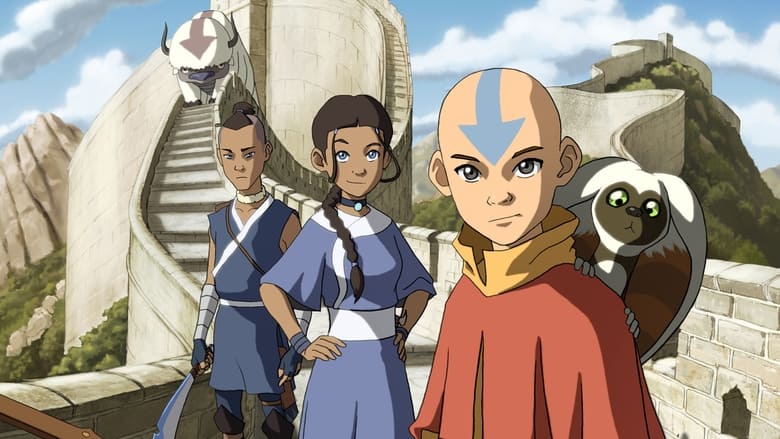
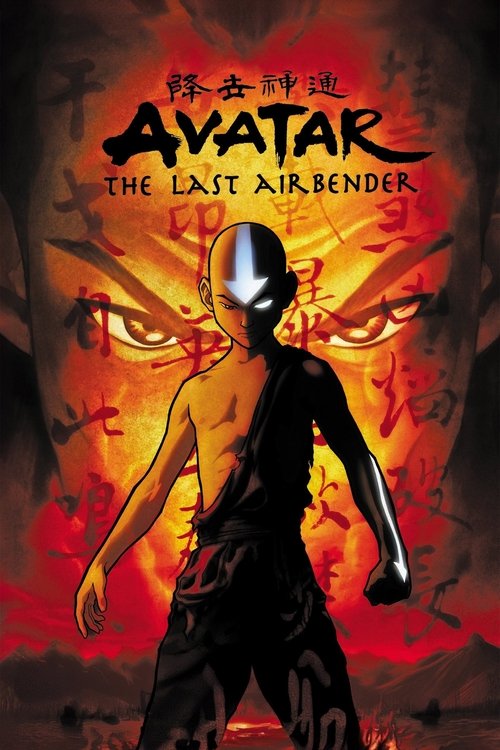
"Fire. Air. Water. Earth"
Cast: Zach Tyler Eisen, Mae Whitman, Jack De Sena, Dante Basco, Dee Bradley Baker
Avatar: The Last Airbender — Episode Highlights
Episode Highlights
The Storm
S1E12This episode is a critical turning point for the series, elevating its narrative depth. It masterfully parallels the backstories of Aang and Zuko, revealing why Aang ran away from his destiny and how Zuko received his scar and banishment. It transforms Zuko from a simple villain into a tragic, sympathetic figure and grounds Aang's journey in personal trauma and guilt.
"The Storm" established that the show was not just a children's cartoon but a complex character drama. It laid the emotional groundwork for the intertwined destinies of the hero and the anti-hero, making their eventual convergence more meaningful and highlighting the immense burdens both young boys carry.
The Siege of the North, Part 2
S1E20The spectacular finale of the first season showcases a massive battle at the Northern Water Tribe. Key moments include Admiral Zhao killing the Moon Spirit, plunging the world into darkness, and Aang merging with the Ocean Spirit to create a gigantic, vengeful water monster to decimate the Fire Nation fleet. It also features Princess Yue's ultimate sacrifice to restore the Moon Spirit.
This episode demonstrated the epic scale of the series and the immense spiritual power of the Avatar. It was a stunning conclusion to Aang's waterbending training, established the high stakes of the war, and showed that victory often comes at a great personal cost, setting a mature tone for the seasons to follow.
Zuko Alone
S2E7In this standalone episode, Zuko, now separated from his uncle, wanders the Earth Kingdom as a refugee. He befriends a young boy and his family, and for the first time, finds a measure of peace. The episode delves into his painful childhood and his complicated relationship with his mother and his cruel sister, Azula. It culminates in him revealing his identity as the Fire Prince to defend the family, only to be rejected by them.
Considered one of the series' best episodes, "Zuko Alone" is a masterclass in character study. It provides crucial insight into Zuko's psyche and motivations, showing that his internal struggle is not just about honor, but about a deep-seated desire for love and acceptance that was denied to him by his family. It powerfully illustrates that his identity is a source of both pride and shame.
The Tales of Ba Sing Se
S2E15An anthology episode featuring a series of short vignettes about the main characters' lives within the massive city of Ba Sing Se. The most famous and poignant segment is "The Tale of Iroh," which follows him as he helps various city residents before building a memorial for his deceased son, Lu Ten, on his birthday, tearfully singing "Leaves from the Vine."
This episode provides a beautiful, quiet moment for character development amidst the epic plot. Iroh's segment, in particular, adds incredible emotional depth to his character and is famous for its heart-wrenching tribute to his original voice actor, Mako, who had recently passed away.
The Crossroads of Destiny
S2E20The dark and shocking finale of the second season sees all the storylines converge in Ba Sing Se. Aang is mortally wounded by Azula while in the Avatar State, Zuko betrays his uncle to side with his sister, and the seemingly impenetrable city of Ba Sing Se falls to the Fire Nation.
This episode marks the lowest point for the heroes and is a stunning subversion of expectations. It demonstrates Zuko's continued internal conflict and his inability to break free from his past, while also showing the terrifying efficiency of Azula. The fall of Ba Sing Se and Aang's near-death experience completely upend the balance of power, setting a grim stage for the final season.
The Avatar and the Fire Lord
S3E6The episode explores the parallel histories of Avatar Roku and Fire Lord Sozin, who began as best friends. Through Aang and Zuko experiencing visions of their respective predecessors' memories, it is revealed how Sozin's ambition and Roku's hesitation led to the start of the Hundred Year War. It also reveals a shocking secret: Zuko is Roku's great-grandson.
This episode is a pivotal moment in the series' mythology and for Zuko's character arc. It reframes the war not just as a conflict between good and evil, but as the result of a broken friendship. The revelation of Zuko's heritage solidifies his internal conflict as a literal battle between the legacies of the Avatar and the Fire Lord raging within him.
Sozin's Comet (Parts 1-4)
S3E18The four-part series finale is an epic conclusion to the entire saga. It features multiple climactic battles: Zuko and Katara versus Azula, Sokka, Toph, and Suki against the Fire Nation airship fleet, the Order of the White Lotus liberating Ba Sing Se, and Aang's final confrontation with the super-powered Fire Lord Ozai. Aang struggles with the moral dilemma of killing Ozai, ultimately using a newly-learned ability, energybending, to take away Ozai's firebending powers permanently.
Widely regarded as one of the best series finales of all time, "Sozin's Comet" provides a deeply satisfying resolution to every major character arc and plotline. Aang's final solution is a perfect culmination of his journey, honoring his pacifist beliefs while still finding a way to defeat evil. The episode is a masterwork of animation, storytelling, and emotional payoff, cementing the series' legacy.
Explore More About This Movie
Dive deeper into specific aspects of the movie with our detailed analysis pages