
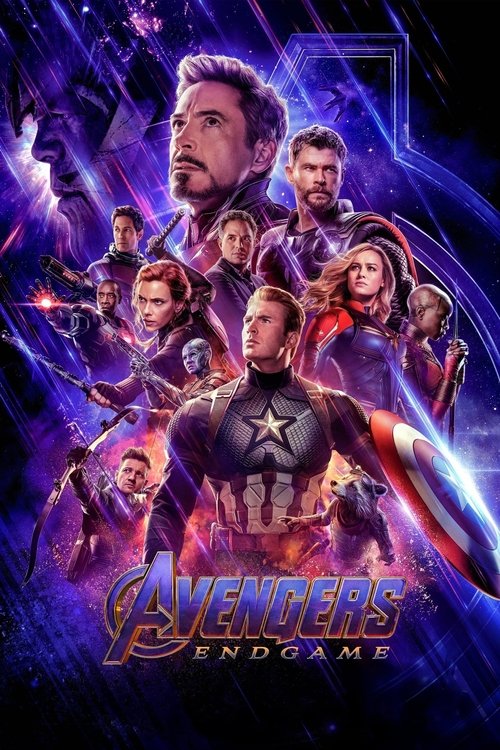
"Avenge the fallen."
Avengers: Endgame - Symbolism & Philosophy
Symbols & Motifs
Captain America's Broken Shield
The shield, a symbol of hope and unwavering resilience, being shattered by Thanos represents the complete and utter defeat of the Avengers and the despair that follows. However, an aged Steve passing on a new, whole shield to Sam Wilson at the end symbolizes the passing of a legacy and the continuation of hope for a new generation of heroes.
During the final battle, Thanos breaks Captain America's vibranium shield with his double-bladed sword, a moment of profound visual defeat for the hero. Later, at the film's conclusion, an elderly Steve Rogers presents a pristine version of the shield to Sam Wilson (Falcon), anointing him as the new Captain America, signifying that the ideal is more enduring than the man or the object.
Mjolnir (Thor's Hammer)
Mjolnir symbolizes worthiness and the validation of a hero's character. Captain America being able to lift the hammer is a powerful confirmation of his unwavering moral compass and intrinsic goodness. For Thor, reclaiming it, even temporarily, is a step in overcoming his depression and self-doubt, reminding him that he is still worthy despite his perceived failures.
In a desperate moment during the final fight against Thanos, Mjolnir flies into Captain America's hand, proving he has always been worthy. The entire theater audience often erupted in cheers at this moment. Earlier, when Thor travels back to 2013 Asgard, he summons the hammer, and its return to his hand brings him a profound sense of relief and renewed purpose.
The Infinity Gauntlet / Nano Gauntlet
The gauntlet represents immense power and the ability to reshape reality itself, but also the immense burden and cost of that power. Thanos's gauntlet is a tool of destruction born from a twisted sense of order, while the Nano Gauntlet created by the Avengers is a tool of restoration and sacrifice. Wielding it requires an immense sacrifice, as seen with both Hulk and Iron Man.
Thanos uses his completed Infinity Gauntlet at the end of Infinity War to erase half of life. In Endgame, the Avengers build their own 'Nano Gauntlet' to reverse the snap. Hulk, strong enough to withstand the gamma radiation, performs the reverse snap but is severely injured. In the final moments of the battle, Tony Stark uses the stones in his own suit to perform the final snap, sacrificing his life to destroy Thanos and his army.
The Final 'Clang' Sound
The sound of a hammer hitting an anvil, which plays over the Marvel Studios logo at the very end of the credits, symbolizes the full-circle journey of the Marvel Cinematic Universe's 'Infinity Saga.' It is a direct callback to its beginning, honoring the character who started it all.
Instead of a post-credits scene, the film ends with the sound of Tony Stark forging his first Iron Man armor in a cave back in the 2008 film Iron Man. This serves as a poignant and sentimental tribute to Tony Stark's legacy and the origin of the entire MCU.
Philosophical Questions
Is it better to accept a tragic past or to risk everything to change it?
The film delves into this question through its characters' varied reactions to 'The Snap.' Tony Stark builds a new life and is hesitant to undo the past for fear of losing what he has gained. In contrast, Steve Rogers and Natasha Romanoff are unable to move on, dedicating their lives to the hope of reversing the tragedy. The 'Time Heist' plot is a direct exploration of this dilemma, weighing the dangers of meddling with the past against the moral imperative to correct a universal catastrophe. The film ultimately champions the idea of fighting for a better future, but acknowledges the profound personal costs and ethical complexities involved.
What is the true measure of a hero: their power or their sacrifice?
Endgame consistently argues that sacrifice is the ultimate measure of heroism. While characters like Captain Marvel and Thor possess god-like powers, the most pivotal moments belong to acts of self-sacrifice. Black Widow, one of the least 'super' powered Avengers, makes a choice that is essential for victory. The film's climax reinforces this: Thanos, the most powerful being, is defeated not by brute force, but by Tony Stark—a mortal man in a suit of armor—making the conscious decision to sacrifice his life for the universe. This suggests that true heroism is defined by character and willingness to give everything, not by inherent ability.
Can you truly find peace without resolving the past?
The film suggests that peace is intertwined with resolving past traumas and regrets. Steve Rogers only finds his personal peace by literally returning to the past to live the life he lost. Tony Stark makes peace with his father's memory by meeting him in 1970, gaining a new perspective that allows him to fully embrace his own role as a father. Thor begins his journey toward healing only after a conversation with his mother in the past helps him reframe his sense of self-worth. The narrative implies that moving forward requires a reconciliation with the past, whether through memory, conversation, or, in this case, a time machine.
Core Meaning
The core meaning of Avengers: Endgame revolves around the themes of hope, sacrifice, and the enduring nature of heroism in the face of insurmountable loss. The film explores the profound impact of grief and failure on its heroes, portraying them not as invincible icons, but as vulnerable individuals struggling to move on. The narrative suggests that true heroism isn't about never falling, but about the courage to rise again, to fight for what was lost, no matter the odds. It posits that moving forward doesn't mean forgetting the past, but rather drawing strength from it to build a better future.
Ultimately, the director's message is that legacy is defined by the sacrifices made for the greater good. Tony Stark's journey from a self-serving industrialist to a selfless savior encapsulates this idea, culminating in the ultimate sacrifice to ensure the universe's survival. The film serves as a poignant farewell, emphasizing that 'part of the journey is the end' and that even in endings, there can be meaning, redemption, and the seeds of a new beginning.