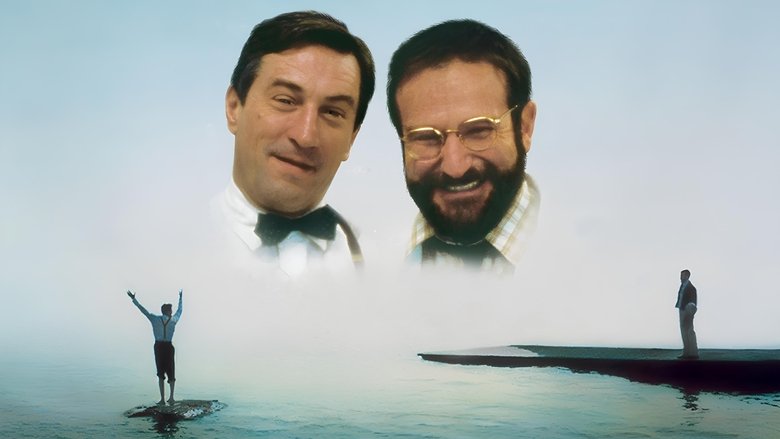
"There is no such thing as a simple miracle."
Director: Penny Marshall
Cast: Robert De Niro, Robin Williams, John Heard, Julie Kavner, Penelope Ann Miller
Awakenings — Movie Quotes
Memorable Quotes
The human spirit is more powerful than any drug.
Context
Delivered during Sayer's closing address to the hospital donors after the effects of L-Dopa have worn off.
Meaning
This is the thematic heart of the film, asserting that while medicine may fail, the inherent value and resilience of the individual remain intact and must be nourished.
Read the newspaper. What does it say? All bad... People have forgotten what it is to be alive.
Context
Leonard calls Sayer in the middle of the night, overwhelmed by the joy of his awakening and the beauty of existence.
Meaning
A critique of the modern world, where healthy people take their freedom and simple joys for granted while focusing only on negativity.
I'm not a thing, I'm a person.
Context
Leonard demands his right to walk outside the hospital without an escort, frustrated by the institutional controls on his life.
Meaning
A powerful assertion of human dignity against a medical system that often views long-term patients as mere biological objects or "vegetables."
It's given to and taken away from all of us.
Context
Eleanor comforts a grieving Sayer after Leonard begins to regress, reminding him that the transience of life applies to everyone.
Meaning
Reflects the universal nature of the human condition—the fragility of life and the inevitability of loss, suggesting that the patients' tragedy is a concentrated version of the human experience.
Explore More About This Movie
Dive deeper into specific aspects of the movie with our detailed analysis pages