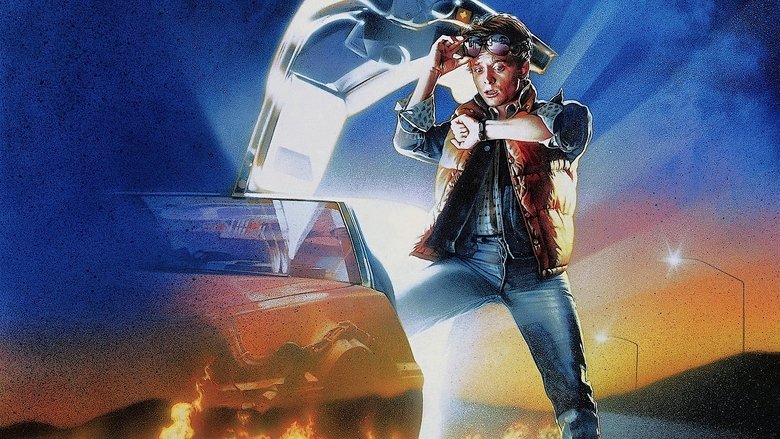
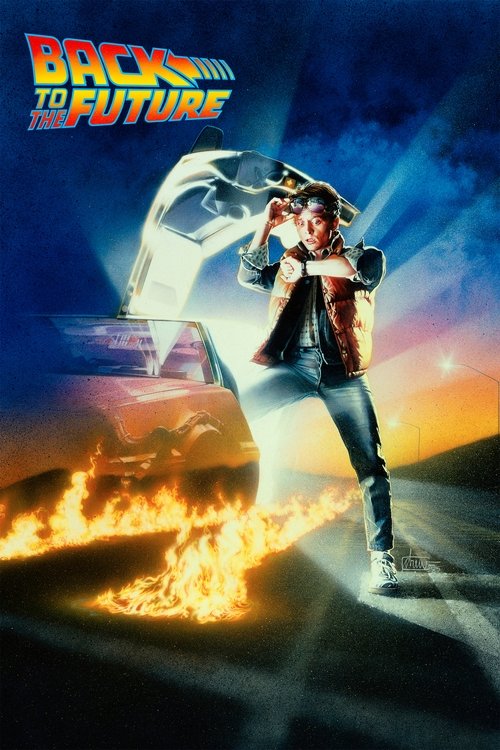
"He was never in time for his classes... He wasn't in time for his dinner... Then one day... he wasn't in his time at all."
Back to the Future - Symbolism & Philosophy
Symbols & Motifs
The DeLorean Time Machine
The DeLorean symbolizes the potential for change and the unpredictable nature of the future. Its stylish yet somewhat unreliable nature reflects the exciting but perilous journey of altering one's destiny. The fact that it's a car also ties into the American obsession with mobility and freedom.
The DeLorean is the vehicle that transports Marty through time, acting as the catalyst for the entire plot. Its gull-wing doors and stainless-steel body make it an iconic and futuristic-looking machine.
The Clock Tower
The clock tower represents the pivotal moments in time and the convergence of fate and choice. The lightning strike is a moment of cosmic intervention that allows for the seemingly impossible to happen, symbolizing the idea that sometimes, everything aligns to create a new future.
The Hill Valley clock tower is central to the film's climax. The flyer Marty has from the future details the exact moment the clock will be struck by lightning, providing the 1.21 gigawatts of electricity needed to power the DeLorean and send Marty back to 1985.
Marty's Photograph of his Siblings
The fading photograph is a visual representation of the fragility of existence and the direct consequences of Marty's actions in the past. It serves as a constant reminder of what is at stake, symbolizing the potential for Marty to be erased from existence if he fails in his mission.
As Marty's interference in the past causes his parents to not get together, his siblings begin to disappear from the photograph he carries. This visual cue raises the stakes and provides a tangible measure of his success or failure.
Philosophical Questions
To what extent do our pasts define our futures?
The film directly engages with this question by showing how altering past events can dramatically change the future. George McFly's transformation from a meek failure to a confident success is a direct result of a single altered event in his past. This suggests that while the past is influential, it is not an inescapable prison, and that individuals have the power to overcome their past circumstances and forge a new future.
Is it ethical to change the past, even if it is for the better?
Doc Brown initially holds a firm stance against altering the timeline, believing the consequences could be catastrophic. However, he himself is a beneficiary of a change to the past when Marty leaves him a letter warning him about the Libyans. The film leaves this question somewhat ambiguous. While Marty's changes to the past lead to a better future for his family, the film also acknowledges the potential dangers of meddling with time.
What is the nature of identity and how is it shaped by our relationships and experiences?
Marty's journey to the past forces him to see his parents in a new light, as individuals with their own histories and personalities outside of their roles as his parents. This challenges his perception of them and, in turn, his own identity. The film suggests that our identities are not fixed but are constantly being shaped by our relationships and the choices we make.
Core Meaning
The core meaning of "Back to the Future" revolves around the idea that our future is not written and is in our own hands. While Marty's journey into the past initially seems to be about correcting a mistake to ensure his own existence, it ultimately becomes a story of empowerment and self-determination. By influencing his father to stand up for himself, Marty not only saves his future but vastly improves it. The film suggests that with courage and conviction, individuals have the power to change their circumstances and create a better life. It champions the idea that one's destiny is not predetermined, but rather a product of the choices they make.