Back to the Future
"He was never in time for his classes... He wasn't in time for his dinner... Then one day... he wasn't in his time at all."
Overview
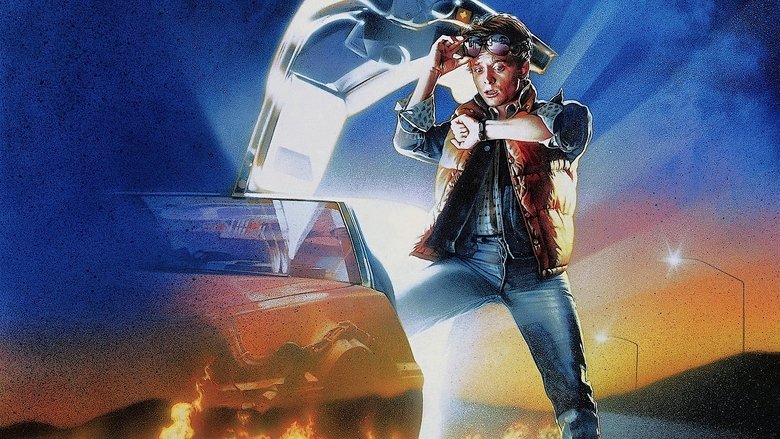
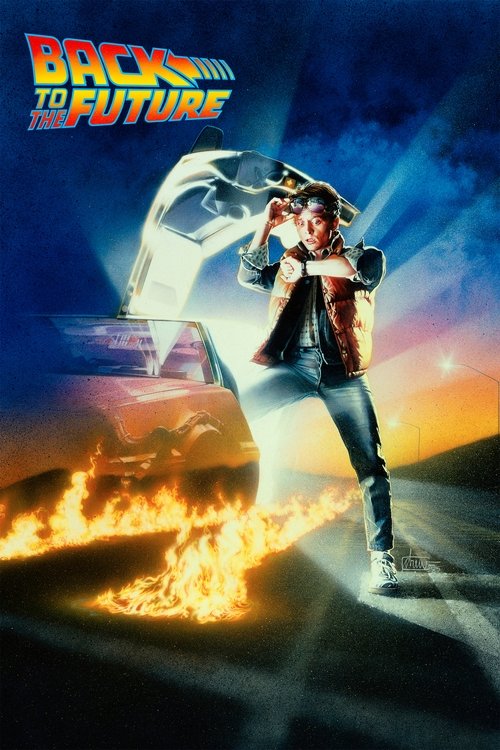
"Back to the Future" is a 1985 American science fiction film directed by Robert Zemeckis. The story follows Marty McFly, a teenager who is accidentally sent back to 1955 in a time-traveling DeLorean automobile invented by his eccentric friend, Dr. Emmett "Doc" Brown. While in the past, Marty inadvertently prevents his future parents from falling in love, threatening his own existence. He must then find a way to make them fall in love and, with the help of the 1955 version of Doc Brown, return to his own time.
The film is a masterful blend of science fiction, adventure, comedy, and romance. It explores themes of family, destiny, and the consequences of one's actions. The narrative is tightly woven, with clever foreshadowing and callbacks that reward attentive viewers. The contrast between the optimistic, wholesome 1950s and the more cynical 1980s provides a rich source of humor and social commentary.
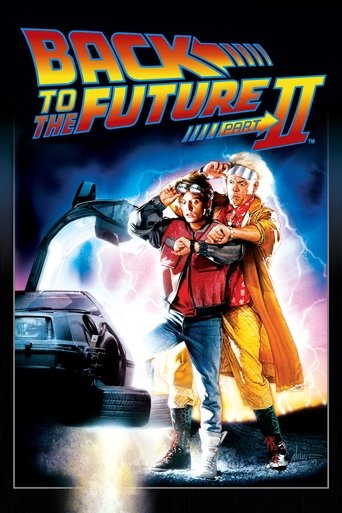
Core Meaning
The core meaning of "Back to the Future" revolves around the idea that our future is not written and is in our own hands. While Marty's journey into the past initially seems to be about correcting a mistake to ensure his own existence, it ultimately becomes a story of empowerment and self-determination. By influencing his father to stand up for himself, Marty not only saves his future but vastly improves it. The film suggests that with courage and conviction, individuals have the power to change their circumstances and create a better life. It champions the idea that one's destiny is not predetermined, but rather a product of the choices they make.
Thematic DNA
Destiny vs. Free Will
The film constantly plays with the tension between destiny and free will. Initially, Doc Brown is adamant about not altering the past for fear of creating time paradoxes. However, Marty's very presence in 1955 is a disruption of the timeline. The central conflict revolves around Marty's need to ensure his parents fall in love, suggesting a destined path that must be followed. Yet, the outcome shows that the future can be changed for the better through individual actions, as seen with George McFly's newfound confidence and the resulting improved future for the McFly family. In the end, Doc's message that "Your future is whatever you make it. So make it a good one," reinforces the theme of free will.
Family and Intergenerational Relationships
At its heart, "Back to the Future" is a story about family. Marty's journey to the past allows him to see his parents not as the world-weary adults he knows, but as teenagers with their own hopes, fears, and flaws. This experience gives him a new perspective and a deeper understanding of them. The film explores the idea that our parents were once young and faced similar challenges to our own. It also highlights the impact that one generation's actions can have on the next.
The Power of Choice and Courage
George McFly's transformation from a timid, bullied teenager to a confident man who stands up to Biff is a central element of the film. This change is a direct result of Marty's encouragement and the choices George makes. His act of courage in punching Biff not only wins him Lorraine's affection but also reshapes his entire future, turning him into a successful author. The film suggests that a single moment of bravery can have a profound and lasting impact on one's life.
Nostalgia and the Past
The film taps into a sense of nostalgia for the 1950s, portraying it as a simpler, more innocent time. However, it also subverts this nostalgia by showing the social constraints and less-than-ideal aspects of the era. The contrast between the 1950s and the 1980s provides much of the film's humor and social commentary, exploring how much and how little has changed over thirty years.
Character Analysis
Marty McFly
Michael J. Fox
Motivation
Marty's primary motivation is to get back to his own time, 1985. This goal becomes intertwined with the more urgent need to ensure his parents fall in love so that he will be born. He is also driven by a desire to help his friend, Doc Brown, and to see his family in a better situation.
Character Arc
Marty starts as a typical teenager who feels like his family is stuck in a rut. His journey to the past forces him to take on a more active role in shaping his own destiny and that of his family. He learns to be resourceful, brave, and to appreciate his parents on a deeper level. By the end of the film, he has not only saved his own existence but has also inadvertently improved his family's future, demonstrating significant personal growth.
Dr. Emmett "Doc" Brown
Christopher Lloyd
Motivation
Doc's main motivation is the pursuit of scientific discovery, specifically the invention and successful operation of the time machine. He is also deeply loyal to Marty and is motivated to help him return to 1985 and fix the damage to the timeline.
Character Arc
Doc Brown begins as a brilliant but eccentric scientist who is seen as a bit of a crackpot by the community. His arc in the first film is more about reaffirming his scientific genius and his friendship with Marty. He grapples with the ethical implications of time travel, initially refusing to know about the future. However, he ultimately chooses to use the information from Marty to save his own life, showing a shift in his rigid scientific principles when faced with his own mortality.
George McFly
Crispin Glover
Motivation
George's initial motivation is simply to avoid conflict and be left alone. He has a secret passion for writing science fiction and a crush on Lorraine Baines, but he lacks the confidence to pursue either. Marty's intervention provides him with the motivation to overcome his fears and go after what he wants.
Character Arc
George undergoes the most significant character arc in the film. He starts as a timid, bullied man who is afraid of confrontation. Through Marty's coaching and a pivotal moment of courage, he learns to stand up for himself against Biff Tannen. This act of bravery not only wins him the affection of Lorraine but also transforms his entire future, turning him into a confident and successful author.
Biff Tannen
Thomas F. Wilson
Motivation
Biff is motivated by a desire for power and control over others, particularly George and Lorraine. He is arrogant, aggressive, and not particularly intelligent, relying on physical intimidation to get his way.
Character Arc
Biff's arc is the inverse of George's. He starts as a dominant and intimidating bully who gets whatever he wants through aggression. By the end of the film, in the altered 1985, his power has been stripped away, and he is reduced to a subservient and somewhat pathetic figure who works for George McFly. His defeat is a direct result of George's newfound courage.
Symbols & Motifs
The DeLorean Time Machine
The DeLorean symbolizes the potential for change and the unpredictable nature of the future. Its stylish yet somewhat unreliable nature reflects the exciting but perilous journey of altering one's destiny. The fact that it's a car also ties into the American obsession with mobility and freedom.
The DeLorean is the vehicle that transports Marty through time, acting as the catalyst for the entire plot. Its gull-wing doors and stainless-steel body make it an iconic and futuristic-looking machine.
The Clock Tower
The clock tower represents the pivotal moments in time and the convergence of fate and choice. The lightning strike is a moment of cosmic intervention that allows for the seemingly impossible to happen, symbolizing the idea that sometimes, everything aligns to create a new future.
The Hill Valley clock tower is central to the film's climax. The flyer Marty has from the future details the exact moment the clock will be struck by lightning, providing the 1.21 gigawatts of electricity needed to power the DeLorean and send Marty back to 1985.
Marty's Photograph of his Siblings
The fading photograph is a visual representation of the fragility of existence and the direct consequences of Marty's actions in the past. It serves as a constant reminder of what is at stake, symbolizing the potential for Marty to be erased from existence if he fails in his mission.
As Marty's interference in the past causes his parents to not get together, his siblings begin to disappear from the photograph he carries. This visual cue raises the stakes and provides a tangible measure of his success or failure.
Memorable Quotes
Roads? Where we're going, we don't need roads.
— Dr. Emmett Brown
Context:
Doc says this to Marty and Jennifer as he returns from the future in the now flying DeLorean. He is about to take them to 2015 to deal with a problem concerning their children, setting up the sequel.
Meaning:
This iconic line, delivered at the very end of the film, perfectly encapsulates the sense of adventure and wonder that defines the movie. It signifies that the possibilities are limitless and that the future holds even more incredible experiences. It has become a cultural touchstone for innovation and looking ahead to the future.
Great Scott!
— Dr. Emmett Brown
Context:
Doc exclaims this at various points throughout the film whenever he is faced with a shocking or incredible revelation, such as when he first learns that Marty is from the future.
Meaning:
This is Doc Brown's signature expression of surprise or astonishment. It's a somewhat old-fashioned exclamation that adds to his eccentric and quirky character. The phrase became so popular after the film that it was revived in the American lexicon.
Wait a minute, Doc. Are you telling me you built a time machine... out of a DeLorean?
— Marty McFly
Context:
Marty says this in the Twin Pines Mall parking lot when Doc first unveils his creation. It's a moment of disbelief and awe as Marty processes the incredible reality of what his friend has accomplished.
Meaning:
This line highlights the absurdity and brilliance of Doc's invention. The choice of a DeLorean, a car with a troubled production history and a futuristic look, adds a layer of humor and style to the concept of the time machine. It underscores the blend of the mundane and the extraordinary that is central to the film's appeal.
If you put your mind to it, you can accomplish anything.
— George McFly
Context:
Marty first says this to his father in 1955 to encourage him to ask Lorraine to the dance. In the altered 1985, George, now a successful author, repeats the line to Marty, bringing the theme full circle.
Meaning:
This line is a key part of the film's central message about self-empowerment and the ability to change one's destiny. It is first said by Marty to his father in 1955 and then repeated by the new, confident George to Marty in the altered 1985, showing how much he has taken the lesson to heart.
Philosophical Questions
To what extent do our pasts define our futures?
The film directly engages with this question by showing how altering past events can dramatically change the future. George McFly's transformation from a meek failure to a confident success is a direct result of a single altered event in his past. This suggests that while the past is influential, it is not an inescapable prison, and that individuals have the power to overcome their past circumstances and forge a new future.
Is it ethical to change the past, even if it is for the better?
Doc Brown initially holds a firm stance against altering the timeline, believing the consequences could be catastrophic. However, he himself is a beneficiary of a change to the past when Marty leaves him a letter warning him about the Libyans. The film leaves this question somewhat ambiguous. While Marty's changes to the past lead to a better future for his family, the film also acknowledges the potential dangers of meddling with time.
What is the nature of identity and how is it shaped by our relationships and experiences?
Marty's journey to the past forces him to see his parents in a new light, as individuals with their own histories and personalities outside of their roles as his parents. This challenges his perception of them and, in turn, his own identity. The film suggests that our identities are not fixed but are constantly being shaped by our relationships and the choices we make.
Alternative Interpretations
One popular fan theory suggests that George McFly knew that "Calvin Klein" was his time-traveling son. Proponents of this theory point to George's love of science fiction and the various anachronistic references Marty makes as evidence that George would have figured it out over the ensuing 30 years. Another darker theory posits that Doc Brown was suicidal before his successful time travel experiment, interpreting his line about standing on the toilet to hang a clock as a euphemism and his willingness to stand in the path of the DeLorean as a sign of his desperation. There is also a theory that Doc Brown murders the Marty of the altered timeline to prevent a paradox, though this has been dismissed by those involved with the film.
Cultural Impact
"Back to the Future" was a massive box office success, becoming the highest-grossing film of 1985. It has since become a cultural phenomenon, beloved by audiences for its humor, heart, and imaginative storytelling. The film has had a lasting impact on popular culture, with its iconic DeLorean time machine, memorable quotes, and endearing characters becoming instantly recognizable. It spawned two successful sequels, an animated series, a theme park ride, and a stage musical, solidifying its place as a major media franchise. The film is often cited as a classic of 1980s cinema and one of the greatest science fiction films ever made. In 2007, it was selected for preservation in the United States National Film Registry by the Library of Congress for being "culturally, historically, or aesthetically significant."
Audience Reception
"Back to the Future" was met with widespread acclaim from audiences upon its release and continues to be a beloved classic. Audiences praised the film's clever and witty screenplay, the charismatic performances of Michael J. Fox and Christopher Lloyd, its thrilling action sequences, and its perfect blend of science fiction, comedy, and heart. The film's nostalgic depiction of the 1950s and its optimistic tone also resonated strongly with viewers. It holds a high rating on review aggregation sites like Rotten Tomatoes and IMDb, indicating its enduring popularity with audiences of all ages.
Interesting Facts
- The idea for the film came to co-writer Bob Gale when he found his father's high school yearbook and wondered if he would have been friends with his father as a teenager.
- The script was reportedly rejected over 40 times by various studios before Universal Pictures finally greenlit it.
- Eric Stoltz was originally cast as Marty McFly and filmed for several weeks before the director and producers decided he wasn't right for the part and replaced him with Michael J. Fox.
- The time machine was originally conceived as a refrigerator, but the idea was scrapped due to concerns that children might try to imitate it and get trapped inside.
- Christopher Lloyd initially turned down the role of Doc Brown.
- The film's title was almost changed to "Spaceman from Pluto" at the suggestion of a studio executive, but Steven Spielberg managed to prevent the change.
- John DeLorean, the creator of the DeLorean car, sent a letter to the filmmakers thanking them for immortalizing his creation.
Easter Eggs
Twin Pines Mall becomes Lone Pine Mall.
At the beginning of the film, the mall where Doc demonstrates the DeLorean is called "Twin Pines Mall." When Marty travels to 1955, he crashes through one of two pine trees on the Peabody farm, the future site of the mall. When he returns to 1985, the name of the mall has changed to "Lone Pine Mall," reflecting this change to the past.
A reference to Stanley Kubrick's "Dr. Strangelove" can be seen on Doc's amplifier.
In the opening scene, the amplifier that Marty plugs his guitar into is labeled "CRM 114." This is a nod to Stanley Kubrick, who used this designation for equipment in several of his films, including "Dr. Strangelove."
A foreshadowing of the clock tower scene appears in Doc's workshop.
In the opening sequence, among the many clocks in Doc's workshop, there is one that depicts a man hanging from the hands of a clock. This is a direct visual reference to a famous scene from the 1923 silent film "Safety Last!" starring Harold Lloyd, and it foreshadows Doc Brown's own predicament at the climax of the film where he hangs from the Hill Valley clock tower.
A Roger Rabbit doll can be seen in an antique store in the sequel.
In "Back to the Future Part II," when Marty looks in the window of an antique store in 2015, a Roger Rabbit doll is visible. This is an inside joke, as director Robert Zemeckis also directed "Who Framed Roger Rabbit," which also starred Christopher Lloyd.
⚠️ Spoiler Analysis
Click to reveal detailed analysis with spoilers
Frequently Asked Questions
Explore More About This Movie
Dive deeper into specific aspects of the movie with our detailed analysis pages
Comments (0)
No comments yet. Be the first to share your thoughts!