
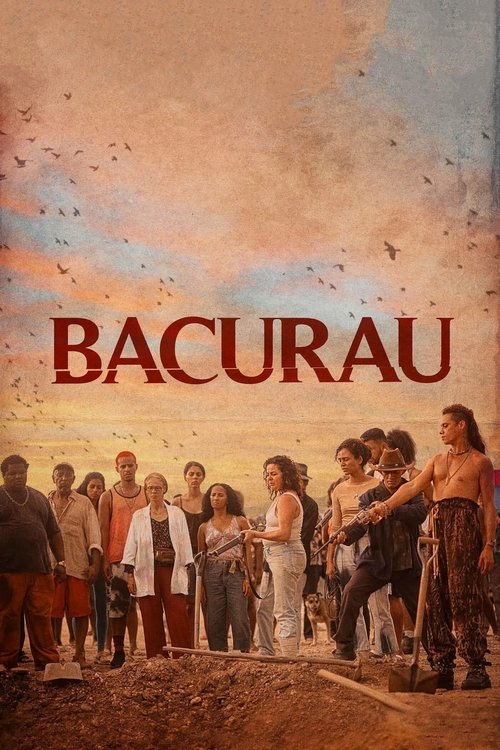
"If you come, come in peace"
Bacurau - Ending Explained
⚠️ Spoiler Analysis
The film meticulously builds tension by hiding the true nature of the threat. Initially, the strange events (loss of cell service, maps disappearing, the UFO drone) suggest a sci-fi mystery or government conspiracy. The twist reveals that a group of wealthy, sociopathic Western tourists, led by Michael (Udo Kier), have paid corrupt mayor Tony Jr. to isolate the town so they can hunt the residents for sport, scoring points for each kill.
However, the true subversion of the film is that Bacurau is not a helpless victim. The villagers are descendants of rebels and outlaws; they take a psychotropic communal drug to prepare for battle, unlock their history-filled museum, and arm themselves with vintage weapons. In the climax, the villagers brutally ambush and slaughter the hunters one by one.
Michael is captured alive, mockingly judged by the town, and buried alive in an underground cell. The mayor is tied naked to a donkey and banished. The ending recontextualizes the entire film: the hunters walked into a trap set by history itself, realizing too late that the town's bloody past was merely sleeping.
Alternative Interpretations
The Alien Invasion Allegory: Some view the film strictly through the lens of science fiction, where the foreign hunters represent an 'alien' invasion from the Global North. Their absolute lack of empathy, bizarre score-keeping via earpieces, and use of the UFO drone code them as extraterrestrials attacking an isolated human outpost.
The Purgatory/Supernatural Reading: Given the magical realist elements—such as the ghostly apparitions of the matriarch Carmelita, the mysterious psychotropic pills the town takes, and the almost mythic invincibility of the villagers at the end—some interpret the town of Bacurau as a supernatural space or a quilombo of the afterlife that traps and punishes wicked outsiders.
The Critique of Internalized Racism: The characters of the southern Brazilian bikers, who aid the foreigners but are ultimately rejected and murdered by them for not being 'white enough,' serve as a critique of internalized racism and classism within Brazil. It shows how the privileged classes of the Global South align themselves with the Global North, only to be deemed equally disposable.