Bacurau
A hallucinatory neo-Western that pulsates with the fierce, defiant heartbeat of rural Brazil. As predatory outsiders descend upon a forgotten town, the community's buried history rises up to swallow them whole, painting the outback in righteous blood.
Bacurau

Bacurau

"If you come, come in peace"

29 August 2019 Brazil 131 min ⭐ 7.7 (1,121)
Director: Kleber Mendonça Filho Juliano Dornelles
Cast: Bárbara Colen, Thomás Aquino, Silvero Pereira, Sônia Braga, Udo Kier
Thriller Mystery Western
Neocolonialism and Imperialism Community and Solidarity Historical Erasure and Collective Memory Political Corruption and State Violence
Budget: $1,430,000
Box Office: $3,554,178

Overview

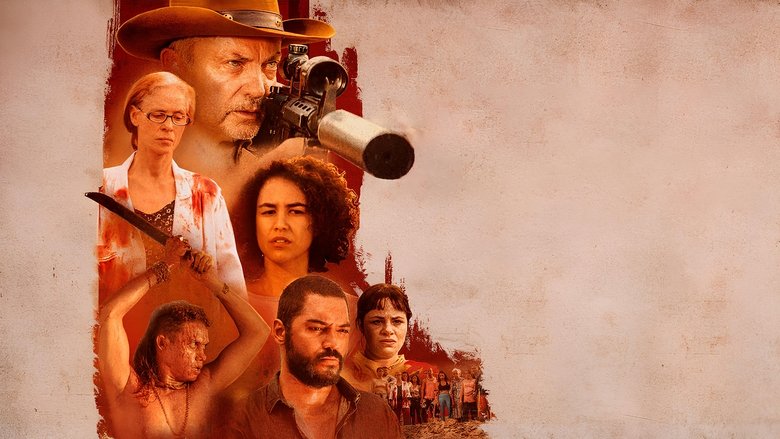
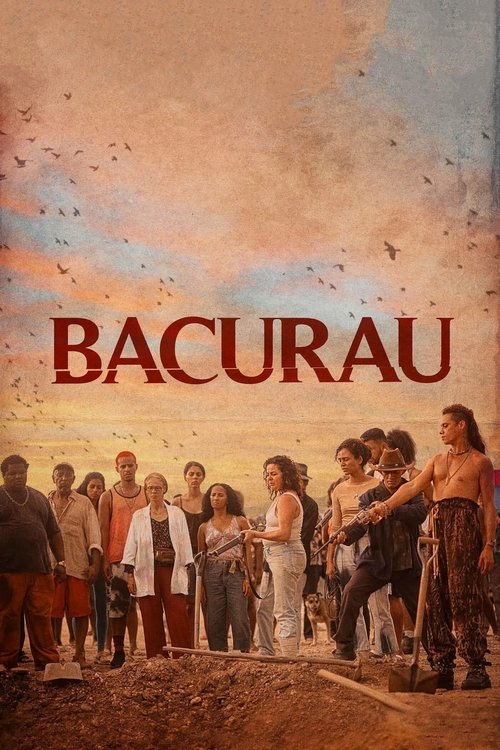
In the near future, a young woman named Teresa returns to her remote hometown of Bacurau in the Brazilian sertão (outback) for the funeral of her grandmother, Carmelita, the village matriarch. The town is already suffering from systemic neglect and a water embargo enforced by a corrupt local politician, Tony Jr., but a deeper, more surreal threat soon begins to manifest.

Slowly, bizarre occurrences start isolating the town from the rest of the world. Bacurau suddenly disappears from all digital maps, cell service drops dead, and a mysterious flying saucer-like drone is spotted tailing residents. When bullet-riddled water trucks and murdered locals are discovered, the town realizes they are actively being hunted by an unknown enemy.

It is revealed that a group of heavily armed, wealthy foreign tourists, led by the cold-blooded German Michael, have paid to use Bacurau as a private hunting ground for sport. Unbeknownst to the arrogant invaders, the diverse and tightly-knit community of Bacurau—including a local doctor, an ex-hitman, and a fiercely defended rebel—refuses to be victims, banding together to mount a brutal and ingenious defense of their home.

Core Meaning

Kleber Mendonça Filho and Juliano Dornelles crafted Bacurau as a blistering critique of neocolonialism, imperialism, and the political neglect of Brazil’s rural populations.

The film acts as an allegory for how the Global North historically and currently exploits the Global South, viewing its people as disposable resources or mere targets for violent sport. However, the directors also deliver a powerful message of resistance and community solidarity. They assert that marginalized communities possess a rich, unbreakable history and collective strength.

By blending genre tropes, the film suggests that survival against systemic and imperial violence requires radical unity, a deep connection to one's roots, and the willingness to fight back fiercely against oppressors.

Thematic DNA

Neocolonialism and Imperialism 30%
Community and Solidarity 25%
Historical Erasure and Collective Memory 25%
Political Corruption and State Violence 20%

Neocolonialism and Imperialism

Revealed through the wealthy American and European tourists who literally buy the right to hunt the villagers, viewing them as primitive and expendable. This reflects both the historical and modern exploitation of Latin America by foreign powers.

Community and Solidarity

The town of Bacurau operates as an egalitarian, tightly-knit unit. Despite internal quirks, everyone from the town doctor to the local outlaw unites to defend their home, proving that collective action is their ultimate weapon.

Historical Erasure and Collective Memory

The invaders attempt to erase Bacurau by literally removing it from satellite maps and cutting its communications. Conversely, the town's museum stands as a physical testament to their violent, rebellious history—a history the foreigners fatally underestimate.

Political Corruption and State Violence

Embodied by the sleazy mayor, Tony Jr., who restricts the town's water supply, dumps expired food, and sells his own citizens out to the foreign hunters, mirroring the systemic neglect by the Brazilian government.

Character Analysis

Teresa

Bárbara Colen

Archetype: The Returning Native / Catalyst
Key Trait: Observant and loyal

Motivation

To honor her matriarch grandmother and protect her community's legacy.

Character Arc

She begins as an observer returning home from the city for her grandmother's funeral, bridging the gap between the audience and the bizarre reality of Bacurau, and eventually takes up arms alongside her people.

Domingas

Sônia Braga

Archetype: The Healer / Cassandra
Key Trait: Uncompromising and fiercely blunt

Motivation

To heal and fiercely protect the physical and spiritual well-being of the villagers.

Character Arc

Initially seen as a bitter, drunken, and abrasive doctor who disrupts the funeral, she is later revealed to be fiercely protective of the town, stepping up as a sober, courageous leader during the siege.

Lunga

Silvero Pereira

Archetype: The Rebel Outlaw
Key Trait: Flamboyant, ruthless, and mythic

Motivation

Righteous vengeance against systemic oppressors and protecting their homeland.

Character Arc

Introduced as a mythic, wanted bandit hiding in a dam fortress. When the town is threatened, Lunga is called back, transforming from an exiled criminal into the savage, radical savior of Bacurau.

Michael

Udo Kier

Archetype: The Imperialist Villain
Key Trait: Arrogant and sociopathic

Motivation

The thrill of the hunt, exerting dominance, and quenching a sociopathic thirst for blood.

Character Arc

Arrives as the cold, calculating leader of the foreign hunting party, driven by a psychopathic code. His hubris leads him to underestimate the villagers, ending in his capture and humiliating defeat.

Pacote / Acácio

Thomás Aquino

Archetype: The Reformed Gunslinger
Key Trait: Pragmatic and world-weary

Motivation

Redemption through protecting his people and Teresa.

Character Arc

A former hitman whose violent exploits are famous on YouTube, he tries to live a peaceful life but is forced to embrace his deadly skills to organize the town's defense against the invaders.

Symbols & Motifs

The Flying Saucer Drone

Meaning:

Symbolizes the surveillance state, technological imperialism, and the alienated, dehumanizing gaze of the foreign invaders.

Context:

Used by the hunters to track the villagers. It resembles a 1950s B-movie UFO, highlighting how the advanced hunters view the locals as almost another species, yet the locals immediately recognize it as a cheap drone.

The Town Museum

Meaning:

Represents the unyielding history of the community, indigenous and quilombo resistance, and the collective memory that fuels their survival.

Context:

Characters repeatedly ask visitors, Have you been to our museum? It eventually becomes the site of the final bloody stand-off, proving that the town's history of rebellion is actively protecting them.

The Empty Coffins

Meaning:

A haunting premonition of death and the brutal calculus of survival. They represent both the systemic expectation of rural death and the violent consequences awaiting the invaders.

Context:

Early in the film, the water truck accidentally crushes empty coffins on the road. Later, the town prepares a specific number of coffins for the inevitable casualties, a nod to classic Spaghetti Westerns.

The Psychotropic Pill

Meaning:

Represents traditional medicine, spiritual unity, and the shedding of fear in the face of annihilation.

Context:

Before the final confrontation, the villagers consume a mysterious pill that alters their state of consciousness, physically and spiritually preparing them for the intense violence required to protect their home.

Memorable Quotes

Quem nasce em Bacurau é o quê? - Gente.

— Teacher Plínio and a student

Context:

Spoken in the schoolroom when the teacher is discussing the town's identity after realizing it has been wiped off the digital maps.

Meaning:

A profound assertion of basic humanity and dignity in the face of a government and world that treats them as disposable statistics.

Se for lá, vá na paz.

— Sign at the entrance of the town

Context:

Written on the welcoming sign of Bacurau, setting the tone for the film's brutal retaliation against the hunters.

Meaning:

A dual-layered warning: the town is welcoming to peaceful visitors, but it implies a severe, violent consequence for those who come with bad intentions.

Você já foi ao museu de Bacurau?

— Various townspeople

Context:

Asked repeatedly of the foreigners and visitors, who arrogantly ignore the rich history that ultimately spells their doom.

Meaning:

A recurring motif emphasizing that understanding the town's bloody, resilient history is essential to understanding the people themselves.

Philosophical Questions

What justifies the use of extreme violence in the pursuit of survival and decolonization?

The film challenges the audience's moral compass by presenting the villagers' brutal, gory retaliation against the hunters not as a tragedy, but as a necessary, cathartic act of self-defense against neocolonial extermination.

How does the preservation of history function as a weapon?

The invaders fail because they lack historical context, seeing the locals as primitive. The villagers draw strength from their history of rebellion (housed in their museum), suggesting that knowing one's past is vital to fighting future oppression.

Who gets to define what is 'civilized' versus 'savage'?

The wealthy foreigners view themselves as civilized and the villagers as savages, yet the foreigners hunt humans for sport. The film flips the binary, showing the rural community as culturally rich and empathetic, while the 'first-world' invaders are barbaric.

Alternative Interpretations

The Alien Invasion Allegory: Some view the film strictly through the lens of science fiction, where the foreign hunters represent an 'alien' invasion from the Global North. Their absolute lack of empathy, bizarre score-keeping via earpieces, and use of the UFO drone code them as extraterrestrials attacking an isolated human outpost.

The Purgatory/Supernatural Reading: Given the magical realist elements—such as the ghostly apparitions of the matriarch Carmelita, the mysterious psychotropic pills the town takes, and the almost mythic invincibility of the villagers at the end—some interpret the town of Bacurau as a supernatural space or a quilombo of the afterlife that traps and punishes wicked outsiders.

The Critique of Internalized Racism: The characters of the southern Brazilian bikers, who aid the foreigners but are ultimately rejected and murdered by them for not being 'white enough,' serve as a critique of internalized racism and classism within Brazil. It shows how the privileged classes of the Global South align themselves with the Global North, only to be deemed equally disposable.

Cultural Impact

Released during the early years of Jair Bolsonaro's far-right presidency in Brazil, Bacurau became an instant cultural phenomenon and a symbol of artistic resistance. It resonated deeply with a politically divided nation, acting as a cathartic revenge fantasy against government neglect, systemic racism, and the erosion of indigenous and marginalized rights.

Winning the Jury Prize at the 2019 Cannes Film Festival, it proved that Brazilian cinema could successfully blend high-minded political critique with pulp genre elements like horror and the Western. Critics globally praised it for reinventing the 'Weird Western' and the 'Post-Western,' using these frameworks to explore decolonialism and necropolitics.

The film generated numerous memes in Brazil, cementing its place in popular culture as a rallying cry against imperialism and fascism. Its portrayal of a resilient community taking up arms against wealthy oppressors struck a powerful chord worldwide, making it one of the most defining international films of 2019.

Audience Reception

Bacurau received overwhelming acclaim from both domestic and international audiences, though it also sparked significant polarization. Viewers heavily praised the film's audacious blending of genres, its tense pacing, and its unapologetic, anti-imperialist political messaging.

The cathartic, violent climax was often cited as a deeply satisfying cinematic payoff. Audiences highlighted the stellar performances, particularly from Sônia Braga, Silvero Pereira, and Udo Kier. However, the film faced criticism from some conservative viewers and critics who felt its political allegory was too blunt, Manichean, or heavy-handed, particularly in its portrayal of the foreign antagonists as purely evil caricatures.

Additionally, some viewers found the extreme violence and gore in the final act to be jarring. Despite these critiques, the overall verdict is that Bacurau is a modern masterpiece of resistance cinema and a thrilling, unpredictable ride.

Interesting Facts

  • The film's title, 'Bacurau', refers to a nocturnal bird (the nighthawk) found in the Brazilian sertão, known for its excellent camouflage, and is also local slang for the last night bus in Recife.
  • The closing credits proudly note that the production of the film created 800 local jobs, functioning as a pointed political statement against the economic policies of the right-wing government.
  • During the film's editing process, Brazil's National Museum tragically burned down. This real-life loss made the film's emphasis on the 'Bacurau Museum' and the preservation of history incredibly poignant.
  • The film uses a vintage Panavision lens, attempting to capture the look and feel of 1970s American cinema and classic Sergio Leone Spaghetti Westerns.
  • Many scenes in the film have become popular internet memes in Brazil, especially the scene where the child says, 'Those who are born in Bacurau, what are they called? People.'

Easter Eggs

The school is named 'Prof. João Carpinteiro'

This translates to 'John Carpenter', serving as a direct homage to the iconic American director. The film heavily draws from Carpenter's siege-based storytelling, particularly Assault on Precinct 13, and features one of his musical tracks.

The flying saucer drone

The drone visually references classic 1950s B-movie UFOs. It highlights the absurdity of the 'advanced' foreigners viewing the locals as an entirely different, primitive species, only for a local villager to immediately recognize it as a cheap drone.

The crushed empty coffins

Early in the film, the water truck crushes empty coffins on the road. This is a cinematic nod to classic Westerns like Django or A Fistful of Dollars, foreshadowing the high body count and signaling that the town is prepared for death.

Live executions on TV

A television broadcast in the background briefly shows public executions in São Paulo. This subtle world-building detail establishes the near-future dystopian setting and critiques the rising tide of extreme right-wing violence in modern Brazil.

⚠️ Spoiler Analysis

Click to reveal detailed analysis with spoilers

Frequently Asked Questions

Explore More About This Movie

Dive deeper into specific aspects of the movie with our detailed analysis pages

Comments (0)

Leave a comment

No comments yet. Be the first to share your thoughts!