
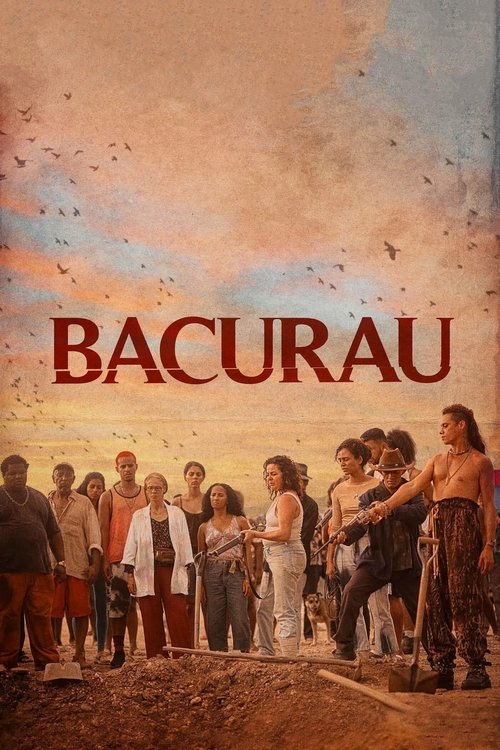
"If you come, come in peace"
Bacurau - Symbolism & Philosophy
Symbols & Motifs
The Flying Saucer Drone
Symbolizes the surveillance state, technological imperialism, and the alienated, dehumanizing gaze of the foreign invaders.
Used by the hunters to track the villagers. It resembles a 1950s B-movie UFO, highlighting how the advanced hunters view the locals as almost another species, yet the locals immediately recognize it as a cheap drone.
The Town Museum
Represents the unyielding history of the community, indigenous and quilombo resistance, and the collective memory that fuels their survival.
Characters repeatedly ask visitors, Have you been to our museum? It eventually becomes the site of the final bloody stand-off, proving that the town's history of rebellion is actively protecting them.
The Empty Coffins
A haunting premonition of death and the brutal calculus of survival. They represent both the systemic expectation of rural death and the violent consequences awaiting the invaders.
Early in the film, the water truck accidentally crushes empty coffins on the road. Later, the town prepares a specific number of coffins for the inevitable casualties, a nod to classic Spaghetti Westerns.
The Psychotropic Pill
Represents traditional medicine, spiritual unity, and the shedding of fear in the face of annihilation.
Before the final confrontation, the villagers consume a mysterious pill that alters their state of consciousness, physically and spiritually preparing them for the intense violence required to protect their home.
Philosophical Questions
What justifies the use of extreme violence in the pursuit of survival and decolonization?
The film challenges the audience's moral compass by presenting the villagers' brutal, gory retaliation against the hunters not as a tragedy, but as a necessary, cathartic act of self-defense against neocolonial extermination.
How does the preservation of history function as a weapon?
The invaders fail because they lack historical context, seeing the locals as primitive. The villagers draw strength from their history of rebellion (housed in their museum), suggesting that knowing one's past is vital to fighting future oppression.
Who gets to define what is 'civilized' versus 'savage'?
The wealthy foreigners view themselves as civilized and the villagers as savages, yet the foreigners hunt humans for sport. The film flips the binary, showing the rural community as culturally rich and empathetic, while the 'first-world' invaders are barbaric.
Core Meaning
Kleber Mendonça Filho and Juliano Dornelles crafted Bacurau as a blistering critique of neocolonialism, imperialism, and the political neglect of Brazil’s rural populations.
The film acts as an allegory for how the Global North historically and currently exploits the Global South, viewing its people as disposable resources or mere targets for violent sport. However, the directors also deliver a powerful message of resistance and community solidarity. They assert that marginalized communities possess a rich, unbreakable history and collective strength.
By blending genre tropes, the film suggests that survival against systemic and imperial violence requires radical unity, a deep connection to one's roots, and the willingness to fight back fiercely against oppressors.