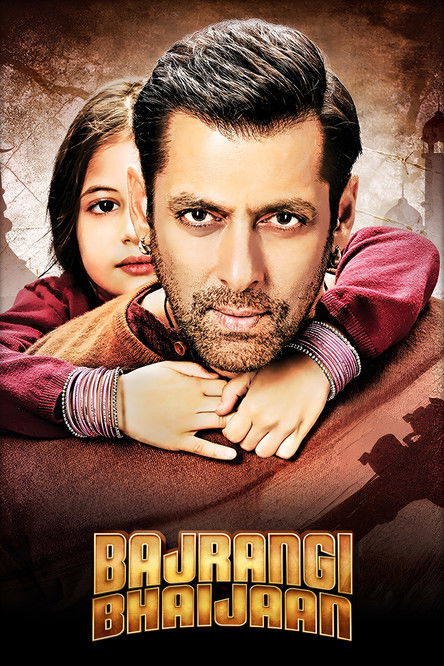
बजरंगी भाईजान
Bajrangi Bhaijaan - Symbolism & Philosophy
Symbols & Motifs
The Hanuman Gada Pendant
Symbolizes Pavan's faith, protection, and his role as a "guardian" figure. It also represents the constant presence of his moral compass throughout his journey into unknown territory.
Pavan gives the pendant to Shahida to protect her, and it becomes a recurring visual reminder of his commitment to her safety.
The Border Fence
Represents the physical and ideological barriers created by man. Its eventual opening signifies the triumph of public will and humanitarian spirit over bureaucratic rigidity.
The climax occurs at the barbed wire fence, where thousands of people from both sides gather to witness Pavan’s return and Shahida's reunion.
Cricket
A shared cultural passion that ironically reveals national differences while acting as a bridge. It is used to show that while the nations are divided, they speak the same cultural language.
The reveal that Shahida is Pakistani occurs when she cheers for a Pakistani cricketer during a match, shattering Pavan's assumption that she is Indian.
Philosophical Questions
Can personal morality supersede national security?
The film explores whether Pavan is a criminal for crossing the border illegally or a saint for saving a child. It poses the question of whether laws that prevent human kindness are themselves unethical.
Does silence have more power than speech?
Through Shahida's muteness, the film suggests that words often complicate and divide, while shared silence and visual empathy can communicate much deeper truths.
Core Meaning
The core meaning of the film lies in the concept of "Insaniyat" (Humanity) as a universal religion that transcends political borders, national identities, and religious dogmas. Director Kabir Khan uses the innocence of a child and the simplicity of a devotee to argue that human connection and empathy are more powerful than the centuries-old animosity between India and Pakistan. The film suggests that while governments and politics may create walls, the collective spirit of common people can tear them down.