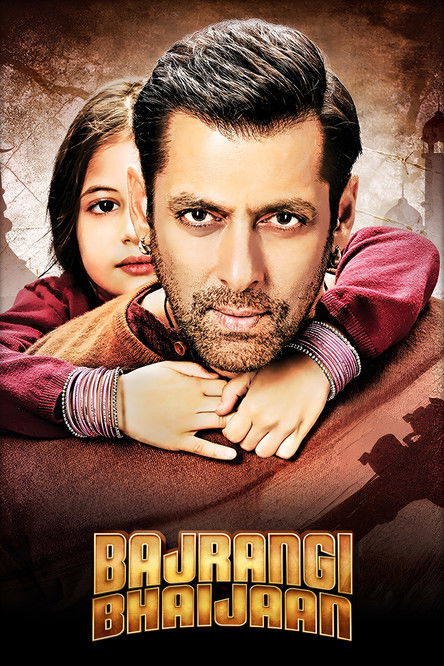
Bajrangi Bhaijaan
A vibrant odyssey of cross-border compassion where unyielding honesty and silent innocence dissolve the jagged divides of nations, painted with the golden hues of faith and human warmth.
Bajrangi Bhaijaan

Bajrangi Bhaijaan

बजरंगी भाईजान

17 July 2015 India 159 min ⭐ 7.8 (519)
Director: Kabir Khan
Cast: Salman Khan, Harshaali Malthotra, Nawazuddin Siddiqui, Kareena Kapoor Khan, Sharat Saxena
Drama Action Comedy
Humanity Over National Identity The Power of Absolute Truth Religious Harmony and Tolerance Innocence as a Catalyst for Peace
Budget: $13,000,000
Box Office: $150,000,000

Overview

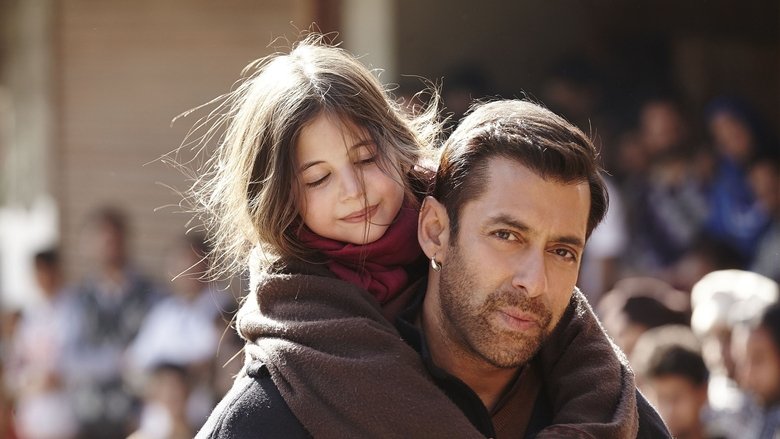
Bajrangi Bhaijaan tells the moving story of Pavan Kumar Chaturvedi, a staunch devotee of the Hindu deity Lord Hanuman, living in Delhi. Pavan, often called "Bajrangi," is a man of simple intellect but profound integrity. His life takes an unexpected turn when he encounters a six-year-old mute girl, Shahida, who has accidentally been separated from her mother while traveling from Pakistan to India for a religious blessing. Discovering that the girl is Pakistani and Muslim, Pavan faces a deep internal and societal conflict but eventually resolves to reunite her with her family against all odds.

The narrative follows their perilous and unauthorized journey across the border into Pakistan. Lacking a passport or visa, Pavan relies on his unwavering honesty and the help of a small-time Pakistani journalist named Chand Nawab. Together, they navigate through military checkpoints, local prejudices, and the vast, scenic landscapes of the subcontinent. The film focuses on the emotional bond between the unlikely pair and the ripple effect of kindness they ignite in everyone they meet along the way.

Core Meaning

The core meaning of the film lies in the concept of "Insaniyat" (Humanity) as a universal religion that transcends political borders, national identities, and religious dogmas. Director Kabir Khan uses the innocence of a child and the simplicity of a devotee to argue that human connection and empathy are more powerful than the centuries-old animosity between India and Pakistan. The film suggests that while governments and politics may create walls, the collective spirit of common people can tear them down.

Thematic DNA

Humanity Over National Identity 35%
The Power of Absolute Truth 25%
Religious Harmony and Tolerance 20%
Innocence as a Catalyst for Peace 20%

Humanity Over National Identity

The film explores how Pavan's initial prejudices regarding the "other" nation and religion are dismantled through his personal bond with Shahida. It emphasizes that a child's plight is universal and that human compassion should not be contingent on a passport or a prayer method.

The Power of Absolute Truth

Pavan's character is defined by his refusal to lie, even when it endangers him. This theme is revealed through his interactions with border guards and authorities, suggesting that radical honesty can be a transformative and disarming force in a world built on suspicion.

Religious Harmony and Tolerance

The film navigates the complexities of Hindu and Muslim co-existence. Pavan, a vegetarian Brahmin, finds himself sleeping in mosques and respecting Islamic traditions to protect the girl, illustrating a path toward mutual respect and shared spirituality.

Innocence as a Catalyst for Peace

Shahida's muteness serves as a metaphor for the voiceless victims of political conflict. Her silent presence forces the adults around her to stop talking about their differences and start acting on their shared values of love and protection.

Character Analysis

Pavan Kumar Chaturvedi (Bajrangi)

Salman Khan

Archetype: The Everyman Hero
Key Trait: Radical Honesty

Motivation

Driven by his deep devotion to Lord Hanuman and his promise to return the "voiceless" child to her mother.

Character Arc

Starts as a rigid, somewhat narrow-minded man governed by strict social and religious rules. Through his journey, he evolves into a symbol of universal peace, learning that his duty to humanity is higher than his duty to social norms.

Shahida (Munni)

Harshaali Malhotra

Archetype: The Innocent Catalyst
Key Trait: Silent Resilience

Motivation

The primal desire to find her mother and return to her home in the mountains.

Character Arc

Though she remains mute for most of the film, her character arc is externalized through the change she inspires in Pavan and the public. Her journey is one of physical and emotional return.

Chand Nawab

Nawazuddin Siddiqui

Archetype: The Ally/Herald
Key Trait: Relatability

Motivation

Initially fame and survival, but later shifted by Pavan's sincerity to pursue the truth for the sake of humanity.

Character Arc

Initially a cynical, struggling journalist looking for a sensational "scoop," he becomes a dedicated activist who uses his skills to protect Pavan and spread a message of hope.

Rasika Pandey

Kareena Kapoor Khan

Archetype: The Anchor/Love Interest
Key Trait: Empathy

Motivation

Love for Pavan and an innate sense of justice.

Character Arc

Serves as Pavan's emotional support and moral conscience in India. She encourages his mission, representing the progressive and compassionate side of the Indian populace.

Symbols & Motifs

The Hanuman Gada Pendant

Meaning:

Symbolizes Pavan's faith, protection, and his role as a "guardian" figure. It also represents the constant presence of his moral compass throughout his journey into unknown territory.

Context:

Pavan gives the pendant to Shahida to protect her, and it becomes a recurring visual reminder of his commitment to her safety.

The Border Fence

Meaning:

Represents the physical and ideological barriers created by man. Its eventual opening signifies the triumph of public will and humanitarian spirit over bureaucratic rigidity.

Context:

The climax occurs at the barbed wire fence, where thousands of people from both sides gather to witness Pavan’s return and Shahida's reunion.

Cricket

Meaning:

A shared cultural passion that ironically reveals national differences while acting as a bridge. It is used to show that while the nations are divided, they speak the same cultural language.

Context:

The reveal that Shahida is Pakistani occurs when she cheers for a Pakistani cricketer during a match, shattering Pavan's assumption that she is Indian.

Memorable Quotes

Hum Bajrangbali ke bhakt hain, mar jayenge par jhoot nahi bolenge.

— Pavan Kumar Chaturvedi

Context:

Said when he insists on taking permission from the Pakistani border officer rather than sneaking in.

Meaning:

Defines Pavan's core philosophy. It highlights that his honesty is not a choice but an inherent part of his religious identity, which paradoxically leads him to break secular laws for a higher moral purpose.

Nafrat badi aasani se bik jaati hai... lekin mohabbat...

— Chand Nawab

Context:

Spoken when Nawab realizes the difficulty of getting news channels to air Pavan’s positive story.

Meaning:

A commentary on the media and social landscape, noting that while hate is easy to sell, love requires a deeper, more challenging narrative to take hold.

Philosophical Questions

Can personal morality supersede national security?

The film explores whether Pavan is a criminal for crossing the border illegally or a saint for saving a child. It poses the question of whether laws that prevent human kindness are themselves unethical.

Does silence have more power than speech?

Through Shahida's muteness, the film suggests that words often complicate and divide, while shared silence and visual empathy can communicate much deeper truths.

Alternative Interpretations

While primarily viewed as a humanist drama, some critics have interpreted the film as a modern religious parable. In this reading, Pavan represents the traditionalist soul of India that must undergo a spiritual "purification" by leaving its comfort zone and embracing the "other." Another interpretation focuses on the power of digital media; the film suggests that while state-controlled media focuses on conflict, decentralized social media (as used by Chand Nawab) can be a tool for civilian diplomacy and grassroots peace-building.

Cultural Impact

Bajrangi Bhaijaan had a massive impact on the cultural discourse between India and Pakistan. It shifted away from the "jingoistic" tone common in border dramas, choosing instead to present Pakistanis as empathetic humans. The film became a massive box-office hit in both countries, proving that there is a huge appetite for stories of reconciliation. It also led to real-world efforts to identify lost persons across the border, most notably the case of Geeta, a mute girl who was eventually returned to India from Pakistan, with the film often cited as a catalyst for public interest in her story.

Audience Reception

The film was met with universal acclaim, praised for its heart-wrenching emotional beats and the chemistry between Salman Khan and Harshaali Malhotra. Critics noted it as one of Salman's most restrained and powerful performances. While some pointed out the typical Bollywood melodrama in the climax, the overall verdict was that the film’s message and sincerity far outweighed any narrative clichés. It remains one of the highest-grossing Indian films of all time.

Interesting Facts

  • The character of Chand Nawab is based on a real-life Pakistani journalist whose viral video of fumbling a report inspired the role.
  • More than 1,000 girls were auditioned for the role of Munni before Harshaali Malhotra was selected.
  • The screenplay was written by V. Vijayendra Prasad, who also wrote the epic 'Baahubali' franchise.
  • The film's climax was shot at a height of 10,000 feet at the Thajiwas Glacier in Sonmarg, Kashmir.
  • Salman Khan bought two horses after the film wrapped and named them Bajrangi and Bhaijaan.

Easter Eggs

The Real Chand Nawab

The scene where Chand Nawab tries to report while being interrupted by people passing by is a frame-by-frame recreation of a real viral video. The real journalist gained newfound fame and appreciation following the film's release.

⚠️ Spoiler Analysis

Click to reveal detailed analysis with spoilers

Frequently Asked Questions

Explore More About This Movie

Dive deeper into specific aspects of the movie with our detailed analysis pages

Comments (0)

Leave a comment

No comments yet. Be the first to share your thoughts!