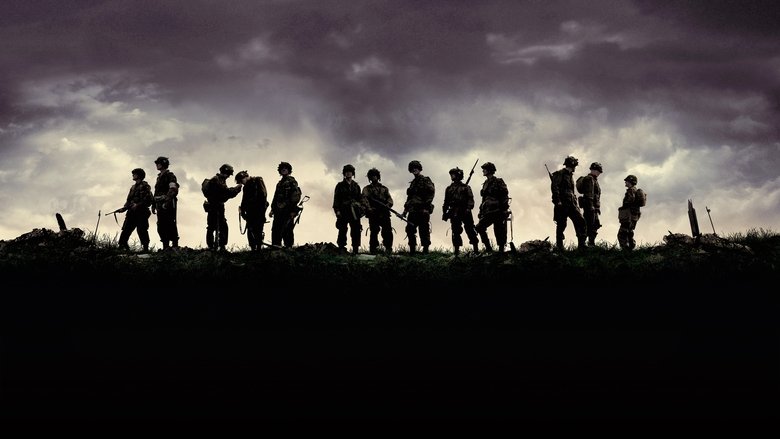
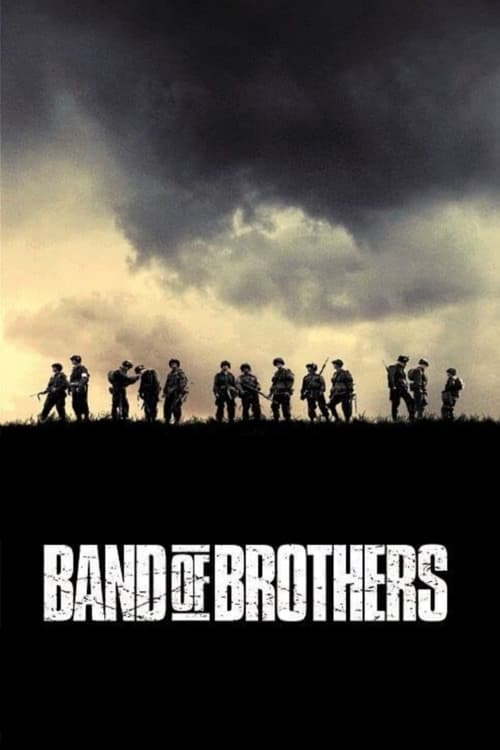
"There was a time when the world asked ordinary men to do extraordinary things."
Band of Brothers - Episode Highlights
Episode Highlights
Day of Days
This episode depicts the chaotic and terrifying D-Day parachute drop into Normandy. With the company commander killed on the jump, Lt. Winters finds himself in charge. He gathers scattered paratroopers and leads a textbook assault on a German artillery battery at Brécourt Manor, a pivotal and historically significant engagement that showcases his tactical genius and leadership under fire.
"Day of Days" establishes Winters as the true leader of Easy Company. The Brécourt Manor assault is a defining moment for the series, demonstrating the effectiveness of the paratroopers' training and the calm competence that would come to define Winters' command style. It transitions the series from the trials of training to the brutal reality of combat.
Crossroads
Directed by Tom Hanks, this episode centers on Captain Winters' leadership during a daring charge against a much larger SS force across an open dike in Holland. The successful but costly action earns him a promotion to Battalion Executive Officer, removing him from direct command of Easy Company. The episode is framed by Winters' report on the battle and his haunting memory of killing a young German soldier.
This episode marks a major turning point for Winters' character. His promotion signifies his growing reputation but also creates a painful distance from the men he feels closest to. His struggle with the memory of killing highlights the personal, moral cost of war, even for a successful and respected leader.
Bastogne
Told from the perspective of medic Eugene "Doc" Roe, this episode immerses the viewer in the brutal conditions of the Siege of Bastogne during the Battle of the Bulge. Easy Company, ill-equipped for the freezing weather and under constant artillery bombardment, struggles to hold the line while suffering immense casualties. Roe scrambles to save his friends, desperately low on medical supplies in a frozen, hellish landscape.
"Bastogne" is a masterclass in depicting the misery and endurance of war. By focusing on the medic, the episode emphasizes the human cost of the battle rather than grand strategy. It is a powerful, atmospheric portrayal of the company's resilience and the sheer grit required to survive one of the war's most infamous battles, solidifying the theme of brotherhood in the face of absolute despair.
The Breaking Point
Narrated by First Sergeant Lipton, this episode details the assault on the German-held town of Foy, which follows the ordeal at Bastogne. Morale is at an all-time low, and the company is led by the incompetent and cowardly Lt. Norman Dike. Lipton struggles to hold the men together as Dike's leadership falters, culminating in a disastrously stalled attack until Lt. Ronald Speirs heroically relieves Dike and leads the charge.
This episode is a raw depiction of the psychological toll of prolonged combat and the critical importance of competent leadership. It shows the men at their most vulnerable, near their breaking point, and highlights the internal strength of the company's NCOs, particularly Lipton, in holding them together when their officer fails. Speirs' legendary run through the town cements his mythical status among the men.
Why We Fight
As the war in Europe nears its end, Easy Company, now in Germany, stumbles upon a Nazi concentration camp. The discovery is a profound shock, confronting the soldiers with the horrifying reality of the evil they have been fighting. The episode, seen through the eyes of a cynical Captain Nixon, contrasts the relative peace of occupied Germany with this unimaginable horror.
This episode provides a stark, horrifying answer to its own title. For soldiers who had become disillusioned and weary of fighting, the discovery of the concentration camp provides a grim, undeniable moral clarity for their sacrifices. It's a pivotal moment that re-contextualizes the entire war for the characters and the audience, moving beyond battles and tactics to the fundamental conflict of humanity versus inhumanity.