Batman: The Animated Series - Symbolism & Philosophy
Symbols & Motifs
Shadows and Darkness
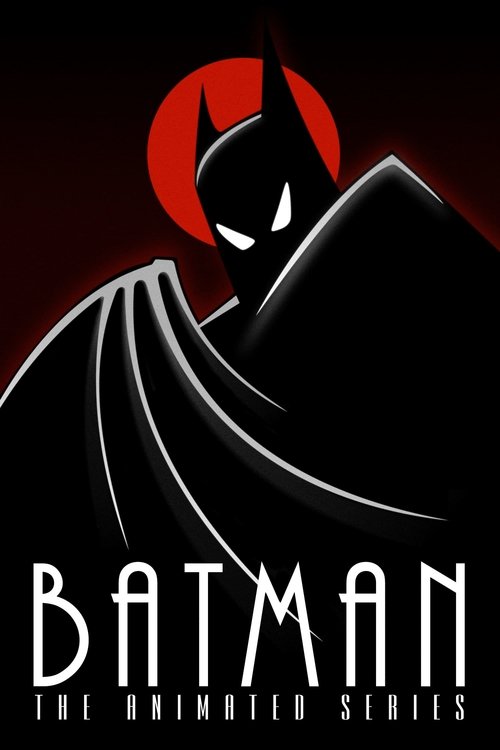
Shadows symbolize the hidden, the unknown, and the psychological depths of the characters. They represent the duality of Gotham City and its inhabitants, particularly Batman himself, who is a creature of the night. The darkness is his ally, a tool he uses for stealth and intimidation, but it also reflects his inner turmoil and brooding nature.
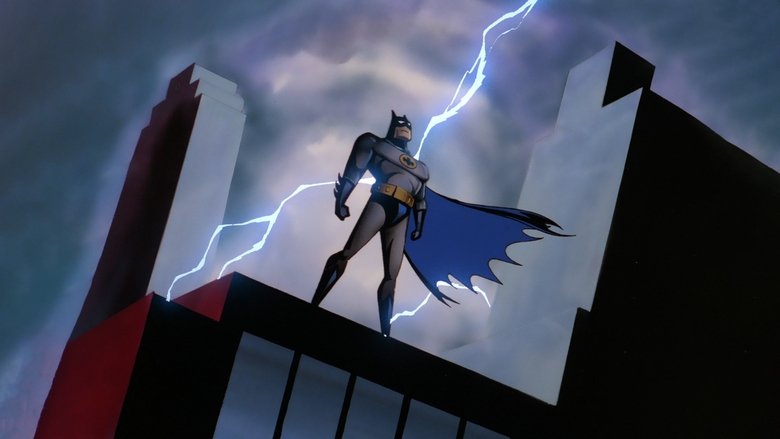
Visually, the entire series is steeped in shadow. The unique "Dark Deco" art style was achieved by painting on black paper instead of white, ensuring that darkness was the default canvas. Batman is almost always introduced emerging from or melting back into the shadows. This visual motif is constant across all episodes, defining the show's film noir atmosphere and reinforcing the psychological weight of its stories.
Gotham's Art Deco Architecture
The towering, stylized Art Deco skyscrapers of Gotham City symbolize a kind of corrupted grandeur and timelessness. The architecture evokes an era of classic noir films, suggesting a city perpetually stuck in a stylish but morally decaying past. These structures are both beautiful and menacing, representing a city with a grand potential that is constantly being undermined by crime and corruption.
The city's design, a key element of the "Dark Deco" style, is a consistent backdrop. From the opening credits, the sharp, angular buildings and police blimps establish a unique, non-specific time period that blends 1940s aesthetics with futuristic technology. This "otherworldly timelessness" is a constant visual presence, making Gotham a character in its own right throughout the series.
The Bat-Signal
The Bat-Signal symbolizes hope in the midst of darkness. It is a direct call to Batman, but more broadly, it represents the idea that even in a city as corrupt and dangerous as Gotham, there is a force for justice that can be summoned. It is a beacon that pierces the perpetual night, signifying that no matter how powerful the criminal element becomes, they are being watched and will be held accountable.
The Bat-Signal is used frequently throughout the series by Commissioner Gordon to summon Batman. Its appearance in the sky is a recurring visual cue that a new crisis has begun. It often appears at the beginning of an episode, cutting through the dark clouds over Gotham, immediately establishing a sense of urgency and setting the stage for Batman's intervention.
Philosophical Questions
Can one truly overcome trauma, or is it a life sentence that can only be managed?
The series explores this question primarily through Bruce Wayne. His entire life is a reaction to a single traumatic event. While he channels his pain into a productive, albeit violent, crusade, he is never truly free from it. Episodes like "Perchance to Dream" show that his deepest desire is a life where the trauma never occurred, yet his own mind rejects this fantasy, suggesting his identity is inextricably linked to his suffering. The villains offer a darker answer; characters like Two-Face and Mr. Freeze are consumed by their trauma, unable to move past it, letting it define them and drive them to criminality. The series suggests that while trauma may be a permanent scar, the choice of how to live with it is what defines a person.
What is the nature of identity?
This question is central to many characters. Bruce Wayne lives a dual life, and the series often questions which identity—the billionaire playboy or the dark avenger—is the "real" one. Characters like Clayface, an actor who loses his original face, and Two-Face, a man split between two warring personalities, explore this theme literally. Harley Quinn's journey is a struggle to define an identity for herself outside of her toxic relationship with the Joker. The series repeatedly examines whether identity is inherent, chosen, or imposed by external circumstances and trauma.
Does the end justify the means?
Batman's strict moral code, particularly his refusal to kill, is the central pillar of this philosophical debate. He uses fear, intimidation, and violence to fight crime, operating outside the law. Yet, he draws a hard line that he will not cross, believing that to do so would make him no better than the criminals he hunts. This code is constantly tested by villains like the Joker, who tries to prove that Batman's morality is a fragile pretense. The series uses Batman's struggle to explore the complexities of justice, questioning whether a fundamentally good outcome can be achieved through morally ambiguous methods.
Core Meaning
The core meaning of "Batman: The Animated Series" is an exploration of trauma and its aftermath, examining how individuals cope with profound loss and injustice. The creators convey that one's response to suffering defines their character. Bruce Wayne channels his pain into a rigid, non-lethal code of justice, becoming a symbol of hope for a corrupt city. Conversely, many of his antagonists are depicted as individuals who have been broken by their own tragedies—a corrupt system, a terrible accident, or personal loss—and have succumbed to madness, revenge, or nihilism. The series posits that the line between hero and villain is often blurred by shared experiences of pain, and true heroism lies not in the absence of darkness, but in the constant struggle to overcome it without sacrificing one's humanity.