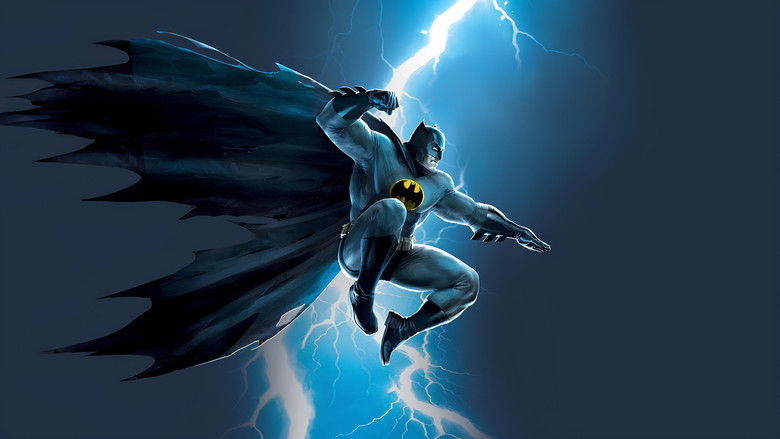
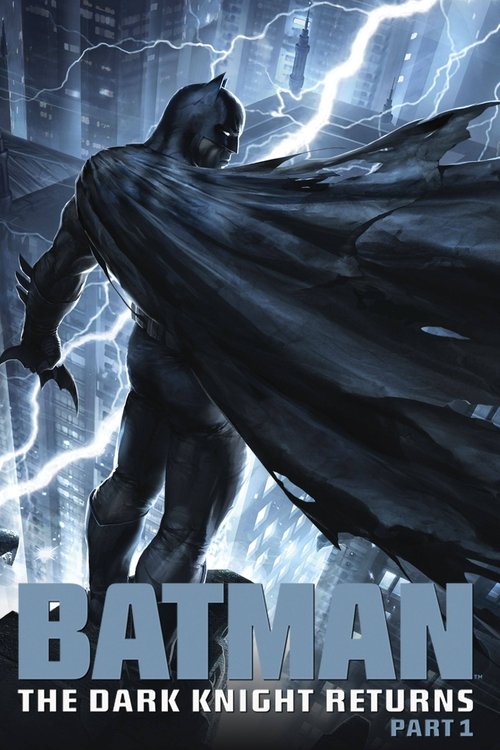
"Old heroes never die. They just get darker."
Batman: The Dark Knight Returns, Part 1 - Symbolism & Philosophy
Symbols & Motifs
The Mudhole
It symbolizes the primal, messy, and grounded nature of Batman's rebirth. It represents the stripping away of technology and wealth, forcing Bruce to rely on pure will and instinct.
During the climactic fight with the Mutant Leader, Batman drags him into a deep mud pit, neutralizing the Leader's speed advantage and turning the fight into a brawl where experience wins.
Two-Face's Coin
A symbol of the illusion of choice and the inescapability of fate. Even when the coin is 'clean' on both sides, Dent's psyche forces a binary, fatalistic worldview.
Harvey Dent uses the coin to decide the fate of his victims. When Batman discovers the coin is double-headed (and unscarred), it reveals that Dent's madness has no 'good' side left.
The Bat/The Shadow
Visualized as a demonic, imposing silhouette, it represents the subconscious compulsion and the terrifying power of the Batman persona that haunts Bruce.
In the opening scenes, the shadow of the Bat appears over Bruce, and he sees a bat-like creature breaking through the window in his hallucinations, signaling the inevitable return.
Philosophical Questions
Is true justice possible within the confines of the law?
The film suggests that the legal system is impotent against true chaos (Mutants) and psychological evil (Dent). Batman operates outside the law to achieve what he views as justice, raising the question of whether a 'civilized' society can survive without 'uncivilized' protectors.
Does the hero create the villain?
The media pundits in the film argue that Batman's return stimulates the criminals to ramp up their violence, suggesting a symbiotic relationship. The film asks if Batman is the cure for Gotham's disease or a symptom of it.
Can a person ever truly escape their nature?
Both Bruce Wayne and Harvey Dent attempt to bury their dual identities (Batman and Two-Face) but fail. The film posits a determinist view that one's essential nature (the 'shadow') will always surface, and suppression only leads to madness.
Core Meaning
The central message of the film is the inescapability of one's true nature and the burden of destiny. Director Jay Oliva, adapting Frank Miller's work, posits that Batman is not a mask Bruce Wayne wears, but rather Bruce Wayne is the mask. The film explores the idea that a hero's drive is a compulsion akin to an addiction, one that cannot be silenced by age or societal pressure. It ultimately suggests that in a corrupt world, true justice requires a terrifying, uncompromising force.