"The entertainment experience of a lifetime!"
Director: William Wyler
Cast: Charlton Heston, Stephen Boyd, Hugh Griffith, Jack Hawkins, Haya Harareet
Ben-Hur — Movie Quotes
Memorable Quotes
Your eyes are full of hate, Forty-One. That's good. Hate keeps a man alive. It gives him strength.
Context
Spoken by Quintus Arrius to Judah Ben-Hur (known only as number 41) aboard the Roman galley. Arrius recognizes the fire in Judah's eyes and sees it not as insubordination, but as a will to live that sets him apart from the other condemned men.
Meaning
This quote encapsulates the philosophy of survival that Judah must adopt during his enslavement. It acknowledges that in the brutal world he's been thrown into, hatred is a powerful tool for endurance, even if it is a corrosive one.
Row well and live.
Context
Arrius gives this order to the new set of galley slaves, including Judah, as they are chained to their oars. It is a chilling introduction to the harsh reality of their new life.
Meaning
This stark command is a brutal summary of the life of a galley slave. Their entire existence is reduced to a single, grueling task, and their survival depends solely on their ability to perform it. It highlights the complete loss of freedom and humanity.
I felt his voice take the sword out of my hand.
Context
Judah speaks these words to Esther after witnessing the crucifixion of Jesus. In this moment, he understands the true meaning of forgiveness and finds peace, which his victory in the chariot race could not provide.
Meaning
This is the moment of Judah's ultimate spiritual transformation. It signifies his release from the burden of hatred and vengeance that has driven him for years. The 'sword' is a metaphor for his revenge, and he finally lets it go after witnessing Christ's ultimate act of forgiveness on the cross.
Rome is an affront to God. Rome is strangling my people and my country, and the whole earth. But not forever. I tell you, the day Rome falls, there will be a shout of freedom such as the world has never heard before.
Context
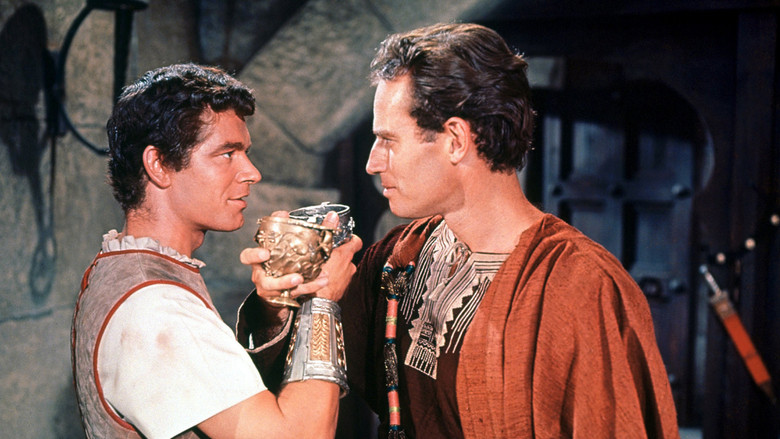
Judah says this to Messala during their initial reunion, after Messala asks him to betray his own people to help enforce Roman order. It is the moment their friendship irrevocably breaks.
Meaning
This quote clearly defines Judah's ideological opposition to Messala and the Roman Empire. It establishes his unwavering loyalty to his people and his faith, setting the stage for the central conflict of the film.
Explore More About This Movie
Dive deeper into specific aspects of the movie with our detailed analysis pages