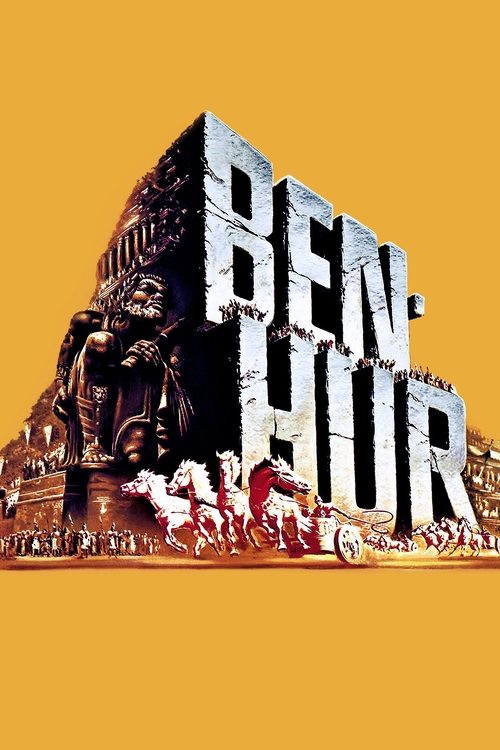
Ben-Hur
"The entertainment experience of a lifetime!"
Overview
"Ben-Hur" tells the monumental story of Judah Ben-Hur, a wealthy Jewish prince living in Jerusalem during the time of Christ. His life takes a drastic turn when his childhood friend, Messala, now a Roman commander, returns to Judea. A political and ideological clash leads Messala to falsely accuse Judah of treason. Consequently, Judah is condemned to a life of slavery in the Roman galleys, and his mother and sister are imprisoned.
Fueled by an unyielding desire for vengeance, Judah endures years of hardship. A chance encounter at sea leads to his rescue and subsequent adoption by a Roman consul, Quintus Arrius. Renowned as a skilled charioteer, Judah returns to his homeland with a new identity and purpose: to exact revenge on Messala. His journey of retribution culminates in a legendary chariot race, a direct confrontation with his betrayer.
Parallel to Judah's personal saga, the film subtly weaves in the life and teachings of Jesus Christ. Judah's path intersects with Jesus at pivotal moments, offering him glimpses of a different path – one of forgiveness and faith. Ultimately, Judah's quest for revenge is challenged by a profound spiritual awakening, forcing him to confront the true meaning of redemption.
Core Meaning
The core meaning of "Ben-Hur" is a profound exploration of the transformative journey from vengeance to forgiveness. Director William Wyler masterfully illustrates that while the pursuit of revenge can provide the strength to survive immense suffering, it ultimately leads to a hollow and destructive existence. The film posits that true peace and redemption can only be achieved by embracing compassion and faith. Judah's personal vendetta against Messala is juxtaposed with the teachings of Jesus Christ, highlighting the conflict between the Roman ethos of power and conquest and the Christian values of forgiveness and love. The narrative ultimately suggests that letting go of hatred is the only way to heal the deepest wounds and find spiritual freedom.
Thematic DNA
Vengeance vs. Forgiveness
This is the central theme of the film. Judah Ben-Hur's initial motivation after his betrayal is an all-consuming desire for revenge against Messala. This hatred fuels his survival as a galley slave and his determination to return to Judea. The film vividly portrays how this quest for vengeance shapes his actions and hardens his heart. However, his encounters with Jesus Christ, who preaches a message of love and forgiveness, present a powerful alternative. The climax is not merely his victory in the chariot race, but his eventual emotional and spiritual transformation where he renounces his hatred and finds peace. Esther's plea that he is becoming the very thing he sought to destroy underscores this internal conflict.
Faith and Redemption
"Ben-Hur" is subtitled "A Tale of the Christ," and the narrative of Jesus runs parallel to Judah's story. The film explores the concept of faith not just as religious belief, but as a guiding force that can lead to personal redemption. Judah's journey is a spiritual one; he loses his faith in humanity and God during his enslavement, but his brief interactions with Jesus plant a seed of hope. The miraculous healing of his mother and sister at the end of the film coincides with Judah's acceptance of Christ's message, symbolizing his own spiritual rebirth and redemption from a life consumed by hate.
Betrayal and Friendship
The film opens with the close friendship between Judah and Messala, which makes the subsequent betrayal all the more painful and dramatic. Their relationship represents the clash of two cultures and ideologies: Judah's loyalty to his people and faith versus Messala's ambition and devotion to the Roman Empire. The tragic arc of their friendship serves as the catalyst for the entire plot and explores how political power and differing loyalties can corrupt and destroy even the strongest personal bonds.
Freedom and Slavery
The themes of freedom and slavery are explored on both a literal and metaphorical level. Judah is physically enslaved, enduring the brutal life of a galley slave. His fight for freedom is a driving force in the first half of the film. However, even after he is physically freed and becomes a wealthy Roman citizen, he remains a slave to his hatred and desire for revenge. The film suggests that true freedom is not just physical but also spiritual, and Judah only achieves it when he is freed from the chains of his own bitterness.
Character Analysis
Judah Ben-Hur
Charlton Heston
Motivation
Initially, Judah is motivated by his love for his family and his loyalty to his people. After his betrayal, his primary motivation becomes an all-consuming need for revenge against Messala for destroying his life and family.
Character Arc
Judah begins as a wealthy and respected Jewish prince. After being betrayed by his friend Messala, he is consumed by a desire for vengeance. His journey sees him endure the horrors of slavery, become a celebrated charioteer, and ultimately achieve his revenge. However, his victory feels hollow. Through his encounters with Jesus Christ, he undergoes a profound spiritual transformation, moving from a vengeful man to one who understands the power of forgiveness and faith, finding true peace and redemption.
Messala
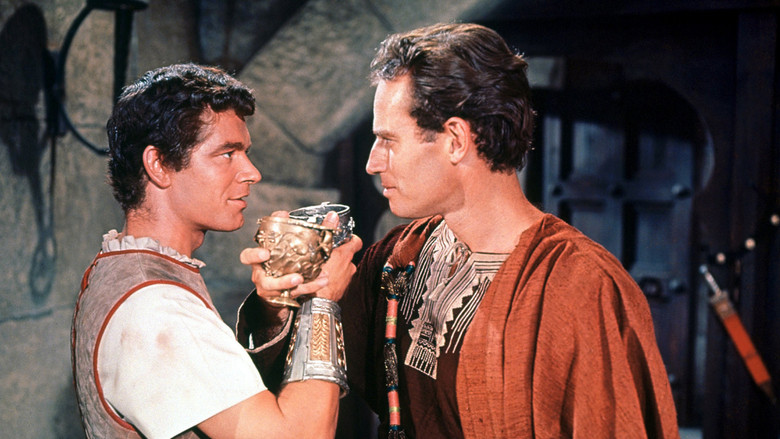
Stephen Boyd
Motivation
Messala is driven by a lust for power, status, and the glory of the Roman Empire. He believes in Rome's absolute authority and is willing to sacrifice friendship and morality to advance his career and enforce Roman dominance.
Character Arc
Messala starts as Judah's childhood friend but returns to Jerusalem as an ambitious Roman tribune, fully embracing Rome's imperial power. His ambition and loyalty to Rome lead him to betray Judah. He becomes a ruthless and powerful figure, but his life is built on a foundation of cruelty. His arc is tragic; his ambition ultimately leads to his downfall and a gruesome death in the chariot race, where in his final moments, he ensures Judah's suffering continues by revealing his family is alive but leprous.
Quintus Arrius
Jack Hawkins
Motivation
Arrius is motivated by a Roman sense of honor and gratitude. After Judah saves his life, he feels indebted and rewards him in the most significant way he can, by making him his heir.
Character Arc
Quintus Arrius is a Roman Consul in command of the galley where Judah is a slave. Initially a stern commander, he recognizes Judah's resilience and spirit. After Judah saves his life during a naval battle, Arrius adopts him as a son, giving him freedom, wealth, and a new life in Rome. He acts as a key transitional figure in Judah's life, enabling his return to power and his path to revenge, though he is not part of Judah's spiritual journey.
Esther
Haya Harareet
Motivation
Esther is motivated by her deep love for Judah and her unwavering faith. She wants to see the good and noble man she loves return, not the bitter man that revenge has created.
Character Arc
Esther is the daughter of the Hur family's loyal steward, Simonides, and Judah's love interest. She remains faithful to Judah throughout his long absence. When he returns, consumed by hatred, she serves as his moral compass, challenging his quest for vengeance and reminding him of the man he used to be. She is one of the first to be moved by the teachings of Jesus and plays a crucial role in guiding Judah towards forgiveness and redemption.
Sheik Ilderim
Hugh Griffith
Motivation
Ilderim is motivated by a love of competition, a desire to see his magnificent horses win, and a sporting dislike for the arrogant Romans, particularly Messala. He sees in Judah the perfect driver to achieve this victory.
Character Arc
Sheik Ilderim is a wealthy Arab sheik who befriends Judah after his return to Judea. He is a boisterous and worldly man with a passion for chariot racing. He recognizes Judah's skill as a charioteer and provides him with the means to compete against Messala. While he aids Judah's quest for revenge, he also provides moments of comic relief and pragmatic wisdom. He is instrumental in Judah's earthly victory but is separate from his spiritual transformation.
Symbols & Motifs
Water
Water symbolizes life, purification, and spiritual rebirth.
When Judah is being marched to the galleys and is dying of thirst, Jesus gives him water, an act of compassion that saves his life and gives him the will to live on. Later, Judah attempts to return the favor as Jesus carries the cross. The sea, where Judah is enslaved, also becomes the place of his 'rebirth' when he saves Quintus Arrius and is adopted, beginning his new life. Finally, the rain mixed with Christ's blood during the crucifixion heals Judah's mother and sister of leprosy, symbolizing a divine cleansing and miracle.
The Chariot Race
The chariot race is a powerful symbol of the clash between good and evil, revenge and justice, and the struggle for dominance between Rome and Judea. It represents the climax of Judah's quest for personal vengeance.
The race is not merely a sporting event but a brutal battleground where Judah and Messala's conflict comes to a head. The visual contrast between Judah's white horses and Messala's black horses reinforces the symbolism of good versus evil. Judah's victory is his moment of earthly triumph over his enemy, but the film makes it clear that this victory does not bring him peace.
Leprosy
Leprosy in the film symbolizes social and spiritual decay, suffering, and ostracism.
Judah's mother and sister contract leprosy while unjustly imprisoned, representing the depth of their suffering and their complete removal from society. Their miraculous healing at the end of the film is a direct result of their faith and the divine power of Christ, symbolizing hope, renewal, and the ultimate triumph of faith over despair and corruption.
The Galley Oar (Number 41)
Chained to an oar, Judah is stripped of his name and reduced to a number. This represents the absolute power of the Roman Empire and the depths of his fall from a prince to a slave. His survival is fueled by his hatred, as noted by Quintus Arrius who says, "Hate keeps a man alive. It gives him strength." His eventual freedom from the oar marks the beginning of his journey back to reclaiming his identity and seeking his revenge.
Memorable Quotes
Your eyes are full of hate, Forty-One. That's good. Hate keeps a man alive. It gives him strength.
— Quintus Arrius
Context:
Spoken by Quintus Arrius to Judah Ben-Hur (known only as number 41) aboard the Roman galley. Arrius recognizes the fire in Judah's eyes and sees it not as insubordination, but as a will to live that sets him apart from the other condemned men.
Meaning:
This quote encapsulates the philosophy of survival that Judah must adopt during his enslavement. It acknowledges that in the brutal world he's been thrown into, hatred is a powerful tool for endurance, even if it is a corrosive one.
Row well and live.
— Quintus Arrius
Context:
Arrius gives this order to the new set of galley slaves, including Judah, as they are chained to their oars. It is a chilling introduction to the harsh reality of their new life.
Meaning:
This stark command is a brutal summary of the life of a galley slave. Their entire existence is reduced to a single, grueling task, and their survival depends solely on their ability to perform it. It highlights the complete loss of freedom and humanity.
I felt his voice take the sword out of my hand.
— Judah Ben-Hur
Context:
Judah speaks these words to Esther after witnessing the crucifixion of Jesus. In this moment, he understands the true meaning of forgiveness and finds peace, which his victory in the chariot race could not provide.
Meaning:
This is the moment of Judah's ultimate spiritual transformation. It signifies his release from the burden of hatred and vengeance that has driven him for years. The 'sword' is a metaphor for his revenge, and he finally lets it go after witnessing Christ's ultimate act of forgiveness on the cross.
Rome is an affront to God. Rome is strangling my people and my country, and the whole earth. But not forever. I tell you, the day Rome falls, there will be a shout of freedom such as the world has never heard before.
— Judah Ben-Hur
Context:
Judah says this to Messala during their initial reunion, after Messala asks him to betray his own people to help enforce Roman order. It is the moment their friendship irrevocably breaks.
Meaning:
This quote clearly defines Judah's ideological opposition to Messala and the Roman Empire. It establishes his unwavering loyalty to his people and his faith, setting the stage for the central conflict of the film.
Philosophical Questions
Does vengeance provide true justice or peace?
The film relentlessly explores this question through Judah's journey. For years, the thought of revenge is the only thing that keeps him alive. He achieves his vengeance in a spectacular and satisfying manner by defeating and causing the death of Messala. However, the film shows that this act does not bring him peace or happiness. Instead, he is left with the bitter knowledge that his mother and sister are lepers. The film argues that vengeance is a hollow victory that only perpetuates a cycle of hatred. True resolution and peace, the narrative suggests, can only come from letting go of that hatred and embracing forgiveness, a path offered by the teachings of Christ.
What is the nature of freedom?
"Ben-Hur" examines freedom on multiple levels. There is the obvious physical freedom that Judah loses when he is enslaved and later regains. However, the film posits a deeper, spiritual form of freedom. Even as a wealthy and powerful adopted son of a Roman consul, Judah is not truly free; he is enslaved by his own consuming hatred. He is chained to his past and his desire for revenge. The film's climax suggests that ultimate freedom is an internal state, achieved only when Judah is liberated from his own bitterness and rage through the act of forgiveness.
Can faith and compassion triumph over tyranny and hate?
The film sets the might of the Roman Empire, a symbol of worldly power, tyranny, and brutality, against the nascent Christian faith, which represents love, compassion, and forgiveness. Messala embodies the Roman ideal of power through conquest, while Jesus represents a revolutionary new idea of power through love. Judah's personal struggle mirrors this larger conflict. He initially tries to fight Rome with its own weapons – strength and violence. However, he ultimately finds his victory not on the chariot track, but at the foot of the cross, where he witnesses an act of ultimate forgiveness that transforms his own heart. The film's conclusion, with the miraculous healing of his family, serves as a powerful affirmation that faith and love can indeed overcome the world's greatest evils.
Alternative Interpretations
One of the most widely discussed alternative interpretations of "Ben-Hur" concerns the relationship between Judah and Messala. Screenwriter Gore Vidal, who did uncredited work on the script, claimed that he intentionally wrote their early scenes with a homoerotic subtext, framing their conflict as that of spurned lovers. According to Vidal, he convinced director William Wyler and actor Stephen Boyd (Messala) to play the scenes this way, but they agreed not to tell Charlton Heston, fearing his reaction.
This interpretation recasts the narrative's central conflict. Messala's extreme betrayal is not just born of political ambition, but also of bitter, personal rejection. Judah's quest for revenge then takes on the dimension of a deeply personal vendetta against a former lover who has wronged him on multiple levels. This reading adds a layer of psychological complexity and tragic romance to their story, explaining the intensity of their emotions. Charlton Heston always vehemently denied this interpretation and disputed the extent of Vidal's contribution to the script. Regardless of the original intent, the "spurned lovers" theory has become a significant part of the film's legacy and is a popular topic of discussion among critics and film historians, offering a lens through which to view the characters' powerful and destructive relationship.
Cultural Impact
"Ben-Hur" was a cinematic event of massive proportions that had a profound and lasting impact on the film industry and popular culture. Released in 1959, it arrived at a time when television was threatening the dominance of cinema. MGM, on the brink of financial collapse, invested heavily in the film, making it the most expensive movie ever made at the time. Its colossal success, both critically and commercially, revitalized the epic genre and proved that audiences would still flock to theaters for a grand spectacle.
The film set a new standard for epic filmmaking with its lavish sets, enormous cast of extras, and breathtaking action sequences, most notably the chariot race. This nine-minute sequence remains a benchmark in action cinematography and stunt work, influencing countless films for decades to come. The film's record-breaking 11 Academy Awards cemented its legendary status, a feat unequaled for nearly four decades.
Beyond its technical achievements, "Ben-Hur" brought a new level of character depth and psychological complexity to the biblical epic. It successfully merged a deeply personal story of betrayal and redemption with a grand historical and religious narrative. The film's themes of faith, forgiveness, and the struggle against tyranny resonated deeply with audiences of the post-war era and continue to be relevant. It became an Easter television staple for many years, introducing new generations to its powerful story. While some elements of its acting style and pacing may seem dated to modern viewers, its sheer scale, craftsmanship, and emotional power ensure its place as one of the cornerstones of Hollywood's Golden Age.
Audience Reception
Upon its release, "Ben-Hur" was met with widespread acclaim from both critics and audiences, becoming the highest-grossing film of 1959 and, at the time, the second-highest of all time after "Gone with the Wind." Audiences were captivated by the film's monumental scale, the breathtaking spectacle of the chariot race, and its powerful, emotional story. Charlton Heston's commanding performance in the title role was widely praised and earned him an Academy Award.
The primary points of praise centered on the film's technical achievements, William Wyler's masterful direction that balanced intimate drama with epic set pieces, and Miklós Rózsa's iconic musical score. The chariot race was universally hailed as a landmark achievement in cinema.
While overwhelmingly positive, some criticism was directed at the film's lengthy runtime of nearly four hours. Some critics also found the final act, which focuses on Judah's religious transformation, to be somewhat ponderous compared to the thrilling action that preceded it. However, these were minor points in a sea of praise. Overall, the public verdict was that "Ben-Hur" was a cinematic masterpiece, a powerful and moving experience that defined the epic genre for a generation.
Interesting Facts
- The film had the largest budget of any movie produced at its time, at $15.175 million, and was a massive gamble by MGM that ultimately saved the studio from bankruptcy.
- "Ben-Hur" won a record 11 Academy Awards, including Best Picture, Best Director, and Best Actor. This record was not tied until "Titanic" (1997) and later "The Lord of the Rings: The Return of the King" (2003).
- The famous nine-minute chariot race is one of the most celebrated action sequences in cinema history. The massive 18-acre set for the circus took a year to build.
- For the chariot race, thousands of extras were used. To create an even larger crowd effect, the upper tiers of the arena were populated with small, painted wooden figures.
- During the chariot race, a stuntman, Joe Canutt, was accidentally thrown from his chariot in a dramatic shot that was so spectacular it was kept in the final film. He suffered only a minor chin injury.
- Director William Wyler had been an assistant director on the 1925 silent version of "Ben-Hur."
- To emphasize the cultural divide, Wyler cast American actors to play the Jewish characters and British actors to play the Romans, believing American audiences would perceive British accents as more patrician.
- The role of Judah Ben-Hur was turned down by several actors, including Burt Lancaster and Paul Newman, before Charlton Heston accepted it.
- Martha Scott, who played Judah's mother, was only ten years older than Charlton Heston. They had previously played mother and son in "The Ten Commandments" (1956).
Easter Eggs
During the Sermon on the Mount scene, Jesus' face is never shown. This was a deliberate choice by director William Wyler.
Wyler wanted to treat the figure of Christ with reverence and avoid the potential controversy or inadequacy of portraying him directly. By focusing on the reactions of the crowd and the main characters to his presence and words, the film emphasizes the impact of his message rather than his physical appearance. This technique allows the audience to project their own image of Jesus onto the film, making his presence more spiritual and powerful.
⚠️ Spoiler Analysis
Click to reveal detailed analysis with spoilers
Frequently Asked Questions
Explore More About This Movie
Dive deeper into specific aspects of the movie with our detailed analysis pages
Comments (0)
No comments yet. Be the first to share your thoughts!