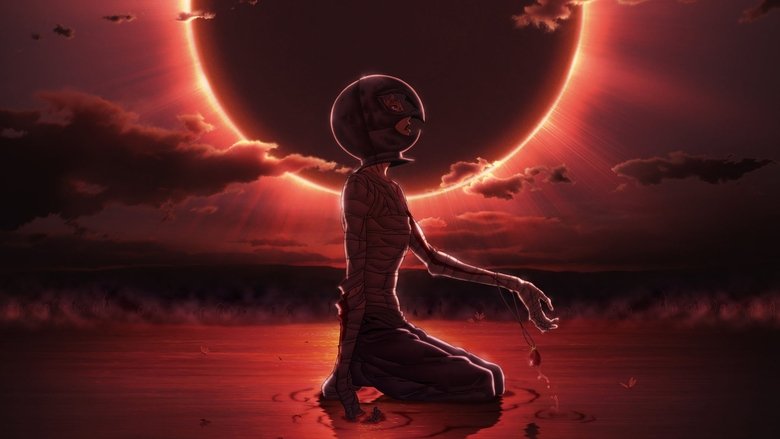
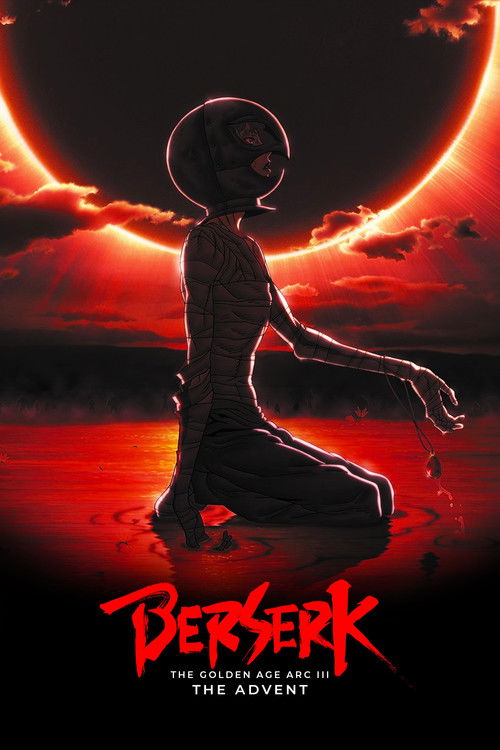
ベルセルク 黄金時代篇Ⅲ 降臨
"I sacrifice."
Berserk: The Golden Age Arc III - The Advent - Symbolism & Philosophy
Symbols & Motifs
The Crimson Behelit (Egg of the King)
A supernatural artifact that acts as a bridge between the physical world and the astral realm. It symbolizes predestined fate and the dark toll of ultimate ambition, weeping tears of blood when its owner reaches the depths of despair.
Griffith loses the Behelit during his imprisonment but reunites with it exactly when his despair peaks. His blood activates it, summoning the God Hand and initiating the Eclipse.
The Eclipse
The total solar eclipse represents the literal and metaphorical death of the light. It signifies the end of the Golden Age, the blinding of human reason, and the descent into an era of darkness and demon-kind.
It occurs during the climax of the film, plunging the characters into a horrific alternate dimension where the sun is replaced by a black void surrounded by a halo of harsh light.
The Brand of Sacrifice
A physical manifestation of being claimed by darkness. It symbolizes inescapable trauma, marking the bearer as a permanent sacrifice to demonic entities and ensuring they will never know peace.
During the Eclipse, Void sears this brand into the flesh of every member of the Band of the Hawk, transforming them from heroic soldiers into mere fodder for Apostles.
The Castle
The castle is a visual metaphor for Griffith's unattainable dream. It is a shining, distant idol that he has chased his entire life, built upon the corpses of his comrades.
During his metaphysical transition into Femto, Griffith envisions himself walking toward a radiant castle, stepping over the literal bodies of the Band of the Hawk to reach it.
Philosophical Questions
Is human ambition inherently destructive?
The film questions the glorification of grand dreams. Griffith's ambition is initially framed as inspiring and beautiful, but the narrative ultimately reveals that dreams pursued at the expense of others demand a horrific, bloody toll.
Does free will exist in a universe ruled by causality?
The God Hand preaches that human destinies are bound by causality—a predetermined chain of events. The film challenges the viewer to ask if Guts' relentless struggle is a meaningful assertion of free will, or just another cog in fate's machine.
What is the true nature of evil?
The movie posits that ultimate evil does not originate from monsters, but from human frailty, despair, and the refusal to let go of pride. Griffith only becomes a demon because of a deeply human weakness.
Core Meaning
The film's core meaning revolves around the devastating price of ambition and the vulnerability of the human spirit. Director Toshiyuki Kubooka, adapting Kentaro Miura's manga, illustrates how a singular, obsessive dream can consume not only the dreamer but everyone who believes in them.
It also explores the terrifying philosophical conflict between predetermined fate (causality) and human free will. The movie asks whether human beings are simply pawns manipulated by invisible, god-like forces, or if they possess the power to forge their own destiny through sheer willpower and resilience in the face of absolute despair.