Berserk: The Golden Age Arc III - The Advent
ベルセルク 黄金時代篇Ⅲ 降臨
"I sacrifice."
Overview
Berserk: The Golden Age Arc III - The Advent picks up a year after Guts parts ways with the Band of the Hawk. Without his presence, the once-glorious mercenary group has been branded as traitors and forced to survive on the run. Guts reunites with his former comrades, now led by a hardened Casca, to mount a desperate rescue mission to save their charismatic leader, Griffith, from the dungeons of Midland.
However, the Griffith they find is merely a shadow of the ambitious commander they once knew. Brutally tortured, mutilated, and stripped of his ability to lead, Griffith's overwhelming despair becomes the catalyst for an apocalyptic event known as the Eclipse. The film abruptly shifts from medieval warfare to surreal, visceral horror as the world is engulfed in darkness and the God Hand descends.
The narrative forces its characters into an unimaginable nightmare where loyalty is tested against absolute, god-like cruelty. It sets the foundation for Guts' lifelong quest for vengeance, perfectly encapsulating the brutal and unforgiving nature of Kentaro Miura's legendary dark fantasy universe.
Core Meaning
The film's core meaning revolves around the devastating price of ambition and the vulnerability of the human spirit. Director Toshiyuki Kubooka, adapting Kentaro Miura's manga, illustrates how a singular, obsessive dream can consume not only the dreamer but everyone who believes in them.
It also explores the terrifying philosophical conflict between predetermined fate (causality) and human free will. The movie asks whether human beings are simply pawns manipulated by invisible, god-like forces, or if they possess the power to forge their own destiny through sheer willpower and resilience in the face of absolute despair.
Thematic DNA
The Devastating Price of Ambition
Griffith's singular desire to attain his own kingdom forms the tragic crux of the film. When his dream is violently stripped away, he is given the choice to reclaim it at the cost of his humanity and his loyal friends. The film showcases how unchecked ambition can morph into ultimate evil.
Causality vs. Free Will
The God Hand repeatedly asserts that all events are bound by the "laws of causality." Griffith's torture, Guts' return, and the Eclipse itself are presented as an inescapable web of fate, raising the question of whether the characters ever truly had a choice in their doom.
Trauma and the Loss of Innocence
The film graphically depicts the sudden, violent shattering of camaraderie and love. The horrifying events of the Eclipse inflict permanent physical and psychological scars on Guts and Casca, representing the ultimate loss of their "Golden Age."
The Will to Survive (Struggle)
Embodied entirely by Guts, the theme of resilience is highlighted during the apocalyptic climax. Even when faced with literal demons and impossible odds, Guts' refusal to die and his desperate fight to protect Casca embody the indomitable human spirit.
Character Analysis
Guts
Hiroaki Iwanaga
Motivation
Initially driven by love and a desire to protect Casca and save Griffith, his motivation twists into pure, unadulterated vengeance and survival by the film's brutal conclusion.
Character Arc
Guts begins the film returning to save his friends, having matured and found a sense of independent purpose. However, the events of the Eclipse violently strip away his newfound peace, physically maiming him and transforming him into the vengeful, cynical "Black Swordsman."
Griffith
Takahiro Sakurai
Motivation
An obsessive, almost childish pursuit of his own kingdom, fueled by a deep-seated fear of being ordinary or weak.
Character Arc
Once a god-like figure to his men, Griffith is reduced to a helpless, mute cripple. Unable to cope with his sheer powerlessness and the pity of his former equal, Guts, he succumbs to the temptations of the God Hand, shedding his humanity to be reborn as the demon lord Femto.
Casca
Toa Yukinari
Motivation
To protect the remnants of the Band of the Hawk and to reconcile her lingering devotion to Griffith with her growing love for Guts.
Character Arc
Casca steps up as the reluctant but capable leader of the Hawks in Griffith's absence. She finally allows herself to love Guts, only to have her reality completely destroyed during the Eclipse. The sheer horror and violation she experiences shatters her psyche completely.
Void
Shinji Ogawa
Motivation
To enforce the laws of causality and shepherd humanity's darkest desires into the creation of new demonic deities.
Character Arc
As the leader of the God Hand, Void does not change. Instead, he acts as the orchestrator of Griffith's fall, guiding the narrative toward its apocalyptic inevitability.
Symbols & Motifs
The Crimson Behelit (Egg of the King)
A supernatural artifact that acts as a bridge between the physical world and the astral realm. It symbolizes predestined fate and the dark toll of ultimate ambition, weeping tears of blood when its owner reaches the depths of despair.
Griffith loses the Behelit during his imprisonment but reunites with it exactly when his despair peaks. His blood activates it, summoning the God Hand and initiating the Eclipse.
The Eclipse
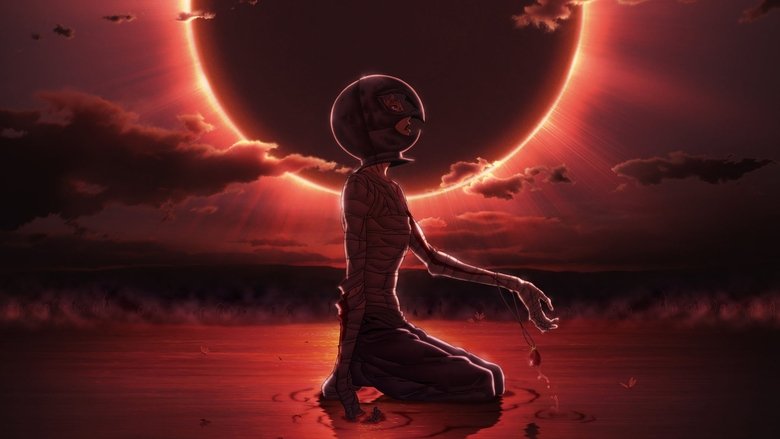
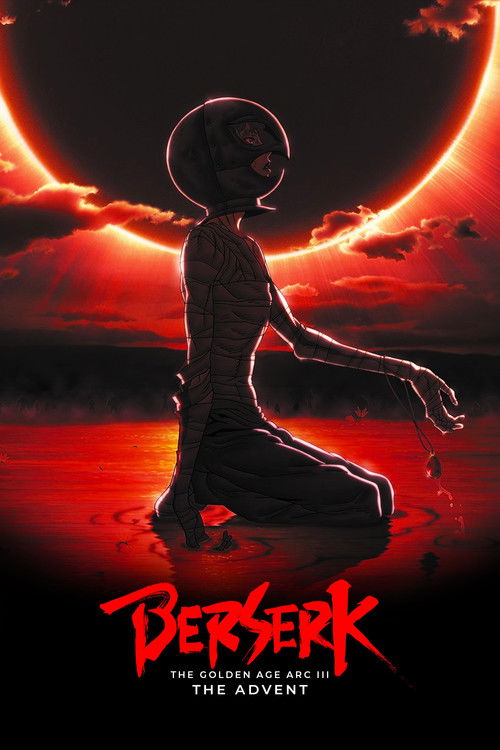
The total solar eclipse represents the literal and metaphorical death of the light. It signifies the end of the Golden Age, the blinding of human reason, and the descent into an era of darkness and demon-kind.
It occurs during the climax of the film, plunging the characters into a horrific alternate dimension where the sun is replaced by a black void surrounded by a halo of harsh light.
The Brand of Sacrifice
A physical manifestation of being claimed by darkness. It symbolizes inescapable trauma, marking the bearer as a permanent sacrifice to demonic entities and ensuring they will never know peace.
During the Eclipse, Void sears this brand into the flesh of every member of the Band of the Hawk, transforming them from heroic soldiers into mere fodder for Apostles.
The Castle
The castle is a visual metaphor for Griffith's unattainable dream. It is a shining, distant idol that he has chased his entire life, built upon the corpses of his comrades.
During his metaphysical transition into Femto, Griffith envisions himself walking toward a radiant castle, stepping over the literal bodies of the Band of the Hawk to reach it.
Memorable Quotes
Struggle, endure, contend. For that alone is the sword of one who defies death. Do not forget these words.
— Skull Knight
Context:
Spoken to Guts by the enigmatic Skull Knight, warning him of the impending apocalyptic event and urging him to survive.
Meaning:
This quote encapsulates the entire thematic essence of Guts' character going forward. It highlights that in a universe ruled by cruel fate, the only human power is the will to fight back.
Chant the words 'I sacrifice' in your heart, and you shall be granted with raven-black wings, upon which you shall soar in the heavens, higher than any summit.
— Void
Context:
Spoken by Void as he attempts to convince the broken Griffith to offer the lives of the Band of the Hawk in exchange for demonic godhood.
Meaning:
A horrific temptation that frames ultimate betrayal as a divine, liberating act. It underscores the twisted logic of the God Hand, who prey on human weakness.
It's all your fault! Griffith and the Band of the Hawk, it all went to hell because of you!
— Casca
Context:
Screamed by Casca when she reunites with Guts, momentarily blaming him before breaking down into his arms.
Meaning:
This raw outburst reveals Casca's deep-seated emotional turmoil and correctly identifies Guts' departure as the domino that triggered the group's tragic downfall.
Philosophical Questions
Is human ambition inherently destructive?
The film questions the glorification of grand dreams. Griffith's ambition is initially framed as inspiring and beautiful, but the narrative ultimately reveals that dreams pursued at the expense of others demand a horrific, bloody toll.
Does free will exist in a universe ruled by causality?
The God Hand preaches that human destinies are bound by causality—a predetermined chain of events. The film challenges the viewer to ask if Guts' relentless struggle is a meaningful assertion of free will, or just another cog in fate's machine.
What is the true nature of evil?
The movie posits that ultimate evil does not originate from monsters, but from human frailty, despair, and the refusal to let go of pride. Griffith only becomes a demon because of a deeply human weakness.
Alternative Interpretations
A central debate among critics and audiences revolves around Griffith's agency during the Eclipse. One interpretation suggests that Griffith is a tragic victim of causality—that his fate was rigged from birth by the God Hand, who manipulated centuries of history just to break his spirit at that exact moment. In this reading, Griffith never truly possessed free will, and his choice was merely an illusion.
Conversely, another interpretation holds Griffith entirely accountable. Despite his suffering, his decision to whisper "I sacrifice" is viewed as the ultimate act of selfish narcissism. He consciously chose to murder the people who loved him most rather than accept a life of obscurity and weakness. The demonic transformation didn't change him; it merely stripped away his charming facade to reveal the monster that was always willing to step on corpses to reach his castle.
Cultural Impact
Berserk: The Golden Age Arc III - The Advent left a massive, traumatic imprint on the anime community. It is widely considered one of the most unflinching, brutal, and emotionally devastating animated films ever created. By utilizing modern animation techniques, Studio 4°C successfully translated Kentaro Miura's famously intricate, grotesque manga art into a terrifying cinematic experience.
The film essentially bridged the gap between old-school fans of the 1997 series and a new generation of viewers, setting a new benchmark for dark fantasy and cosmic horror in anime. The visual design of the Eclipse—a hellscape of visceral red hues and Lovecraftian monstrosities—has profoundly influenced modern fantasy media, echoing in various video games (like the Dark Souls series) and other grimdark animations. It established the "Berserk Eclipse" as an iconic pop-culture shorthand for an absolute, hopeless nightmare scenario.
Audience Reception
Audience reception of The Advent is fiercely passionate. The film is universally praised for its sheer emotional weight, its breathtaking orchestral score by Shiro Sagisu, and its willingness to commit fully to the dark, horrifying tone of the source material. Viewers often describe the climax as a "masterpiece of tragedy" that is unforgettable and genuinely traumatizing.
However, the film is not without its controversies. The explicit, extended scenes of sexual violence and extreme gore during the Eclipse made many viewers deeply uncomfortable, with some debating if the graphic nature crossed the line from narrative necessity into excess. Additionally, while the blend of 2D animation and 3D CGI was noted to be vastly improved over the first two films, some anime purists still criticized the CGI models as clunky during complex action sequences. Despite these critiques, the overall verdict is that The Advent is a haunting, necessary conclusion to the Golden Age arc.
Interesting Facts
- Due to its extreme and unflinching depiction of gore and sexual violence, the film earned a strict R18+ rating in Japan and internationally, which is rare for theatrical anime releases.
- Director Toshiyuki Kubooka utilized a highly cinematic 360-degree rotating 3D camera effect during the Eclipse sequences to heighten the audience's sense of disorientation and inescapable dread.
- The film prominently features the Skull Knight, a crucial manga character who was entirely omitted from the popular 1997 anime television series adaptation.
- The soundtrack features a masterful score by Shiro Sagisu (known for Neon Genesis Evangelion), contrasting beautiful, melancholic orchestral pieces with chaotic, terrifying choral music during the demon encounters.
- To save on runtime and maintain pacing, certain manga elements, such as the fight against the Apostle Wyald and the Black Dog Knights, were omitted from the film adaptation.
Easter Eggs
Cameos of Future Companions
Throughout the Golden Age Arc film trilogy, future members of Guts' party—Puck, Farnese, Serpico, and Azan—can be spotted in the background. This is a treat for manga readers, showing that the threads of fate connecting Guts to his future allies were already weaving together.
God Hand Naming Origins
The names of the God Hand members introduced in this film (Void, Slan, Conrad, Ubik) are subtle references to classic science fiction authors and literature, a known homage paid by the original creator, Kentaro Miura.
⚠️ Spoiler Analysis
Click to reveal detailed analysis with spoilers
Frequently Asked Questions
Explore More About This Movie
Dive deeper into specific aspects of the movie with our detailed analysis pages
Comments (0)
No comments yet. Be the first to share your thoughts!