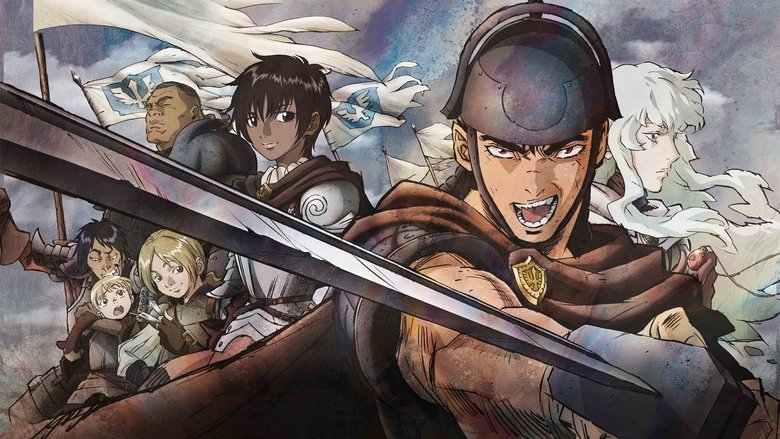
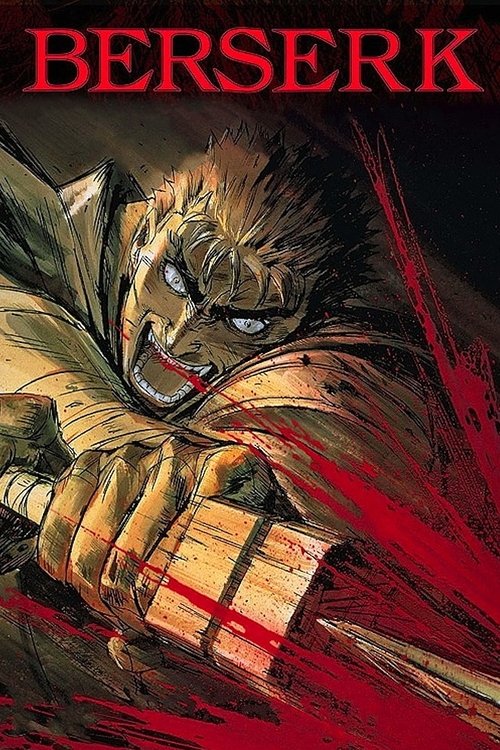
剣風伝奇ベルセルク
"This sword is the proof that I have lived."
Berserk - Symbolism & Philosophy
Symbols & Motifs
The Behelit (The Egg of the King)
The Crimson Behelit is a powerful symbol of fate, sacrifice, and the temptation of power. It is an artifact that connects the physical world to a demonic, astral plane. It represents a key to unlocking one's ultimate desire, but at the cost of sacrificing what is most precious, symbolizing the corrupting nature of absolute power and the terrible price of certain dreams.
The Behelit is in Griffith's possession throughout the series. Its significance is foreshadowed by the apostle Nosferatu Zodd, who recognizes it and spares Griffith and Guts. It remains a mysterious object until the climax, when a desperate and broken Griffith's anguish activates it, triggering the catastrophic event known as the Eclipse and leading to his rebirth as a member of the God Hand.
The Brand of Sacrifice
A mystical mark placed upon those chosen as sacrifices during the Eclipse. It symbolizes an inescapable fate and perpetual suffering. Those who bear the brand are eternally haunted by demons and spirits, drawn to the brand like moths to a flame. For Guts, it is a constant, painful reminder of his trauma, his loss, and the demonic world that now hunts him, signifying his status as a struggler caught between the physical and astral realms.
The brand is inflicted upon all members of the Band of the Hawk during the Eclipse, marking them for death. Guts and Casca are the only branded survivors. Guts' brand is on his neck and bleeds in the presence of powerful demonic entities, serving as a painful warning system in his ongoing fight for survival after the events of the series.
Guts' Dragonslayer Sword
Though the massive sword Guts wields after the Eclipse isn't central to the 1997 series, his oversized sword throughout the Golden Age is symbolic of his immense strength and brutal approach to life. It represents his struggle against overwhelming odds. It is less a tool of finesse and more an extension of his will to survive—a massive, unrefined lump of iron that crushes obstacles through sheer force, much like Guts himself.
Throughout the series, Guts' signature fighting style involves a sword far larger than what a normal man could wield. This is established in his first duel with Griffith and in battles like his fight against one hundred soldiers. It solidifies his reputation as a fearsome warrior and physically represents the immense burdens he carries and the brutal path he walks.
Philosophical Questions
What is the true cost of an absolute dream?
The series explores this question through Griffith, whose dream of obtaining a kingdom is so powerful it becomes his entire identity. "Berserk" meticulously documents the moral compromises, manipulations, and bloodshed he justifies as necessary steps. The ultimate exploration comes during the Eclipse, where the question is posed literally: is your dream worth the lives of everyone you care about? Griffith's answer serves as a dark thesis on the monstrous nature of unchecked ambition.
Are we in control of our own destiny?
This is a central philosophical conflict in "Berserk." The concept of causality, or fate, is presented as an almost irresistible current, suggesting that major events and the roles of key individuals are preordained. However, the narrative champions the act of struggling against this current as the defining characteristic of humanity. Guts is the embodiment of this struggle—a man who constantly defies his expected fate through sheer force of will. The series doesn't provide a clear answer but suggests that the meaning of life is found not in escaping fate, but in the relentless fight against it.
What does it mean to have a purpose?
The series contrasts two paths to finding purpose. Griffith's purpose is a grand, external goal—a kingdom—that he pursues relentlessly. Guts, on the other hand, starts with no purpose beyond survival. His journey through the series is an internal one, seeking a reason to live for himself. "Berserk" suggests that true purpose may not be a grand destiny, but something more personal: finding a reason to wield one's own sword, to protect others, and to define one's own existence outside the dreams of others.
Core Meaning
The core meaning of "Berserk" revolves around the themes of ambition, purpose, and the struggle between fate and free will. It questions what a person is willing to sacrifice to achieve their dream, as exemplified by the contrasting paths of Guts and Griffith. Guts' journey is an agonizing search for his own purpose, separate from the ambitions of others, questioning what it means to live for oneself rather than merely survive. Griffith's arc, conversely, is a chilling exploration of absolute ambition and the dehumanizing cost of power. Ultimately, the series posits that while causality and destiny may be powerful forces, the human will to struggle against them—even in the face of overwhelming despair—is what defines humanity.