Berserk
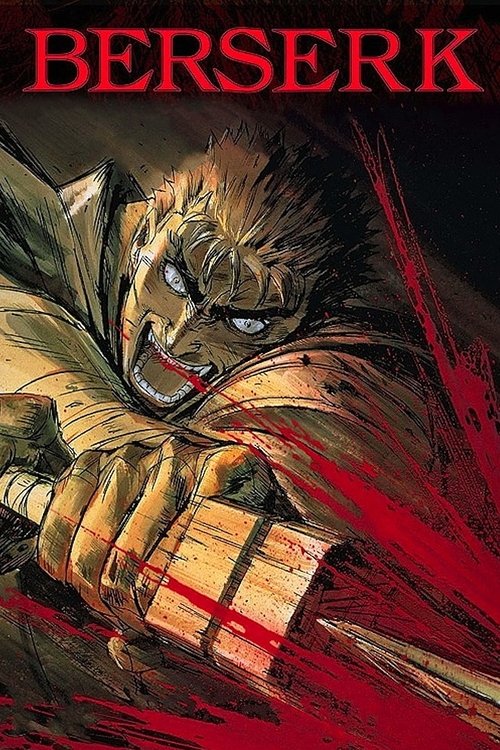
A dark fantasy tapestry woven with brutal ambition and harrowing despair, depicting a lone warrior's struggle against a fate painted in blood and shadow.
Berserk

Berserk

剣風伝奇ベルセルク

"This sword is the proof that I have lived."

08 October 1997 — 01 April 1998 Japan 1 season 25 episode Ended ⭐ 8.5 (707)
Cast: Nobutoshi Canna, Toshiyuki Morikawa, Yuko Miyamura, Tomohiro Nishimura, Unsho Ishizuka
Animation Sci-Fi & Fantasy Action & Adventure
Ambition and Dreams Fate vs. Free Will Betrayal and Friendship Humanity and Monstrosity

Overview

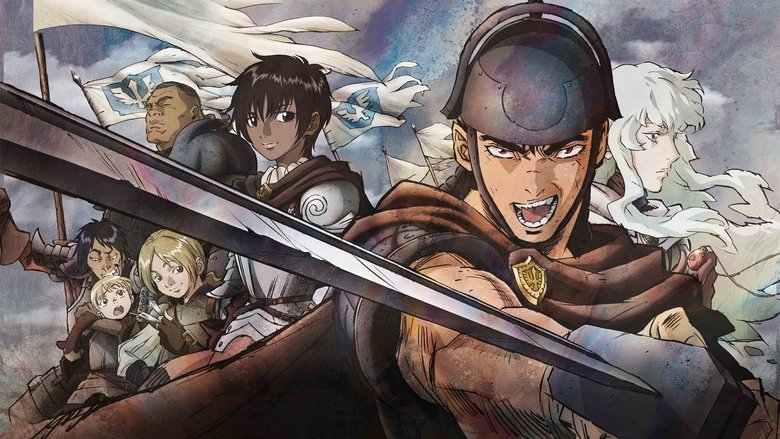
Set in a grim, medieval-inspired world, "Berserk" (1997) chronicles the life of Guts, a lone mercenary of immense skill and fortitude, born from a hanged corpse and raised on the battlefield. His solitary existence is shattered when he is defeated by and forced to join the Band of the Hawk, a charismatic and ruthlessly ambitious mercenary group led by the ethereal Griffith. The series meticulously details the Hawks' rise to prominence in the war-torn kingdom of Midland, exploring the deep, complex, and ultimately tragic relationships that form between Guts, Griffith, and Casca, the band's sole female commander.

As Guts finds a semblance of camaraderie and purpose for the first time, Griffith's insatiable ambition to obtain his own kingdom drives him to climb the social and military ladder. The story focuses on the "Golden Age" arc of the manga, a period of glorious victories and deep personal bonds. However, this era of triumph is merely a prelude to a catastrophic downfall, as personal dreams, deep-seated insecurities, and the currents of a predetermined fate converge, leading to an infamous and devastating conclusion that irrevocably alters the lives of all involved.
Core Meaning

The core meaning of "Berserk" revolves around the themes of ambition, purpose, and the struggle between fate and free will. It questions what a person is willing to sacrifice to achieve their dream, as exemplified by the contrasting paths of Guts and Griffith. Guts' journey is an agonizing search for his own purpose, separate from the ambitions of others, questioning what it means to live for oneself rather than merely survive. Griffith's arc, conversely, is a chilling exploration of absolute ambition and the dehumanizing cost of power. Ultimately, the series posits that while causality and destiny may be powerful forces, the human will to struggle against them—even in the face of overwhelming despair—is what defines humanity.

Thematic DNA

Ambition and Dreams 35%
Fate vs. Free Will 30%
Betrayal and Friendship 20%
Humanity and Monstrosity 15%

Ambition and Dreams

This is the central theme, primarily explored through Griffith's unwavering desire for a kingdom and Guts' journey to find his own dream. Griffith believes true equals are only those who pursue their own dreams, a statement that profoundly impacts Guts and sets him on a path of self-discovery. The series scrutinizes the nature of ambition, showing both its power to inspire greatness and its capacity to corrupt absolutely, leading to catastrophic betrayal.

Fate vs. Free Will

"Berserk" constantly questions whether human lives are governed by a higher power or by individual choice. The concept of causality is a recurring motif, suggesting a predetermined path for certain individuals. Guts embodies the struggle against this seemingly inescapable destiny, his entire existence a battle against the current. Griffith's ultimate decision, however, can be seen as either the culmination of fate or a profound act of free will, a choice to sacrifice his humanity for his dream, leaving the question ambiguous for the audience.

Betrayal and Friendship

The camaraderie within the Band of the Hawk provides the emotional core of the series. For Guts, a man who has only known betrayal and solitude, the bonds he forms with the Hawks, particularly Casca and Griffith, are transformative. This makes the story's climax all the more devastating. The theme explores the fragility of trust and how the deepest friendships can curdle into the most profound hatred, with betrayal serving as the ultimate catalyst for the series' tragic trajectory.

Humanity and Monstrosity

The series delves into the darkness that resides within the human heart. It explores how trauma, ambition, and despair can push individuals to commit monstrous acts. Griffith's transformation is the most literal example, but Guts too must constantly fight his own inner 'beast' born of rage and trauma. The narrative consistently blurs the line between man and monster, suggesting that the greatest horrors are not supernatural, but born from very human desires and failings.

Character Analysis

Guts

Nobutoshi Canna

Archetype: Antihero / Tragic Hero
Key Trait: Indomitable Will

Motivation

Initially, Guts' motivation is simple survival. He fights because it's all he knows how to do. After joining the Band of the Hawk, and especially after hearing Griffith's speech about dreams, his motivation shifts to finding his own purpose and becoming Griffith's equal. Following the traumatic events of the series finale, his motivation is forged into an all-consuming desire for revenge against Griffith and the God Hand.

Character Arc

Guts begins as a stoic, emotionally scarred mercenary who trusts no one and lives only for the next battle. Joining the Band of the Hawk forces him to confront his isolation, and he slowly learns the value of camaraderie and finds a sense of belonging. His arc is defined by his search for a personal dream, distinct from Griffith's. He evolves from a man who only knows how to survive into someone who wants to live for a purpose, culminating in his decision to leave the Hawks. This act of self-determination, however, inadvertently triggers the series' tragic climax, leaving him broken but imbued with a new, terrible purpose: vengeance.

Griffith

Toshiyuki Morikawa

Archetype: Fallen Hero / Antagonist
Key Trait: Unbound Ambition

Motivation

Griffith's singular motivation is the attainment of his own kingdom, a dream he has held since childhood. He is willing to do anything, sacrifice anyone, and endure any hardship to achieve it. His actions, whether charming a princess or leading a bloody battle, are all steps toward this ultimate goal. After Guts leaves, his motivation becomes twisted by despair and a perceived betrayal, leading him to grasp for his dream through supernatural, horrific means.

Character Arc

Griffith is introduced as a charismatic, ambitious, and seemingly noble leader with a powerful dream of obtaining his own kingdom. He appears to be a messianic figure, leading his followers to glory. However, his ambition is absolute and masks a profound narcissism. His arc is a descent from a celebrated hero to a broken man, and finally, into a demonic entity. Guts' departure shatters his composure, revealing that his sense of ownership over Guts was crucial to his identity. This psychological devastation leads to his downfall, imprisonment, and eventual choice during the Eclipse to sacrifice everything and everyone he once led to be reborn as the god-like being, Femto.

Casca

Yuko Miyamura

Archetype: Warrior / Love Interest
Key Trait: Loyalty and Resilience

Motivation

Casca's primary motivation for most of the series is to serve Griffith and help him achieve his dream, viewing him as her savior. She strives to be his most useful tool on the battlefield. As her relationship with Guts develops, her motivation becomes more complex, torn between her unwavering loyalty to Griffith and her burgeoning love for Guts, who sees her as a person rather than just a soldier.

Character Arc

Casca is a highly skilled and respected commander, fiercely loyal to Griffith, who saved her from a traumatic childhood. Initially, she resents Guts, seeing him as a reckless brute who disrupts the Hawks and distracts Griffith. Over time, as they fight alongside each other, her animosity turns to respect and eventually deep affection. Her arc is about finding her own identity and love outside of her devotion to Griffith. She forms a powerful bond with Guts, and they find solace in each other. This development is brutally erased in the series finale, where she suffers unspeakable trauma that leaves her mentally broken, a tragic end to her journey of self-discovery within the series' timeline.

Symbols & Motifs

The Behelit (The Egg of the King)

Meaning:

The Crimson Behelit is a powerful symbol of fate, sacrifice, and the temptation of power. It is an artifact that connects the physical world to a demonic, astral plane. It represents a key to unlocking one's ultimate desire, but at the cost of sacrificing what is most precious, symbolizing the corrupting nature of absolute power and the terrible price of certain dreams.

Context:

The Behelit is in Griffith's possession throughout the series. Its significance is foreshadowed by the apostle Nosferatu Zodd, who recognizes it and spares Griffith and Guts. It remains a mysterious object until the climax, when a desperate and broken Griffith's anguish activates it, triggering the catastrophic event known as the Eclipse and leading to his rebirth as a member of the God Hand.

The Brand of Sacrifice

Meaning:

A mystical mark placed upon those chosen as sacrifices during the Eclipse. It symbolizes an inescapable fate and perpetual suffering. Those who bear the brand are eternally haunted by demons and spirits, drawn to the brand like moths to a flame. For Guts, it is a constant, painful reminder of his trauma, his loss, and the demonic world that now hunts him, signifying his status as a struggler caught between the physical and astral realms.

Context:

The brand is inflicted upon all members of the Band of the Hawk during the Eclipse, marking them for death. Guts and Casca are the only branded survivors. Guts' brand is on his neck and bleeds in the presence of powerful demonic entities, serving as a painful warning system in his ongoing fight for survival after the events of the series.

Guts' Dragonslayer Sword

Meaning:

Though the massive sword Guts wields after the Eclipse isn't central to the 1997 series, his oversized sword throughout the Golden Age is symbolic of his immense strength and brutal approach to life. It represents his struggle against overwhelming odds. It is less a tool of finesse and more an extension of his will to survive—a massive, unrefined lump of iron that crushes obstacles through sheer force, much like Guts himself.

Context:

Throughout the series, Guts' signature fighting style involves a sword far larger than what a normal man could wield. This is established in his first duel with Griffith and in battles like his fight against one hundred soldiers. It solidifies his reputation as a fearsome warrior and physically represents the immense burdens he carries and the brutal path he walks.

Memorable Quotes

A friend would not just follow another's dream... a friend would find his own reason for living.

— Guts

Context:

This is from Guts' internal monologue during the iconic "Bonfire of Dreams" scene in Episode 10, "Noble Man." After overhearing Griffith's definition of a 'friend,' Guts reflects on his own life and his place within the Band of the Hawk, ultimately resolving to leave and find his own path.

Meaning:

This quote encapsulates the philosophical core of Guts' journey. It signifies his realization that to be Griffith's true equal, he cannot simply be a tool for Griffith's ambition. He must forge his own identity and purpose, a decision that fundamentally alters their relationship and sets the entire tragedy in motion.

Throughout my life, the moments and people who have defined me... they have all been illuminated by sparks.

— Godo

Context:

Godo says this to Guts in Episode 22, "The Parting," while working at his forge. He reflects on his own life spent hammering steel, realizing that while he may have forgotten his original purpose, the sparks created in the process gave his life meaning. It's a pivotal moment of wisdom for Guts as he recovers from his wounds and contemplates his future.

Meaning:

Spoken by the blacksmith Godo, this quote serves as a powerful metaphor for life's fleeting but brilliant moments of meaning and connection. It suggests that purpose isn't found in a grand destination but in the brief, intense sparks of passion, struggle, and human connection that illuminate the darkness of a harsh world.

I will sacrifice.

— Griffith

Context:

Griffith utters this in the final episode, Episode 25, "Time of Eternity," during the Eclipse. Presented with the choice by the demonic God Hand to sacrifice his comrades in exchange for godhood, the broken and desperate Griffith makes his fateful decision, sealing the doom of the Band of the Hawk.

Meaning:

These three words are the chilling culmination of Griffith's character arc. They represent his ultimate choice to abandon his humanity and betray every bond of loyalty and friendship he ever forged in the pursuit of his dream. It is the point of no return, where ambition fully eclipses morality, and is one of the most infamous lines in anime history.

Episode Highlights

The Black Swordsman

S1E1

The series begins in medias res, introducing a grim, vengeful Guts years after the main events of the story. This episode establishes the dark, violent tone and introduces the supernatural elements, showing Guts hunting demonic Apostles and bearing the mysterious Brand of Sacrifice. It serves as a framing device, immediately posing questions about what horrors could have created this man.

Significance:

This episode is crucial for context, though it chronologically takes place after the rest of the series. It establishes the stakes and the tragic endpoint towards which the subsequent flashback, the Golden Age arc, is heading. It immediately hooks the viewer with mystery and the promise of a dark, compelling backstory.

Bonfire of Dreams

S1E10

A quiet, introspective episode centered on a conversation between Guts and Casca by a campfire. It delves deep into their pasts, motivations, and their complex views on Griffith and his dream. The episode is renowned for its poignant dialogue and character development, culminating in Guts' internal resolution to leave the Band of the Hawk to find his own dream.

Significance:

This is arguably the most important episode for understanding the central character dynamics and philosophical themes. Griffith's overheard definition of a friend becomes the catalyst for Guts' entire character arc and the eventual dissolution of their relationship, making this episode the turning point of the entire Golden Age story.

One-Hundred Man Slayer

S1E14

This episode showcases Guts' legendary combat prowess. After Casca falls from a cliff during a battle, Guts single-handedly holds off a charge of one hundred enemy soldiers to protect her until morning. The feat earns him his famous title and solidifies his status as a near-superhuman warrior within the world.

Significance:

Beyond the spectacular action, this episode is a major milestone in the relationship between Guts and Casca. Guts' selfless act of devotion fundamentally changes how Casca views him, laying the groundwork for their future romance and moving her loyalty away from being solely focused on Griffith.

The Decisive Battle

S1E18

Guts decides to leave the Band of the Hawk. To do so, he must defeat Griffith in a duel, just as he did to join. In a shocking and swift confrontation, Guts defeats Griffith, shattering Griffith's composure and sense of ownership. A devastated Griffith then makes a fateful, reckless decision to sleep with Princess Charlotte.

Significance:

This episode marks the beginning of the end for the Golden Age. Guts' victory and departure is the direct trigger for Griffith's catastrophic downfall. Griffith's subsequent actions lead to his imprisonment and torture, setting the stage for the final, tragic sequence of events.

The Eclipse

S1E24

The horrifying climax begins. After a year of torture, Griffith is rescued, but he is a broken shell of his former self. His despair activates the Crimson Behelit, transporting the Band of the Hawk to a hellish dimension where they are branded for sacrifice and confronted by the God Hand.

Significance:

This episode begins the series' infamous finale, a descent into surreal horror and absolute despair. It is the point of no return, where the supernatural foreshadowing comes to fruition and the themes of fate and sacrifice are realized in the most brutal way imaginable.

Time of Eternity

S1E25

The Band of the Hawk is slaughtered by Apostles. In the midst of the carnage, Griffith chooses to sacrifice his comrades to be reborn as Femto, the fifth God Hand. He then assaults Casca in front of Guts, who in a desperate rage, cuts off his own arm and loses an eye trying to save her. The series ends abruptly with Guts, having survived, now as the Black Swordsman, vowing revenge.

Significance:

This is one of the most notorious and shocking endings in anime history. It provides a devastating conclusion to the Golden Age arc, cementing Griffith's transformation into a true villain and establishing Guts' future quest for vengeance. Its abrupt, cliffhanger nature leaves an indelible, haunting impact on the viewer.

Philosophical Questions

What is the true cost of an absolute dream?

The series explores this question through Griffith, whose dream of obtaining a kingdom is so powerful it becomes his entire identity. "Berserk" meticulously documents the moral compromises, manipulations, and bloodshed he justifies as necessary steps. The ultimate exploration comes during the Eclipse, where the question is posed literally: is your dream worth the lives of everyone you care about? Griffith's answer serves as a dark thesis on the monstrous nature of unchecked ambition.

Are we in control of our own destiny?

This is a central philosophical conflict in "Berserk." The concept of causality, or fate, is presented as an almost irresistible current, suggesting that major events and the roles of key individuals are preordained. However, the narrative champions the act of struggling against this current as the defining characteristic of humanity. Guts is the embodiment of this struggle—a man who constantly defies his expected fate through sheer force of will. The series doesn't provide a clear answer but suggests that the meaning of life is found not in escaping fate, but in the relentless fight against it.

What does it mean to have a purpose?

The series contrasts two paths to finding purpose. Griffith's purpose is a grand, external goal—a kingdom—that he pursues relentlessly. Guts, on the other hand, starts with no purpose beyond survival. His journey through the series is an internal one, seeking a reason to live for himself. "Berserk" suggests that true purpose may not be a grand destiny, but something more personal: finding a reason to wield one's own sword, to protect others, and to define one's own existence outside the dreams of others.

Alternative Interpretations

One of the most debated aspects of the series is the nature of Griffith's feelings for Guts. While on the surface it is a deep friendship and rivalry, many critics and fans interpret a significant, unrequited romantic subtext in Griffith's obsession with 'owning' Guts. From this perspective, Guts' departure is not just the loss of a soldier but a profound romantic rejection, which makes Griffith's psychological breakdown and his eventual violation of Casca an act of vengeful, jealous rage directed at Guts.

Another area of interpretation revolves around the theme of causality. One perspective is that Griffith's actions were predetermined and that he had no true choice but to become Femto, making him a tragic figure caught in the gears of fate. An alternative reading argues that the God Hand merely presented him with a choice. In this view, Griffith's decision to sacrifice the Hawks was a definitive act of free will, born from his own supreme selfishness and despair, making him not a victim of destiny but a monster of his own creation.

Cultural Impact

The 1997 "Berserk" anime is considered a landmark in the dark fantasy genre. Despite covering only a fraction of the manga's story, its mature and unflinching exploration of complex themes like ambition, trauma, and causality set it apart from its contemporaries. The series is lauded for its deep character studies, particularly the intricate and tragic relationship between Guts and Griffith, which has become a benchmark for character writing in anime and manga.

Its influence is widely seen in other media, most notably in video games. The 'Souls' series, including Demon's Souls and Dark Souls, developed by FromSoftware, draws heavy thematic and aesthetic inspiration from "Berserk's" world, enemy designs, and overall oppressive atmosphere. The iconic imagery of Guts and his massive sword has influenced countless other character designs in fantasy media.

Critically, the series received widespread acclaim for its compelling narrative and complex characters, though some noted the dated animation. For many Western fans, the 1997 anime was their first introduction to the world of "Berserk" and it played a crucial role in establishing the manga's cult following outside of Japan. Its infamous cliffhanger ending is still debated today, both criticized for its abruptness and praised for its haunting, unforgettable impact. The series' legacy is that of a masterclass in tragic storytelling that, despite its age and incomplete nature, remains one of the most respected and influential anime adaptations ever made.

Audience Reception

The 1997 "Berserk" anime is overwhelmingly praised by audiences and is widely considered a cult classic, often ranking among the best anime of all time on fan sites like MyAnimeList. Viewers consistently laud its mature storytelling, deep psychological themes, and complex character development, especially the tragic dynamic between Guts, Griffith, and Casca. The soundtrack by Susumu Hirasawa is iconic and almost universally acclaimed, with tracks like "Guts' Theme" and "Forces" becoming synonymous with the franchise.

The main points of criticism are generally directed at two aspects. Firstly, the animation, which relies heavily on still frames and panning shots, is seen as dated by some, though many defend it as a stylistic choice that adds to the grim atmosphere. Secondly, the infamous cliffhanger ending is highly controversial. While some viewers were frustrated by the lack of resolution and the abrupt cut-off, many others argue that the shocking, bleak finale is unforgettable and perfectly encapsulates the series' themes of despair, leaving a lasting and powerful impact. Despite these criticisms, the 1997 adaptation is often held up as the most faithful in spirit to the manga's Golden Age arc, far surpassing the audience reception of the later CGI adaptations.

Interesting Facts

  • The 1997 anime was created with the close supervision of the original manga author, Kentaro Miura, who approved the changes made for the adaptation, such as the removal of the character Puck, to keep the focus tightly on the human drama between Guts and Griffith.
  • Contrary to popular belief that the series had a low budget, producer Toshio Nakatani stated the budget was actually twice the amount of an average TV anime at the time. The limited animation style was a deliberate artistic choice by director Naohito Takahashi, influenced by the work of Osamu Dezaki, focusing on impactful still frames and dramatic composition over fluid movement.
  • The iconic and ethereal soundtrack was composed by Susumu Hirasawa. Kentaro Miura was already a fan of Hirasawa's music and would listen to it while drawing the manga, and he specifically requested Hirasawa for the anime adaptation.
  • The anime notably omits the character of Skull Knight. This was a significant change from the manga, as Skull Knight is the one who ultimately rescues Guts and Casca from the Eclipse. His absence is a primary reason the anime ends on such an abrupt cliffhanger, as there was no established mechanism for their escape.
  • The series was created during a period of heightened sensitivity to violence in media in Japan. Despite this, the producer insisted on not censoring the blood and violence, believing it was essential to conveying the passion and reality of the characters' struggles.

⚠️ Spoiler Analysis

Click to reveal detailed analysis with spoilers

Frequently Asked Questions

Explore More About This Movie

Dive deeper into specific aspects of the movie with our detailed analysis pages

Comments (0)

Leave a comment

No comments yet. Be the first to share your thoughts!