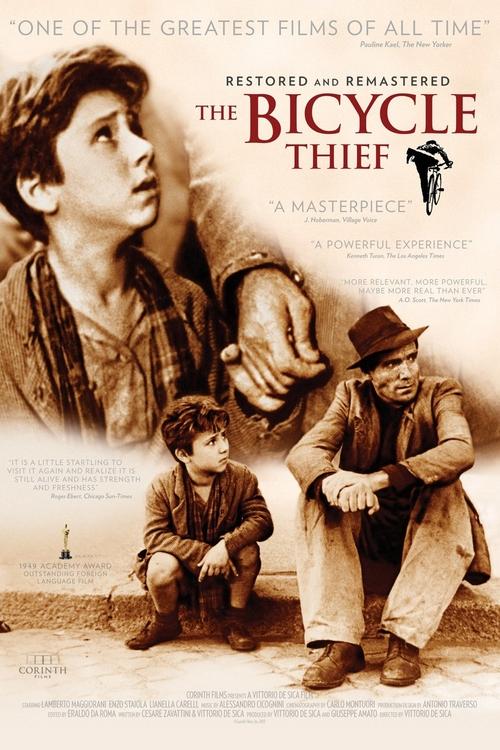
Ladri di biciclette
"The Prize Picture They Want to Censor!"
Bicycle Thieves - Ending Explained
⚠️ Spoiler Analysis
The entire plot of "Bicycle Thieves" is a descent into despair, culminating in a devastating climax. After an exhaustive and fruitless search across Rome, Antonio and Bruno finally track down the man who they believe is the thief. They confront him in his neighborhood, but the community aggressively defends the man, who feigns an epileptic seizure. A policeman arrives but can do nothing; there are no witnesses, the bicycle is gone, and the entire neighborhood provides an alibi for the suspect. Antonio is humiliated and forced to leave.
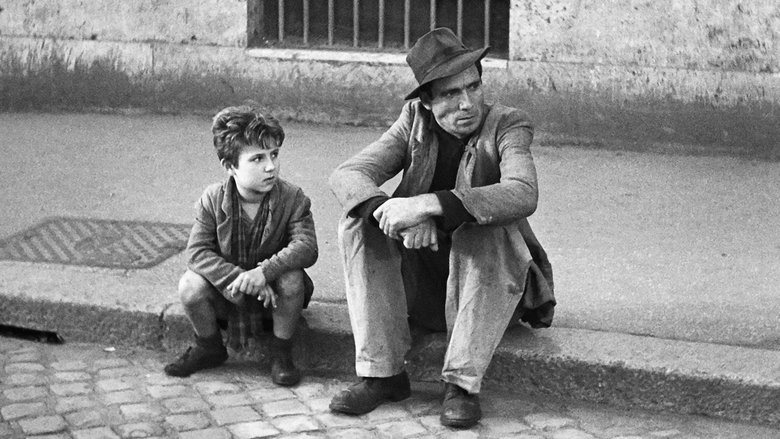
Defeated, Antonio and Bruno sit near a football stadium as crowds of spectators pour out. Antonio notices a single, unattended bicycle. In a moment of absolute desperation, he sends Bruno away on a tram so his son won't witness what he's about to do. He then circles back and steals the bicycle. However, he is clumsy and immediately caught by a mob and the bicycle's owner. He is slapped, his hat knocked off, and thoroughly humiliated. Just as he is being dragged away, a tearful Bruno, who missed the tram, runs to his father's side. Seeing the child's anguish, the owner of the bicycle takes pity on Antonio and tells the mob to let him go. The film's final, unforgettable shot shows Antonio, weeping with shame, walking away into the crowd with Bruno, who silently takes his father's hand. They have not recovered their bicycle and have lost their hope and moral high ground. The plural title, "Bicycle Thieves," becomes fully realized: the society of poverty has turned the victim into a thief.
Alternative Interpretations
While the film is overwhelmingly seen as a social realist drama, it allows for several layers of interpretation. A Marxist Reading: Many critics view the film through a Marxist lens, seeing Antonio as a member of the proletariat crushed by an indifferent capitalist system. The police, the church, and even his fellow workers (in their lack of solidarity) are all parts of a societal structure that perpetuates poverty. The film illustrates how, in such a system, "the poor must steal from each other in order to survive," turning the working class against itself.
An Existential Fable: Another interpretation views the film as an existential fable about the human condition. Antonio's search is not just for a bicycle but for meaning and justice in a seemingly absurd and indifferent universe. The random cruelty of the theft and the futility of his search highlight themes of alienation and the struggle of the individual against overwhelming and chaotic forces beyond his control.
A Christian Allegory: Some analyses interpret the story as a Christian allegory. Antonio is a fallen everyman, whose initial hope gives way to a crisis of faith and a moral transgression. The restaurant scene can be seen as a form of Last Supper before his final fall from grace. The ending, where he is shown mercy by the bicycle's owner and is reunited in suffering with his son, can be seen as a moment of painful, human grace, emphasizing forgiveness and shared hardship over retribution.