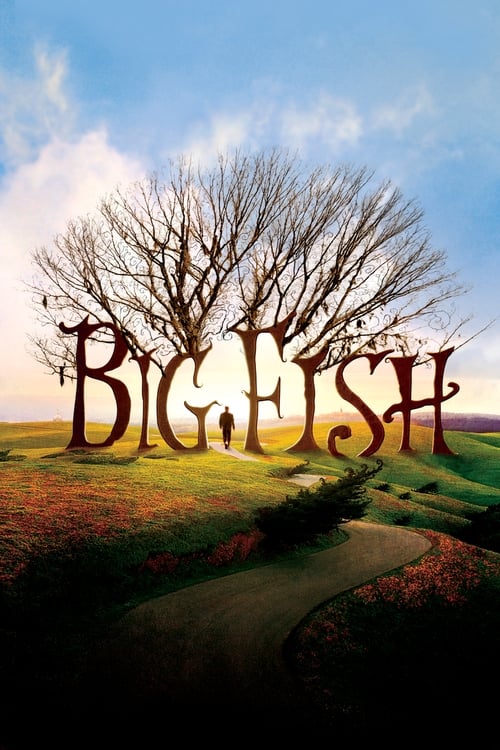
Big Fish
Southern Gothic/Fantasy + Melancholy & Wonder + A giant fish swimming away into a golden sunset. A poignant exploration of a dying father's tall tales and a son's desperate search for the truth beneath the myths.
Big Fish
Big Fish

"An adventure as big as life itself."

04 December 2003 United States of America 125 min ⭐ 7.8 (7,576)
Director: Tim Burton
Cast: Ewan McGregor, Albert Finney, Billy Crudup, Jessica Lange, Helena Bonham Carter
Drama Fantasy Adventure
Storytelling vs. Reality Father-Son Reconciliation Mortality and Legacy Growth and Ambition
Budget: $70,000,000
Box Office: $123,200,000

Big Fish - Ending Explained

⚠️ Spoiler Analysis

The film's climax reveals that while Edward exaggerated the details, the essence of his stories was true. In the final scene at the hospital, Will finally stops fighting and tells his dying father the story of his escape to the river. This act of storytelling allows Edward to die in peace.

At the funeral, Will sees the real-life counterparts of his father's characters: the Giant is a very tall man, the twin singers are identical twins (not conjoined), and the ringmaster is a short, energetic man. They are ordinary people whom Edward turned into myths. This confirms that Edward didn't lie to hide a secret life, but to make the ordinary world magical. Will realizes his father was a 'Big Fish' who touched countless lives, and in the final shot, Will is seen telling these same stories to his own son, completing the cycle.

Alternative Interpretations

Spectre as Purgatory/Limbo: Some critics interpret the town of Spectre not just as a hidden village, but as a metaphysical waiting room for the afterlife. The shoes on the line represent souls giving up their earthly journey. Edward's arrival early in life suggests a near-death experience, and his return later signifies his acceptance of death.

Edward as a Serial Liar: A cynical reading suggests Edward was a narcissist who used stories to cover up his absences and infidelities (hinted at with Jenny). From this view, Will's acceptance isn't a discovery of truth, but a capitulation to his father's manipulation. However, the film strongly leans against this by showing the 'characters' at the funeral.

Will as the New Storyteller: The ending isn't just about Will understanding Edward; it's about the transfer of the mantle. By telling the final story at the river, Will ceases to be the 'dry realist' and becomes the new 'Big Fish,' ensuring the survival of the Bloom oral tradition.