
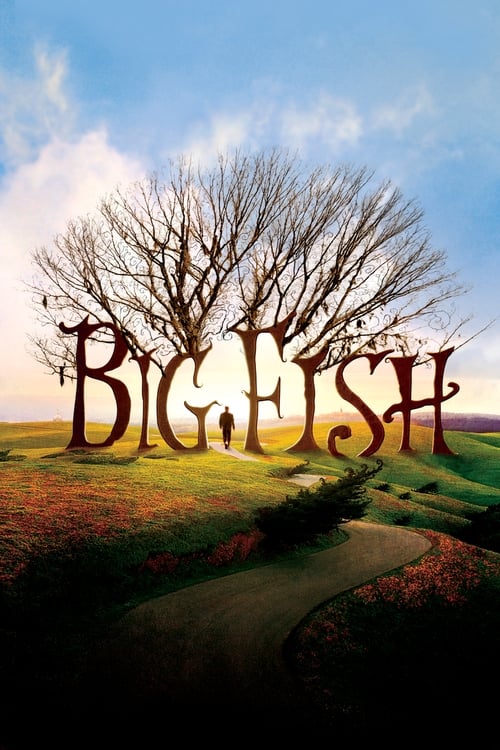
"An adventure as big as life itself."
Big Fish - Symbolism & Philosophy
Symbols & Motifs
The Big Fish
Symbolizes immortality, Edward Bloom himself, and the elusive nature of the truth. A fish that cannot be caught grows larger than life, just as Edward's legend does.
Appears in the opening narration, the story of the wedding ring, and the final transformative scene at the river.
The Glass Eye
Represents fear of the unknown and the ability to see one's fate. It suggests that knowing how the story ends allows one to live without fear.
Used by the Witch to show Edward his death; later associated with the old woman in the fraternity house.
The Town of Spectre
Symbolizes complacency, stagnation, or a false heaven/purgatory. It is a place of comfort where people stop moving forward.
Edward discovers this hidden town twice: once when he is too early to settle down, and later when he helps rebuild it.
Shoes on the Line
Represent abandoning one's journey and settling down. To leave Spectre, Edward must walk barefoot, symbolizing the pain required to grow.
Residents of Spectre throw their shoes over a power line, signifying they never intend to leave.
Water
Symbolizes the subconscious, transformation, and the boundary between life and death.
Edward is constantly associated with water: he requires it to not 'dry out,' and he returns to it in the finale.
Philosophical Questions
Is subjective myth more valuable than objective fact?
The film questions the utility of 'dry facts.' Edward's stories bring joy, inspire ambition, and build community. The film suggests that emotional truth—how an event felt—is a valid, perhaps superior, form of history compared to literal accuracy.
What constitutes immortality?
Big Fish proposes a secular form of immortality. We do not survive through a literal afterlife, but through the narratives we leave behind in the minds of others. To be remembered is to remain alive.
Core Meaning
At its heart, Big Fish is a meditation on the nature of truth and the immortality of storytelling. Director Tim Burton suggests that objective facts are often less meaningful than the stories we tell to make sense of our lives. The film posits that we become the stories we tell, and through them, we achieve a form of eternal life. It also explores the complicated dynamic of father-son relationships, moving from misunderstanding and resentment to acceptance and love.