"Drop everything. Save the world."
Big Hero 6 - Symbolism & Philosophy
Symbols & Motifs
Baymax
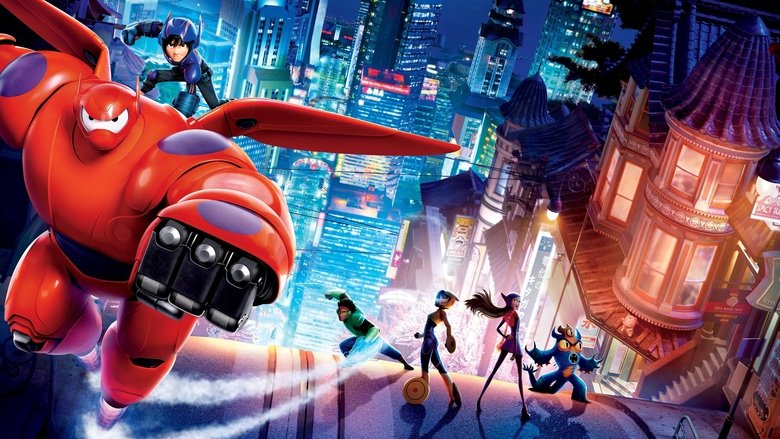
Baymax symbolizes Tadashi's spirit and legacy of altruism. His huggable, non-threatening design represents comfort and the physical manifestation of care, standing in stark contrast to the sharp, aggressive technology of the microbots.
Whenever Hiro is lost in anger or sadness, Baymax provides physical comfort (hugs) and medical logic that forces Hiro to confront his emotional state rather than ignore it.
The Microbots
They represent potential and fluidity. In the wrong hands (the villain), they become chaotic waves of destruction; in the right hands (Hiro), they are the building blocks of the future. They mirror the internal state of their controller.
Used by Hiro to create (transportation, buildings) and by the villain to destroy and attack.
The Kabuki Mask
A symbol of hidden identity and the loss of humanity. By wearing the mask, the villain sheds his former respected persona and becomes a faceless force of rage.
The villain, Yokai, never speaks while wearing the mask, enhancing his dehumanization until the mask is physically broken, revealing the broken man beneath.
Philosophical Questions
Can machines replace human connection?
Through Baymax, the film explores whether a programmed entity can provide genuine emotional support. While Baymax 'feels' nothing, his programmed empathy is functionally indistinguishable from love, suggesting that the effect of care matters more than the biological origin of it.
Is revenge a valid form of justice?
The film explicitly rejects the 'eye for an eye' morality often found in action films. When Hiro commands Baymax to kill Callaghan, it is framed as a horrific violation of Baymax's purpose. The film argues that true justice is about protection and restoration, not retribution.
Core Meaning
At its heart, the film is a meditation on grief and the choice between revenge and healing. While it wears the guise of a superhero origin story, its core message dictates that true strength comes not from aggression or technology, but from compassion and the support of a community. It contrasts Hiro's initial desire to destroy his brother's killer with Tadashi's legacy of healing, ultimately arguing that justice is restorative rather than retributive.