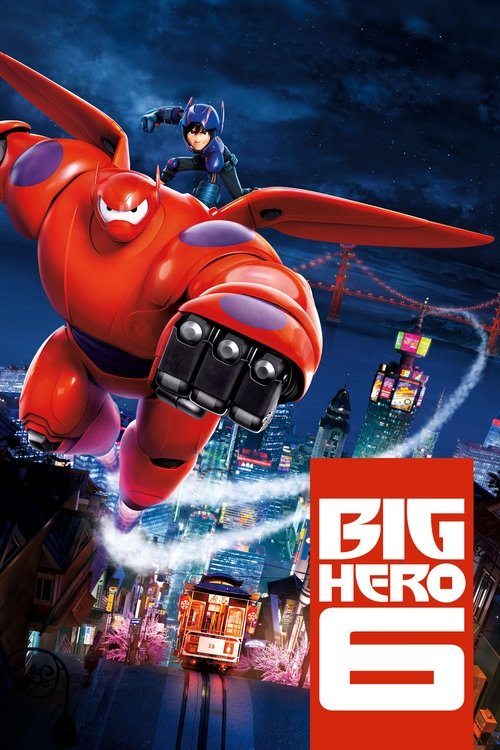
Big Hero 6
A vibrant fusion of Eastern and Western aesthetics where high-tech superhero action meets a tender exploration of grief. Through the soft, vinyl embrace of a robot, it visualizes the healing process as a journey from vengeance to justice.
Big Hero 6

Big Hero 6

"Drop everything. Save the world."

24 October 2014 United States of America 102 min ⭐ 7.7 (16,304)
Director: Don Hall Chris Williams
Cast: Scott Adsit, Ryan Potter, Daniel Henney, T.J. Miller, Jamie Chung
Animation Family Action Comedy Adventure
Grief and Healing Revenge vs. Justice The Ethics of Technology
Budget: $165,000,000
Box Office: $657,870,525

Overview

In the futuristic hybrid city of San Fransokyo, 14-year-old robotics prodigy Hiro Hamada spends his time hustling in back-alley bot fights. His directionless life takes a turn when his older brother, Tadashi, introduces him to his university lab and the eclectic group of friends within it. Inspired, Hiro invents mind-controlled "microbots" to gain admission to the school, but a tragic fire shortly after the showcase seemingly kills Tadashi and destroys Hiro's work.

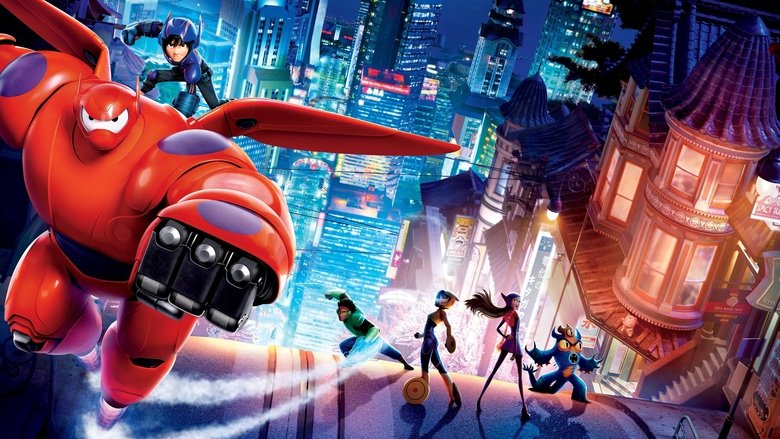
Consumed by grief, Hiro accidentally activates Baymax, a marshmallow-like inflatable healthcare companion created by Tadashi. When Baymax leads Hiro to a masked villain using the supposedly destroyed microbots, Hiro realizes the fire was no accident. He upgrades Baymax and bands together with Tadashi's lab friends—Go Go, Wasabi, Honey Lemon, and Fred—converting their scientific inventions into high-tech superhero gear to catch the criminal and unravel a conspiracy that hits closer to home than expected.
Core Meaning

At its heart, the film is a meditation on grief and the choice between revenge and healing. While it wears the guise of a superhero origin story, its core message dictates that true strength comes not from aggression or technology, but from compassion and the support of a community. It contrasts Hiro's initial desire to destroy his brother's killer with Tadashi's legacy of healing, ultimately arguing that justice is restorative rather than retributive.

Thematic DNA

Grief and Healing 40%
Revenge vs. Justice 30%
The Ethics of Technology 30%

Grief and Healing

The narrative serves as an allegory for the stages of grief. Hiro's journey from depression and isolation to anger (seeking revenge on the villain) and finally acceptance is mirrored by the villain's refusal to move on. Baymax acts as a literal and metaphorical healer, guiding Hiro through his emotional pain.

Revenge vs. Justice

The film juxtaposes Hiro's path with the villain's. Both suffer a traumatic loss, but while the villain allows his loss to turn him into a monster seeking destruction, Hiro—checked by his friends and Baymax—learns that vengeance honors no one and only perpetuates the cycle of pain.

The Ethics of Technology

Technology is presented as neutral; its morality depends on the user. The microbots can build or destroy; Baymax can be a heater or a killer. The film emphasizes that scientific advancement must be guided by human empathy and ethical responsibility.

Character Analysis

Hiro Hamada

Ryan Potter

Archetype: The Prodigy / The Grieving Hero
Key Trait: Genius-level intellect

Motivation

Initially motivated by self-interest, then by revenge for Tadashi's death, and finally by the desire to protect his friends and the innocent.

Character Arc

Starts as an aimless genius wasting potential, moves into a vengeful vigilante after tragedy, and evolves into a selfless hero who understands that helping others is the true way to honor his brother.

Baymax

Scott Adsit

Archetype: The Caregiver / The Innocent
Key Trait: Unwavering compassion

Motivation

To heal the sick and injured; specifically, to improve Hiro's emotional and physical well-being.

Character Arc

While a robot without feelings, his 'arc' is the expansion of his programming's application. He goes from strictly following medical protocols to understanding the complexities of human emotional needs, ultimately making a self-sacrificial choice.

Robert Callaghan (Yokai)

James Cromwell

Archetype: The Fallen Mentor / The Tragic Villain
Key Trait: Obsessive vengeance

Motivation

Revenge against Alistair Krei for the apparent death of his daughter, Abigail.

Character Arc

A respected professor who descends into madness after the loss of his daughter. He serves as a dark mirror to Hiro, showing what happens when grief is processed through vengeance without a support system.

Symbols & Motifs

Baymax

Meaning:

Baymax symbolizes Tadashi's spirit and legacy of altruism. His huggable, non-threatening design represents comfort and the physical manifestation of care, standing in stark contrast to the sharp, aggressive technology of the microbots.

Context:

Whenever Hiro is lost in anger or sadness, Baymax provides physical comfort (hugs) and medical logic that forces Hiro to confront his emotional state rather than ignore it.

The Microbots

Meaning:

They represent potential and fluidity. In the wrong hands (the villain), they become chaotic waves of destruction; in the right hands (Hiro), they are the building blocks of the future. They mirror the internal state of their controller.

Context:

Used by Hiro to create (transportation, buildings) and by the villain to destroy and attack.

The Kabuki Mask

Meaning:

A symbol of hidden identity and the loss of humanity. By wearing the mask, the villain sheds his former respected persona and becomes a faceless force of rage.

Context:

The villain, Yokai, never speaks while wearing the mask, enhancing his dehumanization until the mask is physically broken, revealing the broken man beneath.

Memorable Quotes

On a scale of 1 to 10, how would you rate your pain?

— Baymax

Context:

Said repeatedly by Baymax when activated, initially for physical bumps, but later resonating with Hiro's heartache.

Meaning:

A recurring medical query that evolves into an emotional check-in. It underscores the film's focus on internal/emotional pain being just as valid as physical injury.

Tadashi is here.

— Baymax

Context:

Baymax says this while showing video logs of Tadashi testing him, reminding Hiro that Baymax himself is Tadashi's enduring spirit.

Meaning:

A pivotal realization that those we lose are not truly gone as long as we remember them and uphold their values.

Look for a new angle.

— Tadashi Hamada

Context:

Flashbacks show Tadashi teaching this to Hiro to help him with his inventions, and Hiro later uses it to defeat the villain.

Meaning:

The film's mantra for problem-solving. It applies to engineering problems but also to life—when stuck in grief, one must find a new perspective to move forward.

I am satisfied with my care.

— Hiro Hamada

Context:

Hiro must say this to allow Baymax to shut down and sacrifice himself to save them inside the portal.

Meaning:

The deactivation phrase becomes a tearful farewell, symbolizing Hiro's acceptance of loss and his readiness to let go.

Philosophical Questions

Can machines replace human connection?

Through Baymax, the film explores whether a programmed entity can provide genuine emotional support. While Baymax 'feels' nothing, his programmed empathy is functionally indistinguishable from love, suggesting that the effect of care matters more than the biological origin of it.

Is revenge a valid form of justice?

The film explicitly rejects the 'eye for an eye' morality often found in action films. When Hiro commands Baymax to kill Callaghan, it is framed as a horrific violation of Baymax's purpose. The film argues that true justice is about protection and restoration, not retribution.

Alternative Interpretations

Some critics view the film as a critique of the traditional superhero origin. Instead of the hero's trauma leading directly to righteous crime-fighting, the film shows the 'vigilante phase' as a dangerous, emotionally unstable reaction to grief that must be corrected. Additionally, the villain Callaghan acts as a Dark Reflection of Hiro—showing what Hiro would have become if he hadn't listened to his friends: a man willing to destroy everything for the sake of a lost loved one.

Cultural Impact

Big Hero 6 was a critical and commercial success, winning the Academy Award for Best Animated Feature. It was praised for its diversity, introducing a mixed-race protagonist and a multicultural team without making it a central plot point, which was seen as a step forward for representation. The character of Baymax became a pop culture icon of comfort and mental health awareness. The film also sparked interest in STEM fields among children, portraying science as a 'superpower.' It spawned a 2D animated series and a later series of shorts, Baymax!, continuing its legacy in Disney's canon.

Audience Reception

Audiences overwhelmingly loved the film, particularly the emotional bond between Hiro and Baymax, which many found tear-jerking and heartfelt. The animation style of San Fransokyo was universally praised. However, some critics and viewers felt the villain twist was predictable and the third act fell into a formulaic 'Marvel-style' battle that lacked the uniqueness of the first half. Despite this, it remains a beloved modern Disney classic with a high rewatch value.

Interesting Facts

  • The movement of Baymax was modeled after the waddle of a baby penguin to make him appear non-threatening.
  • San Fransokyo was created using detailed data from the real San Francisco Assessor's office, containing over 83,000 buildings.
  • The film is loosely based on a Marvel comic series of the same name, but the characters and tone were drastically altered for the Disney film.
  • Baymax's soft, vinyl design was inspired by real-world research into 'soft robotics' at Carnegie Mellon University.
  • The production team created a new rendering software called Hyperion specifically to handle the complex lighting of the film, particularly for Baymax's translucent vinyl skin.
  • This was the first Disney animated film to feature Marvel characters after Disney's acquisition of Marvel in 2009.

Easter Eggs

Stan Lee Cameo

Stan Lee appears in a portrait as Fred's wealthy father and has a voice cameo in the post-credits scene, a tradition for Marvel-related films.

Hans Statue from Frozen

A statue of Prince Hans from Frozen is seen in the garden before Baymax blasts it with his rocket fist, a playful jab at the villain of the previous studio hit.

Feast Graffiti

Graffiti resembling the dog from the short film Feast (which played in theaters before Big Hero 6) can be seen on a wall in San Fransokyo.

Wreck-It Ralph Figurine

A small figure of Wreck-It Ralph can be seen on top of Hiro's computer monitor, referencing the director's previous work.

Bolt Photo

A photo of the dog from Disney's Bolt appears on the desk of the police officer, another nod to the directors' past filmography.

⚠️ Spoiler Analysis

Click to reveal detailed analysis with spoilers

Frequently Asked Questions

Explore More About This Movie

Dive deeper into specific aspects of the movie with our detailed analysis pages

Comments (0)

Leave a comment

No comments yet. Be the first to share your thoughts!