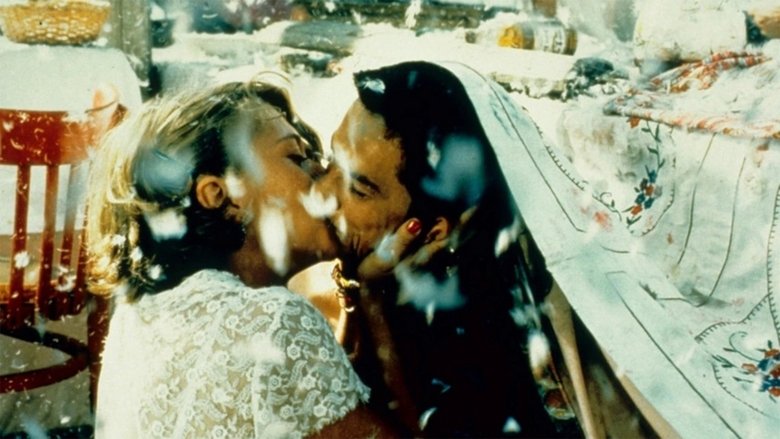

The film's chaotic climax expertly ties together its many sprawling subplots. After Zarije and Grga supposedly die, their families literally put them on ice to delay the funerals so the forced wedding between Zare and Afrodita can proceed. However, both grandfathers are actually alive (or miraculously resurrected), observing the madness.
During the wedding, Afrodita escapes and literally stumbles into Grga Veliki (Grga Pitić's giant grandson), fulfilling her dream of finding a tall man. They fall in love instantly. Meanwhile, Dadan's treachery is punished via laser-guided karma: Zare rigs the local outhouse and slips Dadan a laxative, resulting in the villain falling into a literal pit of feces. The film ends with Zare and Ida stealing the wedding money and escaping down the Danube to be married by a river official, achieving total liberation while the older, honorable generation watches approvingly.