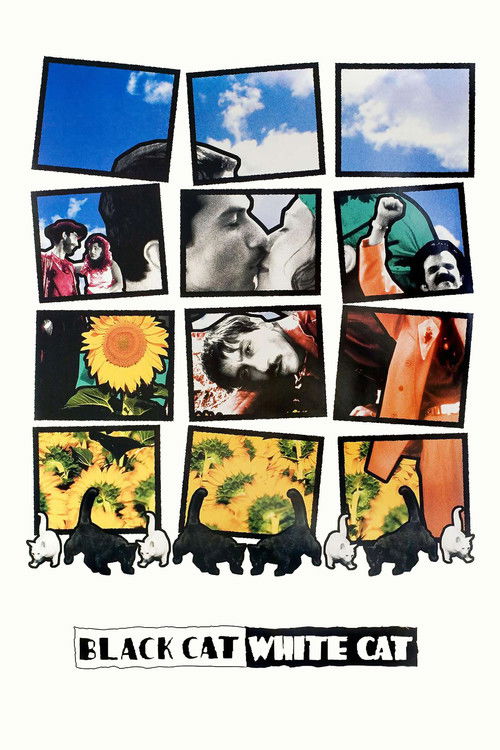
Black Cat, White Cat
This frantic romantic farce is a chaotic celebration of life, where the purity of young love blossoms amid a muddy criminal underworld, much like a stubborn pig steadily devouring an abandoned car.
Black Cat, White Cat

Black Cat, White Cat

Crna mačka, beli mačor

01 June 1998 France 127 min ⭐ 7.7 (802)
Director: Emir Kusturica
Cast: Bajram Severdžan, Srđan 'Žika' Todorović, Zabit Memedov, Florijan Ajdini, Branka Katić
Crime Comedy Romance
The Absurdity of Greed and Materialism The Triumph of Genuine Love over Forced Tradition The Clash of Generations Chaos as the Natural State of Life

Overview

Set on the picturesque but impoverished banks of the Danube, Black Cat, White Cat follows the absurd misadventures of a local Romani community. At the center of the chaos is Matko Destanov, a small-time hustler whose ambition constantly outstrips his competence. After a spectacularly botched train robbery scheme, Matko finds himself heavily in debt to Dadan Karambolo, a hyperactive, drug-fueled local gangster.

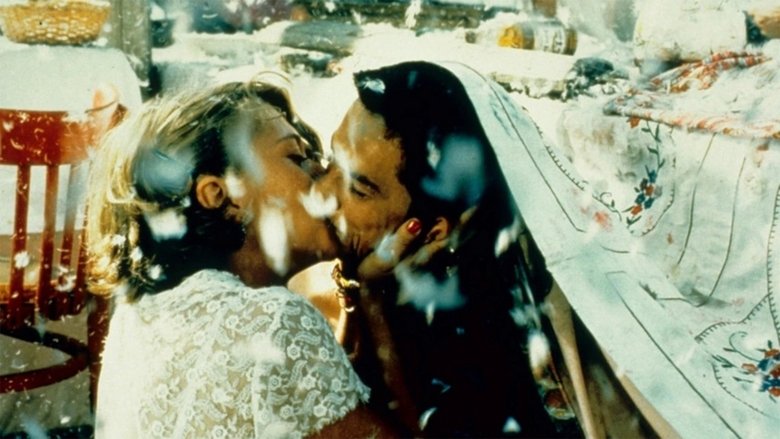
To settle the debt, Dadan forces Matko into an arrangement: Matko's teenage son, Zare, must marry Dadan's diminutive sister, Afrodita. The catch is that neither of the young people wants any part in this forced union. Zare is deeply in love with Ida, a spirited local barmaid, while Afrodita is holding out for the towering 'man of her dreams.'

What follows is a manic, slapstick-infused comedy of errors involving faked deaths, mismatched romances, and an absolutely unhinged wedding party. Director Emir Kusturica weaves a vibrant tapestry of village life, where animals roam freely through scenes and the relentless, driving tempo of brass band music propels the characters through a surreal, joyous struggle for freedom and love.
Core Meaning

At its core, Black Cat, White Cat is a jubilant, anarchic celebration of life's resilience against corruption and societal decay. Emir Kusturica uses the framework of a farce to contrast the innocence of genuine love against the absurdity of greed and forced tradition. The film suggests that amidst the lawlessness, hyperinflation, and moral bankruptcy of the post-Yugoslav landscape, human vitality, humor, and pure romance are the ultimate liberating forces.

Thematic DNA

The Absurdity of Greed and Materialism 30%
The Triumph of Genuine Love over Forced Tradition 30%
The Clash of Generations 20%
Chaos as the Natural State of Life 20%

The Absurdity of Greed and Materialism

Through characters like Matko and Dadan, the film mocks the relentless pursuit of wealth. Their schemes constantly backfire, highlighting how greed leads to indignity and chaos, culminating in Dadan literally falling into a pit of his own making.

The Triumph of Genuine Love over Forced Tradition

The central conflict revolves around an arranged marriage built on debt. Zare and Afrodita both rebel against this transactional view of human relationships, proving that true love cannot be bought, sold, or forced by the older generation.

The Clash of Generations

The film portrays a stark contrast between three generations: the romantic, honorable old-school mobsters (Grga and Zarije), the corrupt, bumbling middle generation (Matko and Dadan), and the innocent youth (Zare, Ida, Afrodita) who just want to escape the madness.

Chaos as the Natural State of Life

Through its magical realist lens and unpredictable pacing, the film embraces chaos. Animals wandering through scenes, sudden deaths and resurrections, and manic music reflect a world where the only way to survive is to laugh and adapt.

Character Analysis

Zare Destanov

Florijan Ajdini

Archetype: The Innocent Hero
Key Trait: Honest

Motivation

To marry his true love, Ida, and escape the corrupt influence of his father and Dadan.

Character Arc

Zare starts as a frustrated teen trapped in his father's incompetent, criminal world. Through his love for Ida, he finds the courage to rebel, outsmart the gangsters, and escape down the river to forge his own destiny.

Dadan Karambolo

Srđan 'Žika' Todorović

Archetype: The Villain / Madcap Gangster
Key Trait: Hyperactive

Motivation

To maintain power, secure wealth, and forcefully marry off his sister to save his own pride.

Character Arc

Dadan begins as the terrifying, coked-up ruler of the local underworld who manipulates everyone. His hubris and cruelty eventually lead to his humiliating downfall into a literal cesspit.

Matko Destanov

Bajram Severdžan

Archetype: The Fool / Antihero
Key Trait: Cowardly

Motivation

To get rich quick without doing any real work, leading him into disastrous alliances.

Character Arc

Matko spends the entire film making terrible decisions, betraying his friends, and gambling away his family's future. He experiences no real redemption, ending up as Dadan's sole remaining lackey.

Grga Pitić

Zabit Memedov

Archetype: The Godfather / Mentor
Key Trait: Romantic

Motivation

To preserve his legacy, help his old friend, and find a suitable wife for his giant grandson.

Character Arc

The aging, romantic mob boss who values loyalty over money. He reunites with his old friend Zarije, helps the younger generation escape, and affirms that honor still exists.

Ida

Branka Katić

Archetype: The Spirited Lover
Key Trait: Resourceful

Motivation

To protect Zare and build a life with him away from the village's madness.

Character Arc

Ida remains a constant source of fiery, practical energy. She helps scheme against Dadan, ultimately securing the stolen wedding money to fund her and Zare's escape.

Symbols & Motifs

Black and White Cats

Meaning:

They symbolize the balance of opposites: life and death, innocence and corruption, and the ultimate union of the bride and groom. They act as silent, omnipresent witnesses to human absurdity.

Context:

The cats appear constantly throughout the film, often observing pivotal or bizarre moments, such as the shifting of ice blocks on a 'dead' body, and eventually witnessing the chaotic climax of the wedding.

The Pig Eating the Trabant

Meaning:

A surreal metaphor for nature slowly and inevitably consuming the artificial constructs of human society, and a subtle nod to the slow decay of the communist era in Eastern Europe.

Context:

This operates as a running visual gag; throughout the film, a pig is shown systematically taking bites out of the plastic chassis of an old, abandoned East German car.

The Outhouse Cesspit

Meaning:

It represents ultimate moral decay and laser-guided karma. It is the physical manifestation of the filth that corrupt characters surround themselves with.

Context:

In the film's climax, Dadan, after being slipped a laxative, rushes into an outhouse rigged to collapse, dropping him into years' worth of human waste.

Memorable Quotes

Louis, I think this is the beginning of a beautiful friendship.

— Grga Pitić

Context:

Said in the final scene to his lifelong friend Zarije as they watch Dadan suffer in a cesspit and the young lovers escape.

Meaning:

A direct quote from Casablanca, it symbolizes the enduring, honorable bond between the old mobsters, contrasting sharply with the backstabbing nature of the younger generation.

Pitbull! Terrier!

— Dadan Karambolo (and song lyrics)

Context:

Shouted and played loudly during Dadan's drug-fueled parties and manic entrances.

Meaning:

Serving as both a recurring song lyric and Dadan's chaotic mantra, it perfectly encapsulates his aggressive, feral, and relentlessly hyperactive personality.

Nobody wants to marry my sister. It's a disgrace.

— Dadan Karambolo

Context:

Dadan complains to Matko about his sister Afrodita, using this as leverage to force Matko's son into an arranged marriage.

Meaning:

This highlights Dadan's misplaced sense of family honor and his view of his sister as a commodity, driving the main conflict of the film.

Philosophical Questions

Can pure innocence survive in a totally corrupt environment?

The film explores this through Zare and Ida. Despite being surrounded by grifters, drug addicts, and corrupt patriarchs, their love remains untainted, suggesting that human purity can outlast systemic moral decay.

What is the true distinction between lawlessness and freedom?

While Dadan uses the lawless environment to oppress others and feed his greed, the younger generation and the older, honorable gangsters use that same lack of societal structure to subvert forced traditions and find true personal liberation.

Alternative Interpretations

While Kusturica claimed the film was a purely apolitical farce, many critics interpret it as an allegory for the state of post-Yugoslavia in the 1990s. In this reading, the lawless, hyper-capitalist world of the village reflects the 'anarchy' of Serbia under international sanctions, where the black market thrived and warlord-like gangsters like Dadan held absolute power.

Another interpretation, famously championed by critics like Slavoj Žižek, views Kusturica's chaotic, 'macho' cinematic world as a form of ideological disorientation that subtly romanticizes the very societal collapse and corruption it depicts, allowing Western audiences to consume Balkan tragedy as a safe, exotic spectacle.

Cultural Impact

Black Cat, White Cat premiered at the 1998 Venice Film Festival, where Emir Kusturica won the Silver Lion for Best Direction. It cemented Kusturica's reputation as a master of magical realism and chaotic, high-energy cinema. The film's soundtrack became iconic, heavily popularizing Balkan brass music and 'Gypsy punk' across Europe and the world.

Culturally, it stands as a defining piece of 1990s Balkan cinema. While highly successful and beloved for its manic energy and humor, it also sparked debate. Critics and scholars have analyzed the film's exoticization of the Romani people, with some arguing it relies on 'Balkanist' stereotypes of the Roma as loveable, lawless, and constantly partying criminals, ignoring the harsh realities of their marginalization in post-war Yugoslavia.

Audience Reception

Audiences overwhelmingly praised Black Cat, White Cat for its sheer, unrelenting vitality. The film's vibrant visual style, uproarious slapstick comedy, and infectious brass band soundtrack are frequently highlighted as its strongest assets. Viewers loved the surreal, Fellini-esque atmosphere where logic takes a backseat to emotion and music.

However, the film is not without its detractors. Some viewers find the two-hour runtime exhausting, noting that the constant screaming, manic pacing, and sensory overload can become grating. Additionally, modern audiences and cultural critics have pointed out controversial elements, particularly its romanticized, stereotypical depiction of Romani culture and the casual slapstick violence, though the overall verdict remains highly positive, viewing it as a comedic masterpiece of European cinema.

Interesting Facts

  • The film originally started out as a documentary about Gypsy music titled 'Musika Akrobatika' before Kusturica decided to evolve it into a full narrative feature.
  • Many of the actors in the film, including those playing central roles, were non-professionals recruited directly from Romani communities to add authenticity.
  • The original Serbo-Croatian title, 'Crna mačka, beli mačor', specifically denotes the gender of the cats (a black female cat and a white male cat), a nuance lost in the English translation.
  • Director Emir Kusturica intended this film to be an 'apolitical' farce as a palate cleanser after the massive political controversy and backlash surrounding his previous epic, 'Underground' (1995).
  • The phenomenal, high-energy brass soundtrack was composed by Nele Karajlić, Vojislav Aralica, and Dejan Sparavalo, becoming a massive hit across Europe.

Easter Eggs

Grga Pitić obsessively watches the 1942 classic film Casablanca.

It serves as a thematic mirror. Grga aligns himself with Rick Blaine's brand of weary but honorable romanticism, culminating in him quoting the film's famous final line. It elevates the squabbling Balkan gangsters into the realm of classic cinematic myth.

The pig eating the Trabant.

The Trabant was an automobile produced in East Germany, serving as a prominent symbol of the Eastern Bloc. A pig slowly eating it throughout the film is a surreal visual metaphor for the collapse and decay of the communist era in Eastern Europe.

⚠️ Spoiler Analysis

Click to reveal detailed analysis with spoilers

Frequently Asked Questions

Explore More About This Movie

Dive deeper into specific aspects of the movie with our detailed analysis pages

Comments (0)

Leave a comment

No comments yet. Be the first to share your thoughts!