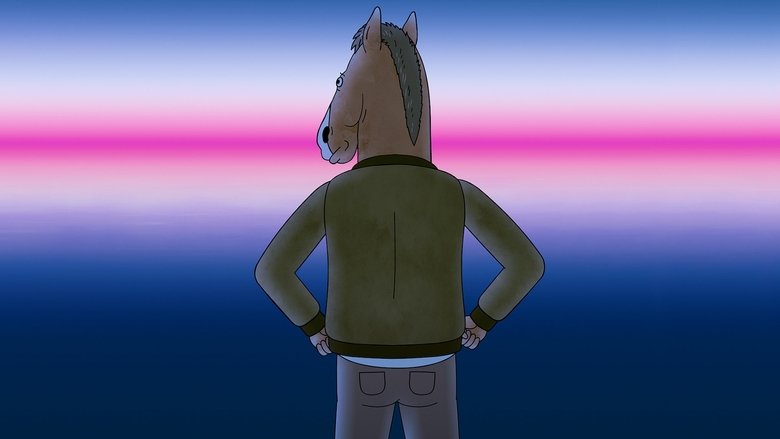

"Don't look back. You're not going that way."
BoJack Horseman - Episode Highlights
Episode Highlights
Fish Out of Water
In this visually stunning and almost entirely silent episode, BoJack attends an underwater film festival. Unable to speak due to his aquatic helmet, he must communicate through actions alone. He attempts to return a lost baby seahorse to its father, embarking on a poignant and frustrating journey. The episode is a masterclass in visual storytelling, conveying deep emotion and character development without dialogue.
"Fish Out of Water" is a significant departure from the show's usual format, proving its artistic ambition. It strips BoJack of his primary coping mechanism—his wit and words—forcing him into a situation where he must act selflessly. It powerfully illustrates his profound loneliness and desperate, albeit clumsy, attempts to connect with others.
Free Churro
The entire episode consists of a single, 25-minute monologue as BoJack delivers the eulogy at his mother's funeral. He rambles through anecdotes about his traumatic childhood, his complicated feelings of grief, resentment, and a desperate search for a final moment of connection that never came. The only other speaking part is a brief flashback with his father at the very beginning.
This episode is a tour-de-force of writing and voice acting. It dives deep into the psychology of grief and abuse, exploring how generational trauma shapes a person. It's a raw, unfiltered look into BoJack's psyche, revealing the profound damage his parents inflicted and his inability to process their loss in a conventional way.
Time's Arrow
This episode explores the life and memories of BoJack's mother, Beatrice, as her mind deteriorates from dementia. The narrative jumps non-linearly through her traumatic past—a privileged but emotionally sterile childhood, the loss of her brother, a forced lobotomy for her mother, and her unhappy marriage to Butterscotch Horseman. The animation cleverly depicts her fractured consciousness, with faces blurring and settings shifting abruptly.
"Time's Arrow" is crucial for understanding the root of BoJack's trauma. It reframes Beatrice from a simple villain into a tragic figure, a victim of her own upbringing who perpetuated a cycle of abuse. It's a deeply empathetic yet unflinching look at generational pain and how cruelty is often born from suffering.
The View from Halfway Down
The penultimate episode of the series finds BoJack in a surreal dinner party limbo with all the major figures in his life who have died, including his mother, Herb Kazzaz, Sarah Lynn, and Secretariat. They perform for him before being consumed by a terrifying black void. The episode culminates in the revelation that BoJack is drowning in his pool, and this is his brain's final, desperate hallucination.
This is the climax of BoJack's journey with death and self-destruction. It's a terrifying, experimental, and profound exploration of life, regret, and what might come after. It forces BoJack (and the audience) to confront the full weight of his past and the people his actions have affected, bringing the series' darkest themes to a haunting crescendo.
Nice While It Lasted
The series finale picks up after BoJack survives his drowning. He is in prison for breaking and entering. The episode sees him on a temporary release to attend Princess Carolyn's wedding, where he has final, quiet, and meaningful conversations with each of the main characters. The most significant is his last talk with Diane on a rooftop, where they silently acknowledge the end of their friendship and the separate paths their lives have taken.
The finale rejects a dramatic, conclusive ending for a more realistic and bittersweet one. It reinforces the series' core message: life goes on. There are no easy resolutions. Relationships change and end, and the work of being a better person is never truly finished. It's a quiet, contemplative, and emotionally resonant conclusion to the entire saga.