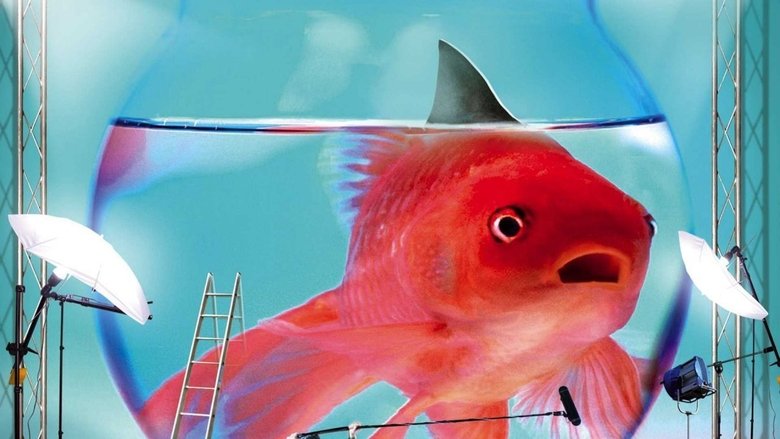

Boris - Episode Highlights
Episode Highlights
Il mio primo giorno (My First Day)
This episode introduces the world of "Boris" through the eyes of the new intern, Alessandro. It perfectly establishes the show's premise, tone, and key characters: René's cynicism, Stanis's arrogance, Corinna's incompetence, and Arianna's frustration. We are immediately immersed in the chaotic, hilarious, and disheartening reality of the set of "Gli occhi del cuore."
It's the perfect pilot, laying the groundwork for the entire series. It defines the core conflict between idealism and cynicism and introduces the satirical target—the world of low-quality Italian 'fiction'—that will be deconstructed for the next three seasons.
Una giornata particolare (A Special Day)
René is replaced for a day by a much-admired and more radically cynical director, Glauco, who pushes the crew's dysfunctional dynamics to their absolute limit. Glauco's directing style is even more nihilistic and exploitative than René's, providing a dark reflection of what René could become. The episode introduces one of the series' most memorable guest characters.
This episode deepens the show's satire by suggesting there are even lower circles of hell in the television industry. Glauco's presence forces René to confront his own methods and provides a glimpse into the industry's more predatory side. It's a fan-favorite for its sharp writing and Giorgio Tirabassi's guest performance.
La mia Africa (My Africa)
The crew is shooting a ridiculously cliché colonial-themed episode of their show. This episode is a masterclass in satirizing how Italian television handles sensitive or historical topics—with utter ignorance and a reliance on harmful stereotypes. It also introduces the neurotic actor Mariano Giusti (Corrado Guzzanti), who becomes a recurring source of chaos.
It broadens the show's satirical scope from just the production process to the content itself, critiquing the cultural poverty of Italian television. The addition of Corrado Guzzanti's character elevates the comedic stakes for the second season.
Un'altra televisione è possibile (Another Television is Possible)
The third season begins with a major shift: René and the crew are given the opportunity to work on a new, high-quality, 'edgy' series called "Medical Dimension" after "Gli occhi del cuore" is cancelled. This episode sees them trying to adapt to a new, supposedly better, way of working, with predictably disastrous results.
This episode sets up the central arc for the third season: the struggle to see if the crew can actually produce quality content when given the chance. It questions whether their incompetence is a product of their environment or an intrinsic part of who they are.
Nella rete (In the Net)
In this penultimate episode of the original run, the crew discovers the devastating truth: the network executives wanted "Medical Dimension" to fail from the start to prove that audiences prefer old-fashioned, terrible fiction. It's a moment of crushing defeat, where the full extent of the system's cynicism is revealed.
This is the climax of the series' core theme. It confirms that the system isn't just accidentally mediocre; it actively enforces mediocrity. It's the ultimate validation of René's cynicism and the definitive crushing of Alessandro's remaining idealism.
Gli Occhi del Cuore Sacro di Gesù (The Eyes of the Sacred Heart of Jesus)
In the series finale, René secretly uses the budget and set of the streaming platform's show, "Life of Jesus," to shoot his own passion project. When he is discovered, in a surreal and possibly imagined sequence, he convinces the platform's executives to accept his film through an interpretive dance. The series ends with the crew watching René's film, "Io, Giuda" (I, Judas), finally a piece of quality art.
This finale provides a poignant and ambiguous conclusion. It can be read as a final, triumphant victory for art over commerce, or as a fantastical dream sequence representing René's ultimate capitulation. The episode is also a moving tribute to the late writer Mattia Torre, whose on-screen counterpart plays a key role from beyond the grave.