Boris
A cynical, mockumentary-style comedy that captures the chaotic soul of Italian television, feeling like a frantic, desperate laugh in a poorly lit studio.
Boris

Boris

16 April 2007 — 26 October 2022 Italy 4 season 50 episode Returning Series ⭐ 8.6 (223)
Cast: Francesco Pannofino, Alessandro Tiberi, Pietro Sermonti, Carolina Crescentini, Caterina Guzzanti
Comedy
Satire of the Media Landscape Cynicism vs. Idealism Critique of Italian Work Culture The Illusion of Quality

Overview

"Boris" is a satirical Italian comedy series that offers a behind-the-scenes look at the chaotic and dysfunctional world of Italian television production. The story is told through the eyes of Alessandro, a naive and idealistic intern who joins the production crew of a terrible soap opera, "Gli occhi del cuore 2" (The Eyes of the Heart 2). He quickly discovers a workplace governed by incompetence, cynicism, and compromise, a far cry from his artistic aspirations.

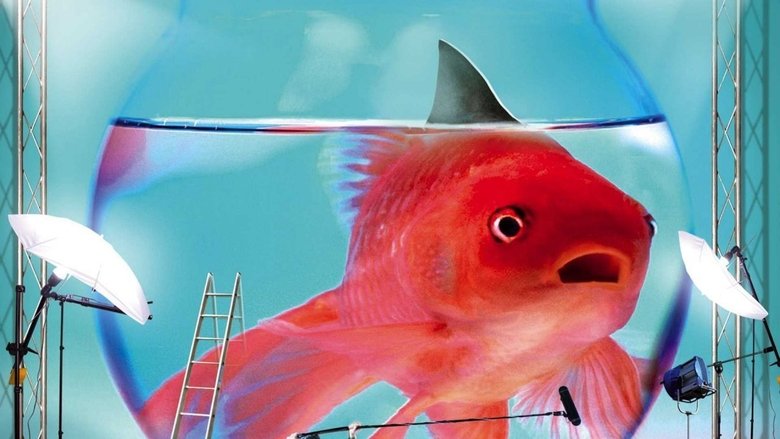
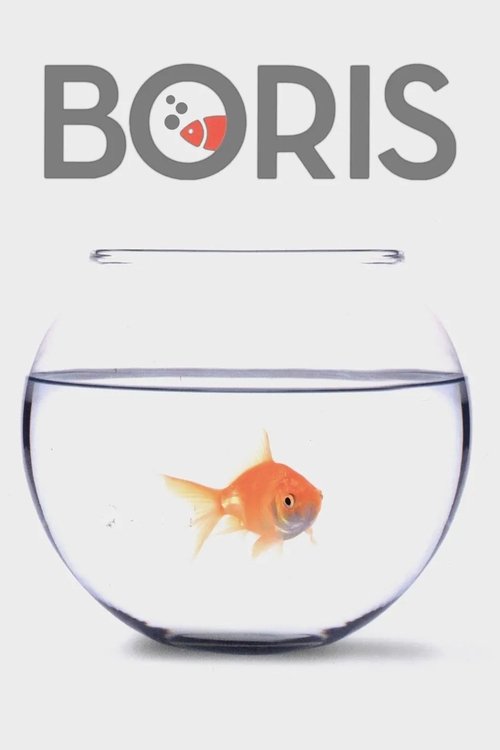
The crew is led by the disillusioned director René Ferretti, who has long abandoned any hope of creating quality work and whose only confidant is his pet goldfish, Boris. The ensemble includes the egotistical and untalented lead actor Stanis La Rochelle, the equally inept lead actress Corinna Negri, the hyper-competent but perpetually stressed assistant director Arianna, and a host of other eccentric characters.

Across its initial three seasons, the series chronicles the crew's daily struggles to produce a low-quality show, satirizing the tropes of Italian fiction and the compromises demanded by network executives. The follow-up movie sees René's attempt to break into serious cinema, only to be pulled back into mediocrity. A revival season, set over a decade later, updates the satire by placing the crew in the world of modern streaming platforms, where they must navigate algorithms, social media, and a new set of corporate absurdities.
Core Meaning

The core meaning of "Boris" is a sharp, satirical critique of the Italian television industry, which serves as a microcosm for the broader professional and social landscape of Italy itself. The creators aimed to expose the systemic mediocrity, cynicism, cronyism, and the constant, losing battle between artistic integrity and commercial imperatives that defined Italian media.

Through its metanarrative structure—a show about making a show—it deconstructs the reasons behind the poor quality of many productions, revealing a world where passion is extinguished by budget cuts, network interference, and sheer laziness. Ultimately, the series is a tragicomedy about the desire for redemption in a system that rewards conformity and penalizes ambition. It suggests that while "another kind of television is possible," achieving it may be a fool's errand in a culture that has learned to settle for "good enough."

Thematic DNA

Satire of the Media Landscape 35%
Cynicism vs. Idealism 30%
Critique of Italian Work Culture 25%
The Illusion of Quality 10%

Satire of the Media Landscape

This is the central theme of the series. The first three seasons relentlessly parody the world of low-budget Italian television fiction ('fiction'), mocking its nonsensical plots, terrible acting, and cheap production values. The show-within-a-show, "Gli occhi del cuore," is a perfect caricature of the genre. The revival season cleverly shifts its satirical target to the modern era of streaming giants, critiquing their algorithm-driven decisions, obsession with social media metrics, and hypocritical corporate culture, demonstrating that despite the technological evolution, the core problems of the industry remain the same.

Cynicism vs. Idealism

The series explores the tension between the fresh-faced idealism of the intern, Alessandro, and the deep-seated cynicism of the veteran crew, particularly the director, René Ferretti. Alessandro arrives full of artistic dreams but is progressively worn down by the grim reality of the set. René, on the other hand, has already lost his artistic aspirations and is resigned to producing content he himself despises, famously describing his method as "a cazzo di cane" (lit. "like a dog's dick," meaning shoddy or slapdash). This conflict highlights the soul-crushing nature of an industry that forces creative individuals to compromise their values to survive.

Critique of Italian Work Culture

Beyond television, "Boris" is a powerful allegory for Italian work dynamics in general. It portrays a world of precarious employment (interns are called 'slaves'), nepotism, careerism, political interference, and a general attitude of 'arrangiarsi' (getting by with the minimum effort). Characters like the lazy, cocaine-addicted cinematographer Duccio and the grumpy electrician Biascica represent universal archetypes of a demotivated and dysfunctional workforce. The series suggests these issues are not confined to a TV set but are endemic to the country's culture.

The Illusion of Quality

Throughout the series, characters occasionally attempt to create something of artistic merit, a 'quality' product. In Season 3, René gets the chance to direct a more serious series, "Medical Dimension," only to find the network's intention was for it to fail. In the movie, his dream of making an arthouse film is corrupted into a vulgar Christmas comedy. These failed attempts underscore a central message: the system is designed to reject genuine quality in favor of safe, profitable mediocrity. The pursuit of quality is presented as a noble but ultimately doomed endeavor.

Character Analysis

René Ferretti

Francesco Pannofino

Archetype: The Disillusioned Mentor
Key Trait: Resigned Cynicism

Motivation

Initially, his motivation is simply survival: to get through the day and collect his paycheck. However, a latent desire for artistic validation constantly gnaws at him, leading to brief, often disastrous, attempts at creating something meaningful. His ultimate motivation is to prove, mostly to himself, that he is more than just a hack.

Character Arc

René begins as a deeply cynical and defeated director, resigned to churning out terrible television. His arc is a series of failed attempts to recapture his artistic soul. In Season 3, he tries to make a quality show, but is sabotaged by the network. In Boris - The Film, his attempt to direct a serious political exposé is co-opted and turned into a crass comedy, pushing him to the brink of despair. By Season 4, he faces the new, algorithm-driven world of streaming platforms, still fighting the same battles against mediocrity, but with a glimmer of hope in the finale where he manages to secretly shoot his own artistic project.

Alessandro

Alessandro Tiberi

Archetype: The Naive Protagonist
Key Trait: Idealism turning to Pragmatism

Motivation

His initial motivation is a pure, artistic ambition to become a great director. This slowly morphs into a more pragmatic desire to simply survive and build a career. In Season 4, his motivation is to succeed within the corporate structure of the streaming platform, even if it means enforcing the same absurd rules he once suffered under.

Character Arc

Alessandro's journey is a classic coming-of-age story set in a soul-crushing environment. He starts as the idealistic intern, referred to as "lo schiavo" (the slave), believing in the magic of cinema. Season by season, the industry's harsh realities chip away at his optimism. He learns the rules of the game, becoming more competent but also more jaded. His arc culminates in Season 4, where he has completed his transformation by becoming a cynical executive at the streaming platform, now embodying the very system he once despised. He has climbed the ladder, but lost his initial innocence along the way.

Stanis La Rochelle

Pietro Sermonti

Archetype: The Pretentious Fool
Key Trait: Narcissistic Delusion

Motivation

His motivation is pure, unadulterated ego. He craves fame, adulation, and validation as a serious, international artist, despite having no talent to back it up. He is driven by a desperate need to appear sophisticated and important.

Character Arc

Stanis is a largely static character, which is central to his comedic function. He is the epitome of the mediocre actor who believes he is a genius. Throughout the series, his defining traits—arrogance, a self-important rejection of "Italian-style" acting, and a complete lack of self-awareness—remain constant. His arc is less about personal growth and more about how his unchangeable absurdity adapts to new contexts, from low-budget fiction in the early seasons to producing and starring in a pretentious series about Jesus for a streaming platform in Season 4. He never learns or changes, consistently serving as a source of conflict and a parody of actorly vanity.

Arianna Dell'Arti

Caterina Guzzanti

Archetype: The Beleaguered Professional
Key Trait: Unyielding Competence

Motivation

Her motivation is professional pride and a deep-seated need for order and efficiency. She is driven by the desire to get the job done correctly, despite the constant obstacles thrown in her way by the cast, crew, and network.

Character Arc

Arianna is the hyper-competent, perpetually exasperated assistant director and the true backbone of the set. Her arc is one of endurance. While other characters dream of art or fame, Arianna simply tries to do her job professionally amidst the chaos. She maintains her high standards and work ethic throughout the series, acting as the anchor of sanity. Her development is subtle; she becomes tougher and more commanding over time, but her core challenge remains the same: managing the incompetence of those around her. She represents the thankless struggle of the truly capable in a dysfunctional system.

Symbols & Motifs

Boris the Goldfish

Meaning:

Boris, René Ferretti's goldfish, symbolizes the director's last vestige of conscience and artistic integrity. In a world of constant noise, compromise, and shouting, the silent fish is René's sole confidant, the only one to whom he can vent his frustrations without judgment. It represents a small, fragile piece of purity and patience in an otherwise corrupt and chaotic environment. Boris is the silent witness to the daily creative and ethical failures on set.

Context:

René keeps Boris in a bowl on his director's cart throughout the first three seasons. He frequently talks to the fish, especially during moments of high stress or when forced to make a particularly painful artistic compromise. The fish's name was chosen in honor of tennis player Boris Becker.

The Set of 'Gli Occhi del Cuore'

Meaning:

The physical set of the show-within-a-show is a symbol of the entire Italian media machine. It's a place of artifice and illusion, where cheap materials are made to look presentable and poor performances are patched together. It represents a creative purgatory where dreams go to die and mediocrity is manufactured on a daily basis.

Context:

The set is the primary location for the first three seasons. The constant technical problems, script changes, and on-set dramas that occur there are the main source of the show's comedy and satire.

Memorable Quotes

A cazzo di cane!

— René Ferretti

Context:

Used constantly by René throughout all seasons when describing how a scene should be shot, how an actor is performing, or the general quality of the show he is directing. It is his mantra of mediocrity.

Meaning:

Literally translating to "like a dog's dick," this is René's signature phrase, meaning to do something in a shoddy, slapdash, or careless manner. It perfectly encapsulates his resignation to the low quality of the production and has become an iconic Italian expression for something done poorly.

Dai, dai, dai!

— René Ferretti

Context:

Shouted by René from behind the camera in almost every episode while filming "Gli occhi del cuore." It's the sound of artistic compromise in real-time.

Meaning:

Meaning "Come on, come on, come on!" or "Let's go, let's go, let's go!", this is René's impatient, rhythmic chant to rush actors through their lines and scenes. It signifies the relentless pressure of the production schedule, where there is no time for nuance or quality, only for getting the shot done as quickly as possible.

Troppo italiano.

— Stanis La Rochelle

Context:

Stanis uses this phrase frequently in the first three seasons to complain about scripts, acting styles, and directing choices that he feels are not up to his imagined "international" standards.

Meaning:

"Too Italian." This is Stanis's go-to criticism for anything he deems unsophisticated, melodramatic, or low-quality. It reflects his pretentious desire to be seen as an international star and his disdain for the very industry that employs him. Ironically, Stanis himself is the epitome of the Italian stereotypes he criticizes.

Apri tutto!

— Duccio Patanè

Context:

Duccio, often high on cocaine and completely unmotivated, gives this command in nearly every episode when setting up a scene, much to René's exasperation.

Meaning:

"Open everything up!" This is the signature instruction from Duccio, the Director of Photography, to the lighting department. It means to blast the scene with flat, undifferentiated light, eliminating any shadow, nuance, or artistic merit. It's the philosophy of "smarmellare"—to smear or flatten everything—and represents the fastest, laziest, and most commercially safe way to light a scene for bad television, becoming a metaphor for the show's entire production philosophy.

Episode Highlights

Il mio primo giorno (My First Day)

S1E1

This episode introduces the world of "Boris" through the eyes of the new intern, Alessandro. It perfectly establishes the show's premise, tone, and key characters: René's cynicism, Stanis's arrogance, Corinna's incompetence, and Arianna's frustration. We are immediately immersed in the chaotic, hilarious, and disheartening reality of the set of "Gli occhi del cuore."

Significance:

It's the perfect pilot, laying the groundwork for the entire series. It defines the core conflict between idealism and cynicism and introduces the satirical target—the world of low-quality Italian 'fiction'—that will be deconstructed for the next three seasons.

Una giornata particolare (A Special Day)

S1E12

René is replaced for a day by a much-admired and more radically cynical director, Glauco, who pushes the crew's dysfunctional dynamics to their absolute limit. Glauco's directing style is even more nihilistic and exploitative than René's, providing a dark reflection of what René could become. The episode introduces one of the series' most memorable guest characters.

Significance:

This episode deepens the show's satire by suggesting there are even lower circles of hell in the television industry. Glauco's presence forces René to confront his own methods and provides a glimpse into the industry's more predatory side. It's a fan-favorite for its sharp writing and Giorgio Tirabassi's guest performance.

La mia Africa (My Africa)

S2E1

The crew is shooting a ridiculously cliché colonial-themed episode of their show. This episode is a masterclass in satirizing how Italian television handles sensitive or historical topics—with utter ignorance and a reliance on harmful stereotypes. It also introduces the neurotic actor Mariano Giusti (Corrado Guzzanti), who becomes a recurring source of chaos.

Significance:

It broadens the show's satirical scope from just the production process to the content itself, critiquing the cultural poverty of Italian television. The addition of Corrado Guzzanti's character elevates the comedic stakes for the second season.

Un'altra televisione è possibile (Another Television is Possible)

S3E1

The third season begins with a major shift: René and the crew are given the opportunity to work on a new, high-quality, 'edgy' series called "Medical Dimension" after "Gli occhi del cuore" is cancelled. This episode sees them trying to adapt to a new, supposedly better, way of working, with predictably disastrous results.

Significance:

This episode sets up the central arc for the third season: the struggle to see if the crew can actually produce quality content when given the chance. It questions whether their incompetence is a product of their environment or an intrinsic part of who they are.

Nella rete (In the Net)

S3E12

In this penultimate episode of the original run, the crew discovers the devastating truth: the network executives wanted "Medical Dimension" to fail from the start to prove that audiences prefer old-fashioned, terrible fiction. It's a moment of crushing defeat, where the full extent of the system's cynicism is revealed.

Significance:

This is the climax of the series' core theme. It confirms that the system isn't just accidentally mediocre; it actively enforces mediocrity. It's the ultimate validation of René's cynicism and the definitive crushing of Alessandro's remaining idealism.

Gli Occhi del Cuore Sacro di Gesù (The Eyes of the Sacred Heart of Jesus)

S4E8

In the series finale, René secretly uses the budget and set of the streaming platform's show, "Life of Jesus," to shoot his own passion project. When he is discovered, in a surreal and possibly imagined sequence, he convinces the platform's executives to accept his film through an interpretive dance. The series ends with the crew watching René's film, "Io, Giuda" (I, Judas), finally a piece of quality art.

Significance:

This finale provides a poignant and ambiguous conclusion. It can be read as a final, triumphant victory for art over commerce, or as a fantastical dream sequence representing René's ultimate capitulation. The episode is also a moving tribute to the late writer Mattia Torre, whose on-screen counterpart plays a key role from beyond the grave.

Philosophical Questions

Is it possible to maintain artistic integrity within a purely commercial system?

This is the central question of the series. René Ferretti is the embodiment of this struggle. His entire career is a testament to the compromises an artist must make to survive in a commercial television landscape. The show repeatedly demonstrates that the system is not just indifferent to quality, but actively hostile to it. Every attempt René makes to inject artistry—in Season 3 with "Medical Dimension" or in the movie with his political film—is systematically crushed and reverted to a commercially safe, mediocre formula. The series bleakly suggests that true integrity is almost impossible to maintain, and the price of survival is often one's own soul.

Does a dysfunctional work environment inevitably corrupt everyone in it?

The series acts as a case study in workplace conditioning. The character of Alessandro arrives as a pure idealist, but to survive and advance, he must adapt to the prevailing culture of cynicism, compromise, and back-stabbing. By Season 4, he has become a corporate apparatchik himself. The show argues that systems have a powerful, corrupting influence on individuals. Even well-meaning characters are forced to adopt the dysfunctional behaviors of the environment to get by, suggesting that individual morality is difficult to sustain against a tide of systemic rot.

Alternative Interpretations

The primary area for alternative interpretations lies in the finale of Season 4. After René is caught using the platform's resources to make his own film, he faces down the executives. What follows is a surreal sequence where he breaks into a dance (a reference to Flashdance) and seemingly wins them over. The crew is later seen at the premiere of his successful film, "Io, Giuda."

One interpretation is that this is a straightforward, optimistic ending. René finally triumphs, using the system against itself to create a true work of art, representing a victory for creative integrity.

A more critical and widely discussed interpretation is that the entire dance sequence and the successful premiere are a fantasy—a dying dream or a surreal hallucination in René's mind at the moment of his ultimate professional defeat. This reading aligns more closely with the show's pervasive cynicism, suggesting that in the real world of "Boris," such a victory is impossible. The true ending, in this view, is René's failure, and the fantasy is his only escape, making the conclusion far more tragic and poignant.

Cultural Impact

"Boris" is widely regarded as one of the most important and influential Italian television series of the 21st century. Created in 2007, during the peak of generalist, low-quality TV fiction dominated by networks like Rai and Mediaset, it was a groundbreaking satire that mercilessly exposed the industry's flaws. Initially a niche show on a satellite channel, it quickly became a cult classic, spreading through word-of-mouth and online piracy.

Its most significant impact is on the Italian language; dozens of its catchphrases and expressions ("a cazzo di cane," "dai, dai, dai," "troppo italiano") have become ingrained in everyday conversation, instantly recognizable to a generation of viewers. The series provided a shared cultural language for describing incompetence, cynicism, and the absurdities of the Italian workplace. It received critical acclaim for its sharp writing and brilliant comedic performances, setting a new standard for Italian comedy.

The 2022 revival on Disney+ was highly anticipated and brought the show to a new, wider audience, although its reception was more divided. While critics praised its clever update of the satire to the world of streaming platforms, some long-time fans felt it lacked the raw, desperate energy and character depth of the original seasons. Nevertheless, the legacy of "Boris" is that of a trailblazing series that changed the landscape of Italian television comedy, offering a cynical but deeply affectionate portrait of Italy itself.

Audience Reception

The audience reception for "Boris" evolved significantly over time. Upon its initial release in 2007 on a pay-TV channel, it had a limited viewership but quickly garnered a passionate cult following. Its popularity exploded through file-sharing and word-of-mouth, with its quotes and characters becoming cultural touchstones in Italy. The first three seasons are almost universally praised by Italian audiences as a masterpiece of satirical comedy.

The 2011 film was also well-received, seen as a fitting, if cynical, continuation of the series. The announcement of a fourth season after more than a decade was met with immense excitement, but its reception in 2022 was more mixed. While many viewers and critics appreciated the sharp writing and the clever shift in satire towards streaming platforms and their algorithm-driven culture, a significant portion of the original fanbase found it lacking. Points of criticism included the perception of shallower character development compared to the first seasons, a less cohesive plot, and a feeling that some of the jokes were aimed at an older demographic out of touch with modern online culture. Overall, while the original series is considered a beloved classic, the fourth season is viewed by some as a good but non-essential addition that didn't fully recapture the magic of the original.

Interesting Facts

  • The series' original working title was "Sampras", but it had to be changed due to potential legal issues with Nike, which held the rights to the tennis player's name.
  • Many of the minor crew members on the fictional set of "Gli occhi del cuore" were played by the actual, real-life crew members of "Boris."
  • The three main writers of the series, Giacomo Ciarrapico, Mattia Torre, and Luca Vendruscolo, all have cameo appearances in the show as minor characters.
  • The theme song for the fictional soap opera, "Gli occhi del cuore," was written and performed by the famous Italian satirical rock band Elio e le Storie Tese.
  • The show's initial broadcast on a satellite channel meant it had a small audience, but it became a massive cult phenomenon through word-of-mouth and, ironically, widespread illegal downloading, which greatly contributed to its popularity.

Easter Eggs

The three on-screen writers of 'Gli occhi del cuore' (played by Valerio Aprea, Massimo De Lorenzo, and Andrea Sartoretti) are a direct parody of the show's actual three writers.

This is a meta-referential joke. The on-screen writers are depicted as lazy, unoriginal, and prone to plagiarism, often stealing ideas from American TV shows. This is a form of self-deprecating humor from the real writers, who are satirizing their own profession and creative process within the show itself. In Season 4, after the real-life death of writer Mattia Torre, his on-screen counterpart (played by Valerio Aprea) appears as a ghost that only his fellow writers can see, serving as a poignant tribute.

⚠️ Spoiler Analysis

Click to reveal detailed analysis with spoilers

Frequently Asked Questions

Explore More About This Movie

Dive deeper into specific aspects of the movie with our detailed analysis pages

Comments (0)

Leave a comment

No comments yet. Be the first to share your thoughts!