
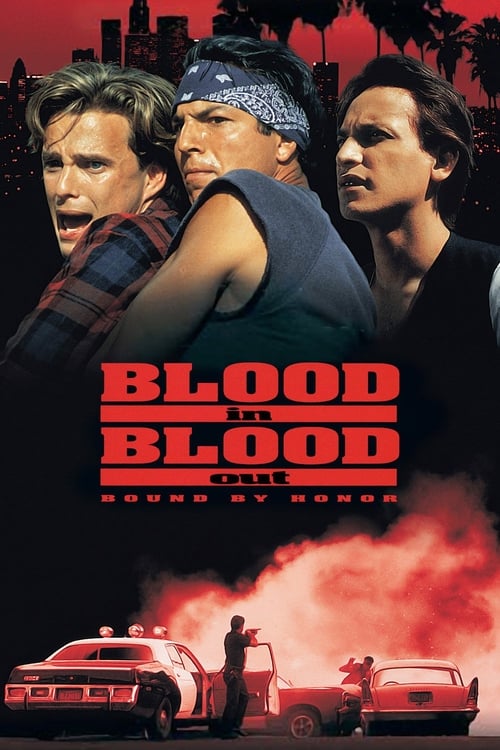
"An epic story of three brothers. Bound by blood. Divided by fate. Driven by destiny."
Director: Taylor Hackford
Cast: Damian Chapa, Jesse Borrego, Benjamin Bratt, Enrique Castillo, Victor Rivers
Bound by Honor — Movie Quotes
Memorable Quotes
Vatos Locos forever, ese!
Context
This phrase is used by the members of the Vatos Locos gang throughout the film, often as a greeting or a reaffirmation of their bond, particularly in their youth before their paths are violently split.
Meaning
This is a declaration of eternal loyalty to their neighborhood gang. It encapsulates the film's theme of brotherhood and a commitment that transcends time and circumstance, even as their lives diverge dramatically. It's a vow of belonging.
I may be white on the outside, but I'm brown on the inside. To the bone.
Context
Miklo says this early in the film to his family and fellow gang members, asserting his identity and loyalty despite his physical appearance, which makes him an outsider in his own community.
Meaning
This quote is the cornerstone of Miklo's character. It expresses his deep-seated struggle with his mixed-race identity and his desperate need to be fully accepted by the Chicano community. It is the justification for all his subsequent actions.
Life's a risk, carnal.
Context
Paco says this to Miklo during a tense moment, reflecting on a choice that has to be made. The line has become iconic among fans of the film.
Meaning
This line succinctly captures the film's ethos: in their world, survival and progress require taking dangerous chances. It is an acknowledgment of the precariousness of life and the necessity of bold, often dangerous, choices to move forward. It reflects a philosophy born from a life of struggle.
I don't want his pork chop... I want his life!
Context
Montana says this to Miklo in San Quentin, instructing him on the true nature of their war with a rival. He is explaining that to secure their power, they must be utterly ruthless and aim for complete victory, not minor advantages.
Meaning
This brutal line signifies the absolute stakes of power and respect within the prison walls. It's not about small gains or material possessions; it's about total domination and the elimination of one's enemies. It highlights the deadly seriousness of the prison gang's code.
Blood in, blood out. That's the rule.
Context
This is explained as the code of La Onda, the prison gang. It defines the permanence of their allegiance and the severe consequences of trying to leave the life.
Meaning
This quote explains the film's original title and the fundamental, inescapable law of the gang. To join ('blood in'), one must commit a violent act, shedding the blood of an enemy. The only way to leave ('blood out') is to be killed. It symbolizes a lifetime commitment from which there is no retirement or escape.
Explore More About This Movie
Dive deeper into specific aspects of the movie with our detailed analysis pages