Bound by Honor
"An epic story of three brothers. Bound by blood. Divided by fate. Driven by destiny."
Overview
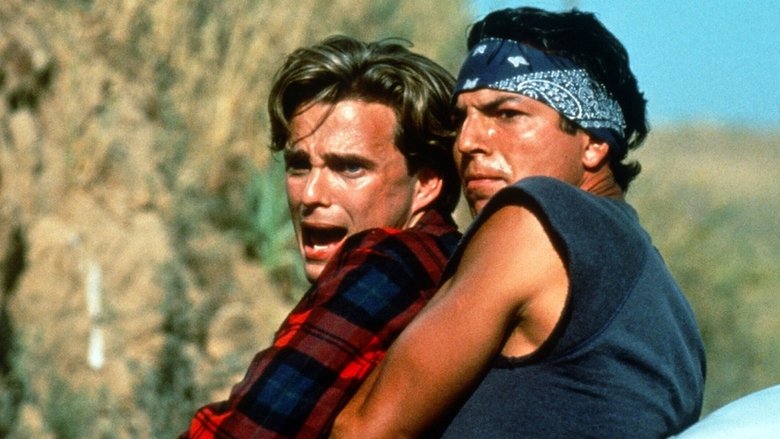
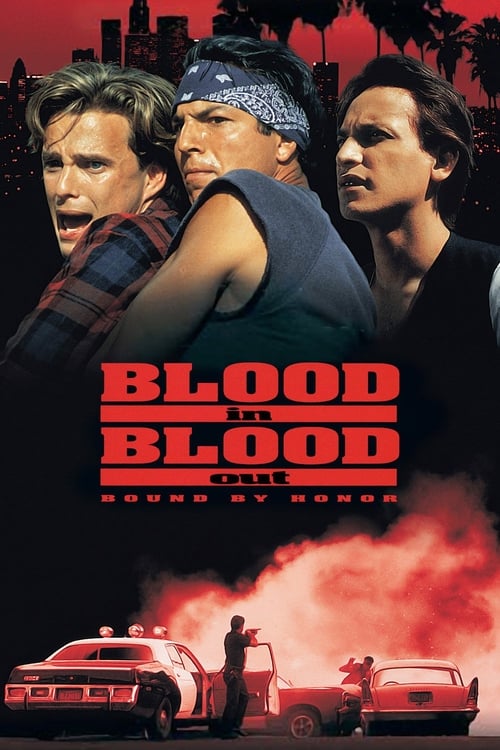
"Bound by Honor," originally and more famously known as "Blood In, Blood Out," is a 1993 crime drama directed by Taylor Hackford that spans over a decade from 1972 to 1984. The film chronicles the intertwined and divergent lives of three Chicano relatives in East Los Angeles: the fair-skinned Miklo Velka, who is desperate to prove his Chicano identity; his cousin Paco Aguilar, a boxer with a strong sense of justice; and their artistic step-brother Cruz Candelaria.
Their lives are irrevocably altered after a violent confrontation with a rival gang, which sends them down three different paths. Miklo is sent to San Quentin prison, where he becomes a powerful leader in the prison gang "La Onda." Paco joins the military and later becomes a decorated police officer, placing him on the opposite side of the law from his family. Cruz, a gifted artist, suffers a tragic injury that leads him down a devastating path of heroin addiction. The film is an epic saga exploring themes of family, loyalty, identity, and the cyclical nature of violence that defines their lives.
Core Meaning
The core meaning of "Bound by Honor" is an exploration of the profound and often tragic influence of environment and chosen loyalties on one's destiny. Director Taylor Hackford presents a powerful narrative about how the bonds of family — both by blood and by choice (like a gang) — shape identity and life trajectories. The film questions whether one can truly escape their roots, as symbolized by Paco's struggle between his barrio upbringing and his role as a cop. It serves as a cautionary tale about the cyclical nature of violence, where acts of revenge and bids for power create an inescapable vortex that consumes generations. Ultimately, it's a deeply human story about the search for belonging and the devastating cost of a life dictated by rigid codes of honor and loyalty.
Thematic DNA
Family and Brotherhood (La Familia)
The central theme is the complex concept of 'familia'. The film contrasts the blood bond between Miklo, Paco, and Cruz with the chosen family of the 'Vatos Locos' gang and later, the prison gang 'La Onda'. It explores how these loyalties are tested, often forcing characters to choose between blood and their sworn allegiances, with tragic consequences. The motto "Blood In, Blood Out" itself signifies that the gang becomes a new family, one you can only enter through violence and only leave through death.
Identity and Belonging
Each protagonist struggles with their identity. Miklo, being half-white, feels an intense pressure to prove his Chicano heritage, which drives him deeper into the violent gang culture. Paco grapples with being seen as a traitor for becoming a cop, attempting to reconcile his cultural identity with his profession. Cruz's identity as an artist is both his salvation and his downfall, as his art expresses the pain of his community but also leads him to addiction. The film is a powerful representation of the Chicano experience and the search for a sense of belonging in America.
The Cycle of Violence and Fate
The film relentlessly portrays violence as a self-perpetuating cycle. The initial gang fight sets off a chain reaction of retaliation, imprisonment, and death that spans over a decade. It questions whether the characters are victims of fate, destined by their environment to a life of violence, or if their choices actively lead them down their destructive paths. The prison system is shown as a microcosm of this cycle, where racial divisions and power struggles mirror and amplify the conflicts of the outside world.
Loyalty and Betrayal
Loyalty is the currency of the world depicted in the film, but it is constantly tested and often leads to betrayal. Miklo's rise in La Onda is marked by both fierce loyalty to his new family and brutal betrayals of his enemies and, eventually, even his own principles. Paco's loyalty to the law forces him into conflict with his loyalty to his family. The film illustrates that in this world, loyalty is absolute and its betrayal is the ultimate sin, punishable by death.
Character Analysis
Miklo Velka
Damian Chapa
Motivation
His primary motivation is the desperate need for acceptance and to prove his identity as a Chicano, "brown on the inside." This evolves into a thirst for power and respect within the prison system, believing that La Onda is the only thing that gives him strength and dignity.
Character Arc
Miklo begins as an outcast, a blue-eyed, fair-skinned Chicano desperate for acceptance from his 'familia'. His desire to belong drives him to commit a violent act that lands him in San Quentin. Inside, he sheds his initial vulnerability and transforms into a cunning, ruthless, and powerful leader of the prison gang 'La Onda'. His journey is a tragic rise to power, where in finding the family he always craved, he loses a part of his humanity and becomes imprisoned by the very code he embraced.
Paco Aguilar
Benjamin Bratt
Motivation
Paco is motivated by a strong, albeit conflicted, sense of justice. He wants to protect his community, but chooses the path of law and order to do so, which alienates him from his past. His actions are often driven by a desire to save his 'carnales' from the destructive path he escaped.
Character Arc
Paco starts as a respected gang leader and Golden Gloves boxer. To avoid prison, he joins the military and later the police force, believing he can make a difference from within the system. His arc is one of internal conflict, as he is constantly torn between his duty as an officer and his deep-rooted loyalty to his family and the barrio. By the end, he is a man burdened by the tragic outcomes of their lives, realizing that his badge has separated him from his world without offering true peace.
Cruz Candelaria
Jesse Borrego
Motivation
Initially, Cruz is motivated by his passion for art and his love for his family. After his injury, his primary motivation becomes the desperate need to escape his physical and emotional pain through heroin, while still clinging to his identity as an artist.
Character Arc
Cruz begins as the brightest hope of the family, a gifted and passionate artist on the verge of success. His life takes a tragic turn after a rival gang breaks his back, leaving him with chronic pain that leads to a crippling heroin addiction. His artistic talent, once a source of joy and pride, becomes intertwined with his suffering. His arc is a heartbreaking descent into addiction that costs him his family, his art, and ultimately, his younger brother's life, representing the wasted potential and collateral damage of the cycle of violence.
Montana Segura
Enrique Castillo
Motivation
Montana is motivated by a desire to protect and empower his people, the Chicanos within the prison system. He believes in honor, a man's word, and the collective strength of La Onda. His goal is not just power, but respect and survival for his race.
Character Arc
Montana is the established and respected leader of La Onda when Miklo first enters San Quentin. He operates with a code of honor and intellect, mentoring Miklo on the politics and power dynamics of prison life. He is a thoughtful leader who seeks to unify his people. His arc culminates in a tragic betrayal, where his attempts to create peace are undone by the very system of violence he commands, making way for Miklo's more ruthless brand of leadership.
Symbols & Motifs
El Pino (The Pine Tree)
El Pino, a real-life landmark in East Los Angeles, symbolizes home, roots, and the unbreakable, foundational bond between the three main characters. It is their sacred meeting place, a silent witness to their vows and their diverging paths. For the community, it represents cultural heritage and resilience.
The film opens with an image of the tree, and it is the first place Miklo wants to go upon returning to East L.A. It's where the 'Vatos Locos' gather, a touchstone of their shared past that they mentally return to, even when physically separated by prison walls or societal roles.
Art and Murals
Cruz's artwork symbolizes the soul and conscience of the Chicano community. His paintings capture the beauty, pain, and reality of their lives. The murals serve as a vibrant backdrop that asserts cultural identity and tells the stories of the barrio, acting as both a celebration and a memorial. The art created for the film was done by San Antonio artist Adan Hernandez.
Cruz's talent is initially a source of immense pride for the family and a potential path out of the barrio. After his back is broken, his art becomes a medium to express his immense physical and emotional pain, but his creative drive is tragically entangled with his heroin addiction.
Tattoos
Tattoos represent lifelong, unbreakable commitments and identity. The 'Vatos Locos' tattoo is a mark of belonging to their street family. In prison, tattoos signify allegiance to one of the three major racial gangs—La Onda (Chicano), Aryan Vanguard (White), or Black Guerrilla Army (Black). They are permanent declarations of who you are and where you stand.
Paco, as a police officer, keeps his gang tattoo but is ashamed of it, symbolizing his conflicted identity. Miklo's tattoos in prison chart his rise within La Onda, each one marking a deeper descent into that world. The act of removing a rival's tattoo is shown as the ultimate act of desecration.
San Quentin Prison
San Quentin is more than a location; it's a brutal microcosm of society, amplifying the racial tensions and power dynamics of the outside world. It represents a point of no return, a place where the cycle of violence is institutionalized and survival depends on absolute allegiance to one's race-based gang.
A significant portion of the film takes place within the prison walls, where Miklo is forged into a leader. The filmmakers were granted permission to film inside the actual San Quentin State Prison, using inmates as extras to add to the authenticity.
Memorable Quotes
Vatos Locos forever, ese!
— Miklo Velka
Context:
This phrase is used by the members of the Vatos Locos gang throughout the film, often as a greeting or a reaffirmation of their bond, particularly in their youth before their paths are violently split.
Meaning:
This is a declaration of eternal loyalty to their neighborhood gang. It encapsulates the film's theme of brotherhood and a commitment that transcends time and circumstance, even as their lives diverge dramatically. It's a vow of belonging.
I may be white on the outside, but I'm brown on the inside. To the bone.
— Miklo Velka
Context:
Miklo says this early in the film to his family and fellow gang members, asserting his identity and loyalty despite his physical appearance, which makes him an outsider in his own community.
Meaning:
This quote is the cornerstone of Miklo's character. It expresses his deep-seated struggle with his mixed-race identity and his desperate need to be fully accepted by the Chicano community. It is the justification for all his subsequent actions.
Life's a risk, carnal.
— Paco Aguilar
Context:
Paco says this to Miklo during a tense moment, reflecting on a choice that has to be made. The line has become iconic among fans of the film.
Meaning:
This line succinctly captures the film's ethos: in their world, survival and progress require taking dangerous chances. It is an acknowledgment of the precariousness of life and the necessity of bold, often dangerous, choices to move forward. It reflects a philosophy born from a life of struggle.
I don't want his pork chop... I want his life!
— Montana Segura
Context:
Montana says this to Miklo in San Quentin, instructing him on the true nature of their war with a rival. He is explaining that to secure their power, they must be utterly ruthless and aim for complete victory, not minor advantages.
Meaning:
This brutal line signifies the absolute stakes of power and respect within the prison walls. It's not about small gains or material possessions; it's about total domination and the elimination of one's enemies. It highlights the deadly seriousness of the prison gang's code.
Blood in, blood out. That's the rule.
— Montana Segura
Context:
This is explained as the code of La Onda, the prison gang. It defines the permanence of their allegiance and the severe consequences of trying to leave the life.
Meaning:
This quote explains the film's original title and the fundamental, inescapable law of the gang. To join ('blood in'), one must commit a violent act, shedding the blood of an enemy. The only way to leave ('blood out') is to be killed. It symbolizes a lifetime commitment from which there is no retirement or escape.
Philosophical Questions
What is the true meaning of 'family' and loyalty?
The film constantly forces the characters and the audience to question the definition of family. Is it defined by blood, as seen in the bond between the three protagonists, or by sworn allegiance, like the oaths of the Vatos Locos and La Onda? The narrative explores the devastating conflicts that arise when these loyalties clash. It asks whether loyalty is an absolute virtue or if it can become a destructive force when pledged to a violent code, ultimately suggesting that while blood makes you related, the choices you make based on loyalty are what truly define you and your fate.
Are we products of our environment or our choices (Fate vs. Free Will)?
"Bound by Honor" presents a compelling case for environmental determinism, suggesting that for young men like Miklo, Paco, and Cruz, the options are severely limited by the socio-economic realities of East L.A. The path to gangs, violence, and prison seems almost preordained. However, it also highlights moments of choice. Paco chooses to become a cop, a conscious decision to break the cycle, though he can never fully escape his past. Miklo actively chooses to descend deeper into prison politics to gain power. The film leaves it ambiguous, suggesting that while the environment creates the path, the steps taken upon it are still individual choices, each with profound and lasting consequences.
Can one's identity be chosen, or is it inherent?
Miklo's entire journey is a struggle to define his own identity. Rejected by his white father and not fully accepted by some Chicanos due to his appearance, he believes he can forge his identity through action and allegiance. He insists he is "brown on the inside." The film explores whether this chosen identity is valid. In embracing the most extreme aspects of Chicano gang culture to prove himself, does he become authentically 'brown,' or does he create a hardened persona that ultimately betrays the core values of the family he sought to join? The film suggests identity is a complex interplay of heritage, choice, and perception.
Alternative Interpretations
One of the primary debates surrounding "Bound by Honor" is whether it glorifies gang violence or serves as a powerful cautionary tale. Some critics argued that its slick, Hollywood production style and epic scope turned the tragic lives of its characters into a "violent, cartoonish posturing," effectively making the destructive lifestyle seem appealing. This perspective suggests the film could be misinterpreted as an endorsement of the 'Vatos Locos' ethos, especially by younger audiences.
Conversely, the more widely accepted interpretation, particularly by its dedicated fanbase and cultural advocates, is that the film is a profound tragedy that demonstrates how societal forces and the inescapable cycle of violence destroy lives and communities. This view holds that the film does not glorify the characters' choices but rather shows their devastating consequences: Miklo's humanity is eroded by his quest for power, Paco is alienated and emotionally scarred, and Cruz's immense talent is destroyed by addiction. From this perspective, the film is a critique of a system that leaves marginalized youth with few options, where joining a gang can feel like the only way to find family and respect. It's not a story of heroes, but of flawed men trapped by circumstance and their own codes of honor.
Cultural Impact
Despite being a box office disappointment upon its 1993 release, "Bound by Honor" (or "Blood In, Blood Out") has achieved an enduring and powerful cultural impact, cementing its status as a cult classic. Its primary influence lies within the Chicano and Latino communities, where it is often revered as one of the few epic-scale films to authentically explore their experiences with identity, family, and systemic oppression. For many, the film was a rare instance of seeing their world, language (Spanglish), and cultural nuances represented on a grand cinematic scale.
Initially, critics gave the film mixed reviews, with some praising its authenticity and powerful performances while others criticized its three-hour runtime and graphic violence, calling it a "long potboiler." However, the audience reception, particularly after its home video release, was overwhelmingly positive. It developed a fervent following, with its lines becoming iconic and its characters legendary figures within pop culture. The film's unflinching portrayal of prison life, based on the real experiences of writer Jimmy Santiago Baca and filmed on location in San Quentin, lent it a credibility that resonated deeply with viewers.
The film's legacy continues to grow. It is frequently cited as a significant work of Chicano cinema and has been the subject of academic and community discussions about representation in media. Its influence can be seen in later crime dramas that explore similar themes of loyalty and cultural identity. The film's landmarks, like the 'El Pino' tree, have become cultural touchstones for fans. In 2024, U.S. Representative Joaquin Castro advocated for the film to be added to the National Film Registry, citing its importance to Mexican American culture and heritage.
Audience Reception
While initial critical reception was mixed to negative, audience reception for "Bound by Honor" has been overwhelmingly positive over time, elevating it to beloved cult classic status. Audiences, particularly from the Latino community, have praised the film for its authenticity, emotional depth, and epic scope. Many viewers connected deeply with the themes of brotherhood, loyalty, and the struggle for identity, feeling it was a rare and powerful representation of their culture. The performances of the three leads are consistently lauded, as are the intricate plot and the realistic portrayal of both barrio life and the brutal prison system.
The main points of criticism from audiences often echo those of the original critics: its extensive three-hour runtime can be daunting for some viewers. The graphic and unrelenting violence is another aspect that some find difficult to watch. However, for its vast fanbase, these elements are not seen as flaws but as necessary components of its sprawling, tragic narrative. The film's emotional weight and unforgettable character arcs are what viewers overwhelmingly praise, with many considering the three-hour experience to be completely gripping and justified.
Interesting Facts
- The film was released theatrically under the title "Bound by Honor" because the studio, Hollywood Pictures (a division of Disney), feared the original title "Blood In, Blood Out" might incite violence. It was later released on home video with its original title, where it found its massive cult following.
- The screenplay was co-written by poet Jimmy Santiago Baca, and is partly based on his own life experiences with street gangs and imprisonment.
- To achieve authenticity, director Taylor Hackford was granted permission to film inside San Quentin State Prison, and many of the extras in the prison scenes were actual inmates at the time. An actual prison riot occurred during filming, briefly halting production.
- The three main prison gangs in the film are fictional but are loosely based on real prison gangs: La Onda represents the Mexican Mafia, the Aryan Vanguard represents the Aryan Brotherhood, and the Black Guerrilla Army represents the Black Guerrilla Family.
- All the paintings created by the character Cruz Candelaria were actually painted by Chicano artist Adan Hernandez.
- A 5-hour director's cut of the film reportedly exists, containing much deeper backstories and character development, particularly for supporting characters like Popeye and Montana.
- Despite its poor box office performance, the film became a massive cult classic, especially within the Chicano and wider Latino communities, due to its authentic portrayal of their culture and experiences.
- There was on-set tension between Damian Chapa (Miklo) and Benjamin Bratt (Paco) due to their different acting styles; Chapa was a method actor who stayed in character, while Bratt was more traditional. This tension reportedly enhanced their on-screen confrontational scenes.
⚠️ Spoiler Analysis
Click to reveal detailed analysis with spoilers
Frequently Asked Questions
Explore More About This Movie
Dive deeper into specific aspects of the movie with our detailed analysis pages
Comments (0)
No comments yet. Be the first to share your thoughts!