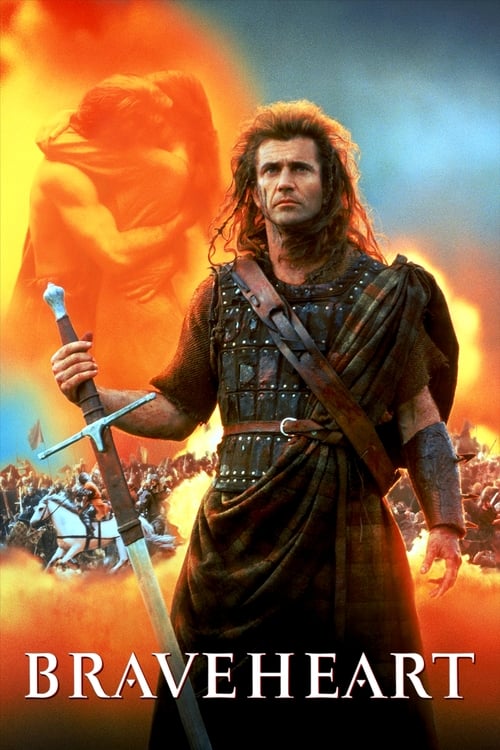
Braveheart
A sweeping historical epic of raw emotion, where the verdant highlands weep for a love lost and roar for a freedom yet to be won.
Braveheart
Braveheart

"Every man dies, not every man really lives."

24 May 1995 United States of America 177 min ⭐ 7.9 (10,640)
Director: Mel Gibson
Cast: Mel Gibson, Catherine McCormack, Sophie Marceau, Patrick McGoohan, Angus Macfadyen
Drama War History Action
Freedom vs. Tyranny Betrayal and Loyalty Sacrifice and Martyrdom Love as a Catalyst for Action
Budget: $72,000,000
Box Office: $213,216,216

Braveheart - Ending Explained

⚠️ Spoiler Analysis

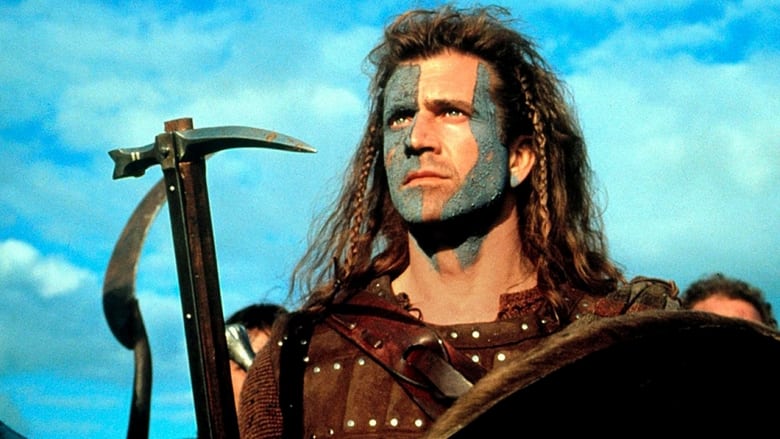
The entire plot of Braveheart hinges on a series of escalating tragedies and betrayals that culminate in martyrdom. The key event that sparks the rebellion is the public execution of Wallace's wife, Murron, by an English sheriff after she resists assault. This transforms Wallace's personal desire for a peaceful life into a burning quest for vengeance that quickly morphs into a national uprising.

A major plot twist occurs at the Battle of Falkirk. After being initially successful, Wallace's army is defeated because the Scottish nobles, having been bribed by King Edward, withdraw their forces. The most devastating blow is the revelation that a mysterious knight fighting for the English is none other than Robert the Bruce, the man Wallace hoped would lead them. This betrayal breaks Wallace, not physically, but spiritually, leading him into a period of guerrilla warfare.

The final, ultimate betrayal leads to Wallace's capture. He is lured to a meeting in Edinburgh by the Scottish nobles, only to be seized by English soldiers. It is revealed that Robert the Bruce's father conspired with the other nobles to hand Wallace over. During his brutal public execution in London, Wallace refuses to submit or beg for mercy, instead using his last breath to shout 'Freedom!'. The film reveals a final hidden meaning in its closing moments: Princess Isabelle, visiting the dying King Edward, whispers to him that she is pregnant with Wallace's child, meaning the king's bloodline will end and Wallace's will endure, in a sense, through the future royalty of England. The film concludes years later at the Battle of Bannockburn, where the guilt-ridden and inspired Robert the Bruce finally takes up Wallace's mantle, invokes his name, and leads the Scots to decisively win their freedom.

Alternative Interpretations

One of the primary alternative interpretations of Braveheart views it not as a historical account of a Scottish hero, but as an American-centric myth about freedom projected onto a foreign setting. Critics point out that the film's emphasis on individual liberty and its anti-establishment, 'man of the people' narrative feels more aligned with American revolutionary ideals than with the realities of 13th-century feudalism. The famous cry for 'freedom' is seen by some as a modern, almost Hollywood-ized concept anachronistically placed into the mouth of a medieval warrior.

Another interpretation analyzes the film through a religious lens, particularly given Mel Gibson's own devout Catholic faith. William Wallace is often seen as a Christ-like figure or a messianic symbol. He is a simple man who gathers followers, is betrayed by his own people (the nobles), endures a 'purification by pain' during his public torture (which includes being strapped to a cross-like structure), and his sacrificial death ultimately leads to the 'salvation' or freedom of his nation. This reading views the film less as a political or historical epic and more as a passion play about martyrdom and redemption.