Braveheart
A sweeping historical epic of raw emotion, where the verdant highlands weep for a love lost and roar for a freedom yet to be won.
Braveheart

Braveheart

"Every man dies, not every man really lives."

24 May 1995 United States of America 177 min ⭐ 7.9 (10,640)
Director: Mel Gibson
Cast: Mel Gibson, Catherine McCormack, Sophie Marceau, Patrick McGoohan, Angus Macfadyen
Drama War History Action
Freedom vs. Tyranny Betrayal and Loyalty Sacrifice and Martyrdom Love as a Catalyst for Action
Budget: $72,000,000
Box Office: $213,216,216

Overview

Set in the late 13th century, Braveheart chronicles the life of William Wallace (Mel Gibson), a Scottish commoner who returns to his village seeking a peaceful life and to marry his childhood love, Murron (Catherine McCormack). However, the brutal tyranny of the English King, Edward I "Longshanks" (Patrick McGoohan), shatters this peace. After a personal tragedy incites his vengeance, Wallace's fight against local English soldiers quickly escalates into a nationwide rebellion.

Reluctantly at first, but with growing conviction, Wallace unites the disparate Scottish clans, proving to be a brilliant and inspiring military leader. His grassroots army, fueled by a deep desire for liberty, challenges the might of the English empire in a series of visceral and bloody battles, including the legendary Battle of Stirling. Wallace's quest for freedom is complicated by the treacherous politics of the Scottish nobles, particularly the conflicted contender for the Scottish crown, Robert the Bruce (Angus Macfadyen). The film is a passionate, albeit historically liberal, account of one man's transformation from a farmer into a symbol of a nation's enduring fight for independence.
Core Meaning

The core meaning of Braveheart is an impassioned cry for freedom against tyranny. Director Mel Gibson aimed to tell a story where the universal and timeless ideal of liberty is worth any sacrifice, including life itself. The film posits that freedom is not a privilege granted by rulers, but an inherent right of the people. Through William Wallace's journey from a man seeking personal peace to a national martyr, the film argues that the fight for freedom is often ignited by personal loss and sustained by a collective spirit. It also explores the contrast between leadership born from conviction and patriotism (Wallace) versus leadership motivated by political gain and compromise (the Scottish nobles), ultimately suggesting that true leadership inspires others to fight for a cause greater than themselves.

Thematic DNA

Freedom vs. Tyranny 40%
Betrayal and Loyalty 30%
Sacrifice and Martyrdom 20%
Love as a Catalyst for Action 10%

Freedom vs. Tyranny

This is the central theme, encapsulated in Wallace's dying shout, "Freedom!". The film portrays the English rule under Edward Longshanks as oppressive and cruel, exemplified by policies like Prima Nocte. Wallace's rebellion is depicted as a righteous struggle of an oppressed people for self-determination. The narrative repeatedly contrasts the Scots' desire for liberty with the English crown's tyrannical ambition, making the conflict a powerful, archetypal battle between subjugation and liberation.

Betrayal and Loyalty

The theme of betrayal is a constant, painful undercurrent. Wallace is repeatedly betrayed by the self-serving Scottish nobles, who prioritize their own land and titles over the nation's freedom. The most poignant betrayal comes from Robert the Bruce, who is torn between his admiration for Wallace and his father's cynical political machinations. This contrasts sharply with the fierce loyalty of Wallace's common-man army, highlighting a class divide where true patriotism resides with the people, not necessarily the aristocracy.

Sacrifice and Martyrdom

Braveheart powerfully explores the idea that meaningful change requires immense sacrifice. Wallace loses his wife, his home, and ultimately his life for the cause of Scottish independence. His brutal public execution is not depicted as a defeat, but as a final, defiant act of sacrifice that transforms him into a martyr. His death serves as the ultimate inspiration for the Scots, galvanizing them to continue the fight and eventually win their freedom at Bannockburn, proving his sacrifice was not in vain.

Love as a Catalyst for Action

While a war epic, the narrative is fundamentally driven by love. It is the murder of his wife, Murron, that serves as the catalyst for Wallace's rebellion. His initial fight is one of personal vengeance, born from lost love, which then transforms into a larger, patriotic cause. His memory of Murron sustains him throughout his campaign, and his vision of her in his final moments signifies that his entire struggle was an extension of his love for her and, by extension, his homeland.

Character Analysis

William Wallace

Mel Gibson

Archetype: The Tragic Hero / Rebel Leader
Key Trait: Indomitable Will

Motivation

Initially motivated by vengeance for his wife's murder, his purpose broadens to a passionate, all-consuming desire to free Scotland from English oppression. He fights for the idea that every person has the right to live freely on their own land, a conviction he holds until his final breath.

Character Arc

Wallace begins as a man desiring only peace, family, and a simple life. The murder of his wife transforms him from a private citizen into a reluctant but ferocious leader of a rebellion. He evolves from seeking personal revenge to embodying the national hope for freedom, becoming a master strategist and an inspirational orator. His arc culminates in his capture and martyrdom, where he sacrifices his body but immortalizes his cause, transitioning from a man to a legend.

Robert the Bruce

Angus Macfadyen

Archetype: The Conflicted Prince
Key Trait: Conflicted

Motivation

His primary motivation is to secure the Scottish crown for himself. He is caught between two paths to this goal: the safe, political maneuvering suggested by his father (aligning with England) and the dangerous, principled path of rebellion championed by Wallace. His ultimate motivation becomes fulfilling Wallace's legacy.

Character Arc

Robert starts as a pragmatic, cautious nobleman, torn between his respect for Wallace and the political expediency advised by his leprous, cynical father. His fear and ambition lead him to betray Wallace at the Battle of Falkirk, a moment of profound shame. However, Wallace's unwavering courage and ultimate sacrifice inspire Robert to cast aside his father's influence and his own indecision. He finally embraces his role as a true leader, taking up Wallace's cause and leading Scotland to freedom.

King Edward I 'Longshanks'

Patrick McGoohan

Archetype: The Tyrant / Antagonist
Key Trait: Ruthless

Motivation

His motivation is absolute power and the complete subjugation of Scotland. He sees the country and its people not as a nation to be governed but as a territory to be owned and exploited. He is driven by a cold, Machiavellian desire to expand and solidify his own power and legacy, using any means necessary.

Character Arc

Longshanks is a largely static character, representing the unwavering force of tyranny. He is portrayed as a cunning, ruthless, and cruel monarch from beginning to end. His arc is one of decline; as Wallace's rebellion gains momentum, Longshanks' control frays, and his health deteriorates. His story ends in impotence, as he dies knowing his bloodline will be severed and that the rebellion he sought to crush has outlived him.

Princess Isabelle

Sophie Marceau

Archetype: The Ally / Confidante
Key Trait: Compassionate

Motivation

Trapped in a loveless political marriage to the weak Prince Edward, she is motivated by a yearning for genuine strength and honor, which she finds in Wallace. Her motivation becomes to aid his cause, driven by a mixture of political savvy, compassion, and love, ultimately seeking to undermine the cruel king who controls her life.

Character Arc

Initially sent as a political pawn by Longshanks to manipulate Wallace, Princess Isabelle is instead won over by his integrity and passion. She transforms from a dutiful, unhappy noblewoman into a defiant ally and Wallace's secret confidante. Her arc culminates in an act of ultimate loyalty to Wallace and defiance against Longshanks, as she reveals she carries Wallace's child, ensuring the end of the king's direct lineage.

Symbols & Motifs

The Thistle

Meaning:

The thistle, the national flower of Scotland, symbolizes love, devotion, and the beauty and fragility of life and peace. It also represents the sharp pain of loss.

Context:

As a child, Murron gives a young William a thistle at his father's funeral. Years later, as an adult, William returns the preserved thistle to her, symbolizing his enduring love. The flower connects his love for her to his love for Scotland itself.

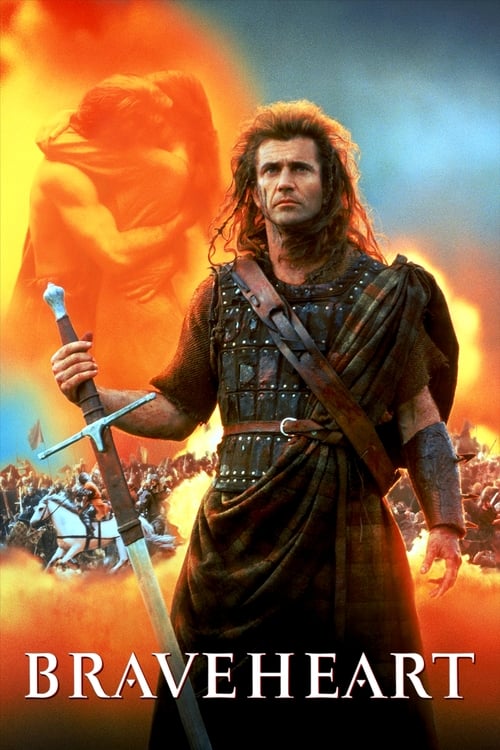
Wallace's Claymore (Two-Handed Sword)

Meaning:

The massive broadsword symbolizes Wallace's incredible strength, his leadership, and the enduring spirit of the Scottish rebellion. It represents the physical manifestation of the fight for freedom.

Context:

The sword is Wallace's primary weapon in battle. In the final scene, years after Wallace's death, Robert the Bruce invokes his memory, and the sword is seen planted in the ground at the victorious field of Bannockburn, signifying that Wallace's spirit and cause have ultimately triumphed.

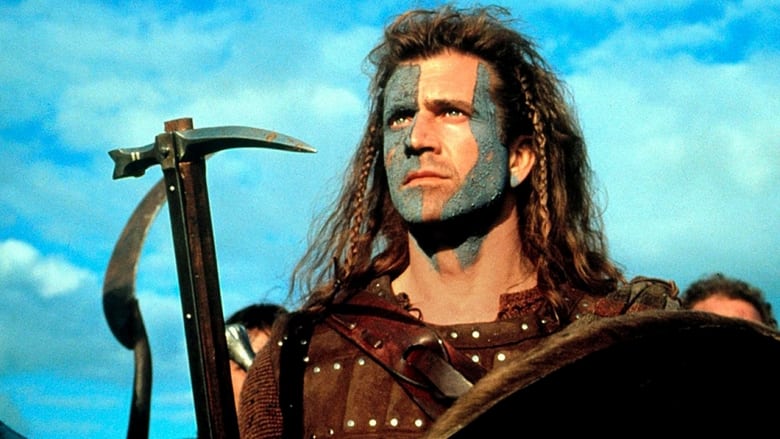
Blue Face Paint (Woad)

Meaning:

The blue woad paint symbolizes a return to an ancient, fierce, and untamable Scottish warrior spirit. It visually distinguishes the Scots from the uniformed English, representing their wildness and their deep connection to their land.

Context:

Wallace and his army don the blue face paint before major battles, most famously at Stirling Bridge. While a historical anachronism (the Picts who used it lived centuries earlier), it serves as a powerful cinematic tool for intimidation and a symbol of Scottish identity.

The Secret Marriage

Meaning:

Wallace and Murron's secret marriage is a direct act of personal rebellion against English tyranny, specifically the abhorrent law of Prima Nocte. It symbolizes the idea that love and personal freedom are rights that exist outside the control of an oppressive state.

Context:

To avoid the English lord's claim to sleep with Murron on her wedding night, she and Wallace marry in secret. This private defiance of an unjust law is the precursor to Wallace's public war against all English injustice.

Memorable Quotes

They may take our lives, but they'll never take... OUR FREEDOM!

— William Wallace

Context:

Wallace bellows this line as the climax of his speech to the hesitant Scottish army before the Battle of Stirling. Facing a superior English force, his words galvanize the soldiers to fight not just for survival, but for the principle of freedom.

Meaning:

This is the film's most iconic line and its thematic core. It powerfully argues that while the physical body can be conquered and killed, the spirit and the ideal of liberty are unconquerable. It's a defiant roar against tyranny, asserting that the most important part of human existence cannot be taken by force.

Every man dies, not every man truly lives.

— William Wallace

Context:

Spoken to his close friend Hamish before a battle, this line encapsulates Wallace's worldview. It reflects his own choice to abandon a peaceful life for a purpose-driven one, no matter the cost.

Meaning:

This quote serves as a philosophical call to action. It suggests that a life lived without purpose, passion, or courage is not a life truly lived. Wallace uses it to inspire his men to choose a meaningful death for a cause over a long, empty life of servitude.

Your heart is free. Have the courage to follow it.

— Malcolm Wallace

Context:

William's father speaks these words to him when he is a young boy, shortly before leaving for a battle from which he will not return. The memory of this advice resonates throughout the film, influencing Wallace's major decisions.

Meaning:

This is the foundational advice given to William as a child, which becomes his guiding principle as an adult. It posits that true guidance comes from one's inner convictions and emotions, rather than from external pressures or fears. It is a call for moral courage.

FREEDOM!

— William Wallace

Context:

This is Wallace's last word. While being publicly tortured and disemboweled in London, the magistrate offers him a quick death if he will only say 'Mercy'. Instead, with his last ounce of strength, he screams 'Freedom' for all to hear.

Meaning:

This single word is the ultimate expression of Wallace's defiance and the culmination of his entire struggle. By shouting it instead of begging for mercy, he denies his executioners their final victory of breaking his spirit. It transforms his death into a powerful symbol of martyrdom and ensures his legend will inspire others.

Philosophical Questions

What is the true price of freedom?

The film relentlessly explores whether any price is too high for freedom. Wallace sacrifices his chance at a peaceful life, his love, his safety, and ultimately his own body. The narrative argues that a life without liberty is not a life worth living, encapsulated in the quote, 'Every man dies, not every man truly lives.' It forces the audience to confront whether they would be willing 'to trade all the days, from this day to that, for one chance... to tell our enemies that they may take our lives, but they'll never take our freedom!' The film's answer is an unequivocal yes, suggesting that the ultimate sacrifice is not only justified but necessary to achieve a cause greater than one's own life.

Does history belong to the victors or the martyrs?

Braveheart opens with the narration, 'Historians from England will say I am a liar, but history is written by those who have hanged heroes.' This sets up a central question about historical narrative. In the short term, King Edward is the victor; he captures and brutally executes Wallace. However, the film argues that the moral and inspirational victory belongs to the martyr. Wallace's legend, not Edward's power, is what ultimately inspires the Scots to win their freedom. The film suggests that the power of a story and a symbol can be more enduring and influential than the power of an army or a king, effectively rewriting history through inspiration rather than conquest.

Alternative Interpretations

One of the primary alternative interpretations of Braveheart views it not as a historical account of a Scottish hero, but as an American-centric myth about freedom projected onto a foreign setting. Critics point out that the film's emphasis on individual liberty and its anti-establishment, 'man of the people' narrative feels more aligned with American revolutionary ideals than with the realities of 13th-century feudalism. The famous cry for 'freedom' is seen by some as a modern, almost Hollywood-ized concept anachronistically placed into the mouth of a medieval warrior.

Another interpretation analyzes the film through a religious lens, particularly given Mel Gibson's own devout Catholic faith. William Wallace is often seen as a Christ-like figure or a messianic symbol. He is a simple man who gathers followers, is betrayed by his own people (the nobles), endures a 'purification by pain' during his public torture (which includes being strapped to a cross-like structure), and his sacrificial death ultimately leads to the 'salvation' or freedom of his nation. This reading views the film less as a political or historical epic and more as a passion play about martyrdom and redemption.

Cultural Impact

Braveheart's cultural impact has been immense and multifaceted, particularly in Scotland. Upon its release in 1995, the film was credited with a significant surge in Scottish nationalism and interest in the nation's history. It sparked a massive increase in tourism to Wallace-related sites, such as the Wallace Monument near Stirling. Some commentators have even linked the film's powerful narrative of independence to the political climate that led to the Scottish Parliament's re-establishment in 1999 and the 2014 independence referendum.

Critically, the film was a major success, winning the Academy Award for Best Picture and solidifying Mel Gibson's status as an A-list director. However, it has been widely and consistently criticized by historians for its vast number of historical inaccuracies, from the use of kilts and woad (which were from different eras) to the complete fabrication of the romance with Princess Isabelle and the misrepresentation of key events like the Battle of Stirling Bridge (which famously featured no bridge). Director Mel Gibson and writer Randall Wallace have defended these choices as necessary for creating a more 'cinematically compelling' narrative, emphasizing that they were creating a mythic legend, not a documentary. Despite the inaccuracies, Braveheart's epic scale, brutal battle scenes, and passionate themes of freedom resonated with audiences worldwide, influencing the historical epic genre for years to come.

Audience Reception

Audiences overwhelmingly embraced Braveheart, turning it into a commercial success and a beloved classic. Viewers praised its epic scope, the emotional depth of its story, the spectacular and visceral battle sequences, and James Horner's soaring musical score. Mel Gibson's passionate performance as William Wallace was widely lauded, and the film's central themes of freedom, love, and sacrifice resonated deeply with the public. The film's memorable and inspiring quotes, particularly the 'Freedom!' speech, became iconic parts of popular culture. While some viewers and critics pointed out the extreme violence and the numerous historical inaccuracies, for the majority of the audience, these were secondary to the powerful and emotionally engaging story of a hero fighting against tyranny. It remains a film that evokes strong feelings of inspiration and patriotism, even for viewers with no connection to Scotland.

Interesting Facts

  • Most of the large-scale battle scenes were filmed in Ireland, not Scotland, using around 1,600 members of the Irish Army Reserve as extras.
  • Mel Gibson initially felt he was too old to play William Wallace and wanted to only direct the film. However, Paramount Pictures would only finance the project if Gibson also starred in the lead role.
  • The film is based on the 15th-century epic poem "The Actes and Deidis of the Illustre and Vallyeant Campioun Schir William Wallace", written by Blind Harry.
  • The iconic blue face paint (woad) used by the Scots was historically inaccurate for the 13th century; it was used by the Picts over 1,000 years earlier.
  • The romance between William Wallace and Princess Isabelle is a complete fabrication. The real Princess Isabelle was a child at the time of the events and did not even arrive in England until after Wallace's death.
  • The first assembly cut of the movie was three hours and forty-five minutes long. Gibson has stated there is still about an hour of footage that has never been released.
  • The film won five Academy Awards, including Best Picture and Best Director for Mel Gibson.
  • The word 'Braveheart' historically refers to Robert the Bruce, not William Wallace. Bruce was instructed to carry the King's heart on a crusade, earning him the title.
  • Real-life members of the Wallace Clan appeared as extras during the filming in Scotland.
  • During filming, Mel Gibson was nearly crushed by a horse that fell backwards on top of him, but his stunt double pulled him out of the way just in time.

⚠️ Spoiler Analysis

Click to reveal detailed analysis with spoilers

Frequently Asked Questions

Explore More About This Movie

Dive deeper into specific aspects of the movie with our detailed analysis pages

Comments (0)

Leave a comment

No comments yet. Be the first to share your thoughts!