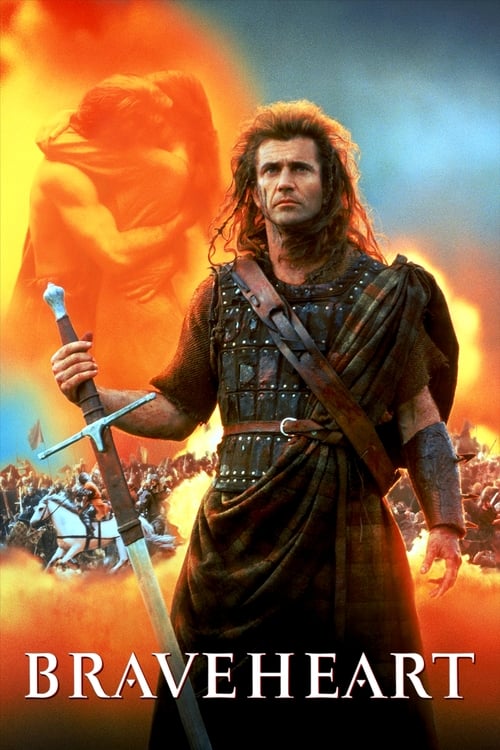
"Every man dies, not every man really lives."
Braveheart - Symbolism & Philosophy
Symbols & Motifs
The Thistle
The thistle, the national flower of Scotland, symbolizes love, devotion, and the beauty and fragility of life and peace. It also represents the sharp pain of loss.
As a child, Murron gives a young William a thistle at his father's funeral. Years later, as an adult, William returns the preserved thistle to her, symbolizing his enduring love. The flower connects his love for her to his love for Scotland itself.
Wallace's Claymore (Two-Handed Sword)
The massive broadsword symbolizes Wallace's incredible strength, his leadership, and the enduring spirit of the Scottish rebellion. It represents the physical manifestation of the fight for freedom.
The sword is Wallace's primary weapon in battle. In the final scene, years after Wallace's death, Robert the Bruce invokes his memory, and the sword is seen planted in the ground at the victorious field of Bannockburn, signifying that Wallace's spirit and cause have ultimately triumphed.
Blue Face Paint (Woad)
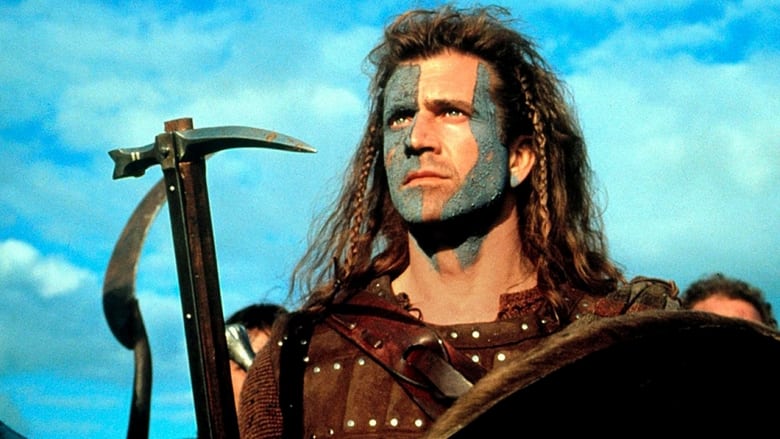
The blue woad paint symbolizes a return to an ancient, fierce, and untamable Scottish warrior spirit. It visually distinguishes the Scots from the uniformed English, representing their wildness and their deep connection to their land.
Wallace and his army don the blue face paint before major battles, most famously at Stirling Bridge. While a historical anachronism (the Picts who used it lived centuries earlier), it serves as a powerful cinematic tool for intimidation and a symbol of Scottish identity.
The Secret Marriage
Wallace and Murron's secret marriage is a direct act of personal rebellion against English tyranny, specifically the abhorrent law of Prima Nocte. It symbolizes the idea that love and personal freedom are rights that exist outside the control of an oppressive state.
To avoid the English lord's claim to sleep with Murron on her wedding night, she and Wallace marry in secret. This private defiance of an unjust law is the precursor to Wallace's public war against all English injustice.
Philosophical Questions
What is the true price of freedom?
The film relentlessly explores whether any price is too high for freedom. Wallace sacrifices his chance at a peaceful life, his love, his safety, and ultimately his own body. The narrative argues that a life without liberty is not a life worth living, encapsulated in the quote, 'Every man dies, not every man truly lives.' It forces the audience to confront whether they would be willing 'to trade all the days, from this day to that, for one chance... to tell our enemies that they may take our lives, but they'll never take our freedom!' The film's answer is an unequivocal yes, suggesting that the ultimate sacrifice is not only justified but necessary to achieve a cause greater than one's own life.
Does history belong to the victors or the martyrs?
Braveheart opens with the narration, 'Historians from England will say I am a liar, but history is written by those who have hanged heroes.' This sets up a central question about historical narrative. In the short term, King Edward is the victor; he captures and brutally executes Wallace. However, the film argues that the moral and inspirational victory belongs to the martyr. Wallace's legend, not Edward's power, is what ultimately inspires the Scots to win their freedom. The film suggests that the power of a story and a symbol can be more enduring and influential than the power of an army or a king, effectively rewriting history through inspiration rather than conquest.
Core Meaning
The core meaning of Braveheart is an impassioned cry for freedom against tyranny. Director Mel Gibson aimed to tell a story where the universal and timeless ideal of liberty is worth any sacrifice, including life itself. The film posits that freedom is not a privilege granted by rulers, but an inherent right of the people. Through William Wallace's journey from a man seeking personal peace to a national martyr, the film argues that the fight for freedom is often ignited by personal loss and sustained by a collective spirit. It also explores the contrast between leadership born from conviction and patriotism (Wallace) versus leadership motivated by political gain and compromise (the Scottish nobles), ultimately suggesting that true leadership inspires others to fight for a cause greater than themselves.