"It's only a state of mind."
Brazil - Symbolism & Philosophy
Symbols & Motifs
The Ducts
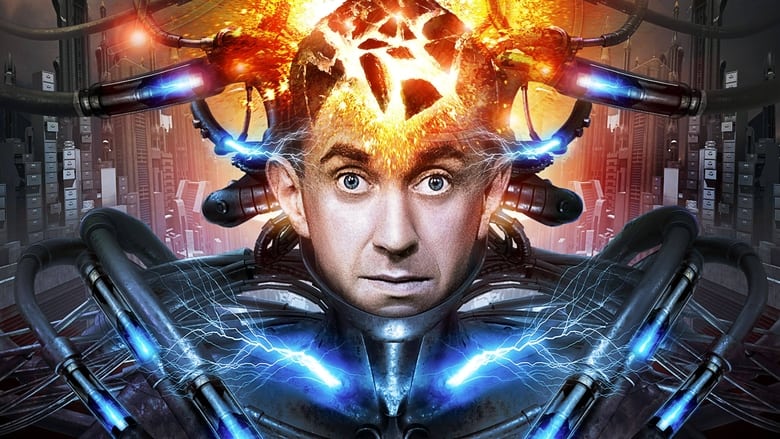
The large, intrusive metallic tubes and ducts represent the ugly, invasive nature of the government [1.10]. They pump the essential services (and surveillance) into every home, symbolizing how the state violates private spaces.
They are omnipresent in apartments and restaurants. When Sam's air conditioning breaks, Central Services rips open his walls, having the ducts violently spill out into his living space like mechanical guts.
The Winged Armor
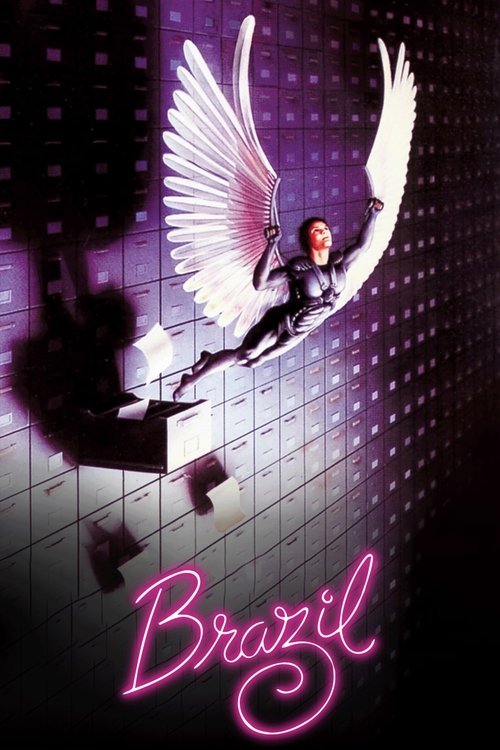
Sam's winged persona represents romantic individualism, heroism, and absolute freedom—everything that the real world denies him.
This symbol appears exclusively in Sam's recurring daydreams, where he flies above the clouds to fight giant monsters and rescue his dream woman, contrasting sharply with his grey, grounded reality.
The Giant Samurai
The towering, mechanical Samurai in Sam's dreams symbolizes the soulless, technologically armed state and the overwhelming obstacles constructed by bureaucracy.
Sam fights this giant in his fantasies. When he finally cracks open the Samurai's mask, he is horrified to see his own face underneath, suggesting his complicity in the very system he subconsciously hates.
Plastic Surgery
The grotesque cosmetic procedures represent the decay of the upper class, their obsession with vanity, and society's desperate attempt to mask its own rotting core.
Sam's mother, Ida, undergoes constant 'rejuvenation' procedures with Dr. Jaffe, while her friend Mrs. Terrain suffers horrific, dissolving complications from an opposing surgeon. Both ignore the dying world around them.
Philosophical Questions
Is escapism a form of rebellion or a mechanism of surrender?
The film asks whether retreating into one's own imagination is a triumph of the human spirit or a tragic defeat [1.5]. While Sam's fantasy life keeps his soul alive in a dead world, his failure to act in reality allows the oppressive system to continue unchallenged until it destroys him.
How does bureaucracy dilute moral responsibility?
Through characters like Jack Lint, the film explores the banality of evil. When actions are broken down into departments, forms, and transit protocols, individuals stop seeing the human cost of their work, allowing ordinary people to commit horrific acts simply by 'doing their job'.
Can true love survive in a completely rationalized, surveilled society?
Sam and Jill's romance is doomed by the state because genuine human connection and uncontrollable emotions are antithetical to a system that requires perfect predictability, paperwork, and obedience.
Core Meaning
Terry Gilliam's Brazil operates as a post-Orwellian warning about the dehumanizing power of bureaucracy, consumerism, and state control. The film suggests that when society prioritizes procedure and paperwork over human empathy, it creates an absurd but terrifying totalitarianism. However, rather than simply critiquing the state, Gilliam deeply examines the individual's response to such oppression. Sam Lowry's tragedy is that his rebellion is entirely internal; his rich imagination, while a beautiful refuge, ultimately serves as a mechanism of escapism rather than a tool for meaningful change. The film argues that retreating into fantasy in the face of systemic horror may be the only way the individual can survive mentally, but it is ultimately a defeat in the physical world.