
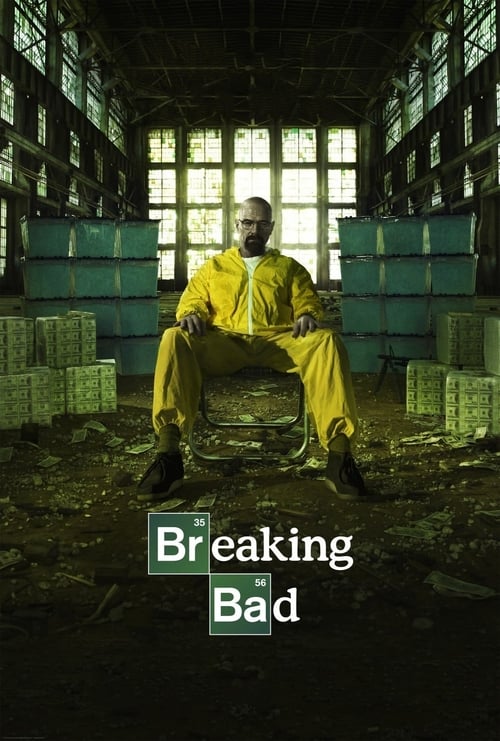
"Change the equation."
Breaking Bad - Symbolism & Philosophy
Symbols & Motifs
The Pink Teddy Bear
The pink teddy bear, with its charred face and missing eye, symbolizes the loss of innocence and the widespread, collateral damage of Walt's actions. It represents the innocent victims caught in the fallout of his choices. Its unsettling appearance is a constant, haunting reminder of the human cost of Walt's empire. Some interpretations also suggest it foreshadows the facial injury of antagonist Gus Fring.
The bear first appears in Season 2, seen in black-and-white flash-forwards floating in Walt's pool. It is later revealed to be debris from the Wayfarer 515 plane crash, a tragedy indirectly caused by Walt's decision to let Jane Margolis die, which led her air-traffic controller father to be distraught at work. The bear's eye is later seen in the pool filter, a recurring visual motif.
Color Palette
Colors are used deliberately throughout the series to signify characters' emotional states, power dynamics, and moral alignment. For example, Marie is almost always seen wearing purple, representing royalty and self-deception. Walt often wears beige and green at the beginning, signifying his blandness and greed, but transitions to darker colors like black as he becomes Heisenberg. Jesse is associated with yellow and red, symbolizing his impulsiveness and connection to the drug trade. Pink is often tied to moments of innocence or tragic loss.
The use of color is consistent across all five seasons. Character wardrobes, set designs, and even the color of the meth itself are all imbued with symbolic meaning. The visual transition of characters' clothing is a subtle way the show telegraphs their internal transformations without dialogue.
The Fly (Episode: "Fly")
The fly in the superlab represents contamination, chaos, and Walter's overwhelming guilt. His obsessive, single-minded quest to kill it is a manifestation of his loss of control over his life and his desperate need to purify his conscience. It symbolizes the one uncontrollable element in his meticulously controlled environment, a tiny flaw that threatens to unravel everything.
In the Season 3 episode titled "Fly," Walt and Jesse are locked in the lab for the entire episode. Walt becomes fixated on killing a single fly, convinced it will contaminate their batch of meth. The episode serves as a deep dive into Walt's psyche, where he nearly confesses his role in Jane's death to Jesse, revealing the immense guilt tormenting him.
Walter White's Hats (Pork Pie Hat)
The pork pie hat is the primary symbol of Walter's transformation into his criminal alter ego, Heisenberg. When he puts on the hat, he sheds the persona of the meek Walter White and embodies the confident, ruthless, and powerful drug lord. It is a key part of his new identity, a mask that allows him to commit heinous acts.
Walt first dons the hat in Season 1 and it becomes his signature look as Heisenberg. The simple act of putting on or taking off the hat often signifies a shift in his personality. In the final season, the hat is iconic, representing the infamous criminal he has become, recognized by all in the criminal underworld.
Philosophical Questions
Are we defined by our choices or our circumstances?
The series constantly explores the tension between free will and determinism. Walter White is dealt a terrible hand with his cancer diagnosis and financial struggles. The show asks whether these circumstances inevitably led to his transformation or if he actively chose to become Heisenberg at every turn. While his situation is the catalyst, the series seems to argue that his pride and his choices—to lie, to kill, to manipulate—are what truly define his descent. Jesse's arc provides a counterpoint, suggesting that even in the most dire circumstances, a different path can be chosen.
What is the nature of good and evil?
"Breaking Bad" challenges a binary understanding of morality. It presents a protagonist who commits evil acts for what he initially frames as a good reason. The series meticulously blurs the lines, forcing the audience to sympathize with a character even as he becomes monstrous. It suggests that evil is not a state of being, but a gradual process of moral compromise, where each small step into darkness makes the next one easier. The show asks if there is a point of no return, and whether a person can be both a loving father and a ruthless killer.
Can actions be justified if the initial motivation is noble?
This is the central ethical dilemma Walter White presents to himself and the audience. He starts his journey with the noble goal of providing for his family. The series continuously tests the age-old question of whether the ends justify the means. As Walt's actions become more and more heinous—from letting Jane die to poisoning a child—the show makes it increasingly clear that his initial noble motivation has become a hollow justification for acts driven by ego and a lust for power, suggesting that some means are so corrupting they invalidate any end.
Core Meaning
The core meaning of "Breaking Bad" is a profound exploration of transformation and moral decay. Series creator Vince Gilligan famously described his goal as turning the protagonist from "Mr. Chips into Scarface." The series posits that under the right (or wrong) circumstances, anyone is capable of immense change and moral compromise. It delves into the nature of good and evil, questioning whether they are fixed states or the results of a series of choices. The show meticulously examines the consequences of one man's decision to break societal and moral laws, initially for his family, but ultimately for his own pride and ego. It serves as a tragic, modern-day cautionary tale about the seductive allure of power and the devastating ripple effects of a compromised soul.