"A story of the most precious moments in a woman's life!"
Brief Encounter - Symbolism & Philosophy
Symbols & Motifs
The Railway Station
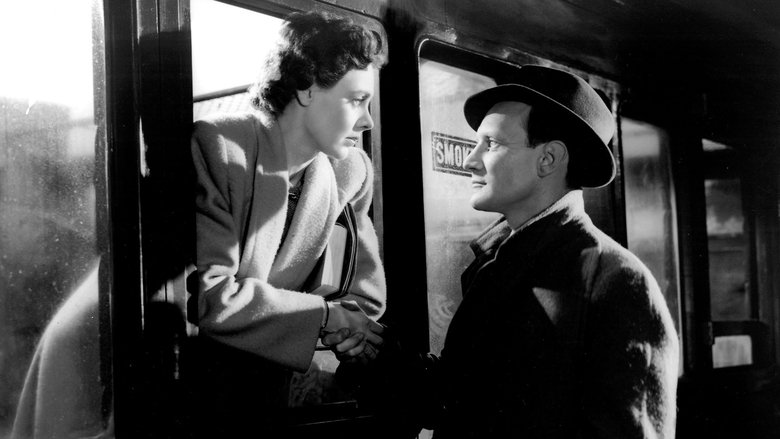
A place of transition and limbo. It represents the 'brief' nature of their encounter—a space where they are suspended between their real lives (home) and their fantasy life (together).
Almost all key moments—the meeting, the developing romance, and the final goodbye—occur at Milford Junction, amidst the steam and noise.
Grit in the Eye
The catalyst for intimacy. It represents how a tiny, irritation or accident can penetrate one's defenses and alter the course of a life.
The affair begins physically when Alec touches Laura to remove the grit, breaching the social distance between strangers.
The Express Train
Uncontrollable passion and danger. It disrupts the quiet domesticity of the station and represents the violent emotions Laura fears.
The express train rushes through the station, shaking the ground. In the climax, it becomes a symbol of the death impulse as Laura briefly considers suicide.
Rachmaninoff's Piano Concerto No. 2
The turbulent internal landscape of Laura's heart. It provides the emotional release that the repressed characters cannot verbally express.
Used throughout the soundtrack, often swelling during Laura's internal monologues or moments of high romantic tension.
Philosophical Questions
Is unconsummated love more profound than realized love?
The film suggests that by denying their physical impulses, Laura and Alec preserve their love in a state of perfect, tragic purity, untarnished by the realities of an affair or a scandalous life.
Does moral duty supersede personal happiness?
The film posits that personal happiness purchased at the cost of betrayal and shame is toxic. It argues that integrity is a higher form of existence than satisfaction, a stoic philosophy deeply rooted in the era's culture.
Core Meaning
The Triumph of Decency over Desire: Brief Encounter is not merely a romance, but a tragedy of ordinary people confronting 'violent' emotions they are ill-equipped to handle. Director David Lean and writer Noël Coward argue that for the British middle class of the era, personal happiness is secondary to moral integrity and social responsibility. The film suggests that the most profound love is sometimes demonstrated not by seizing what you want, but by letting it go to preserve the dignity and stability of others.