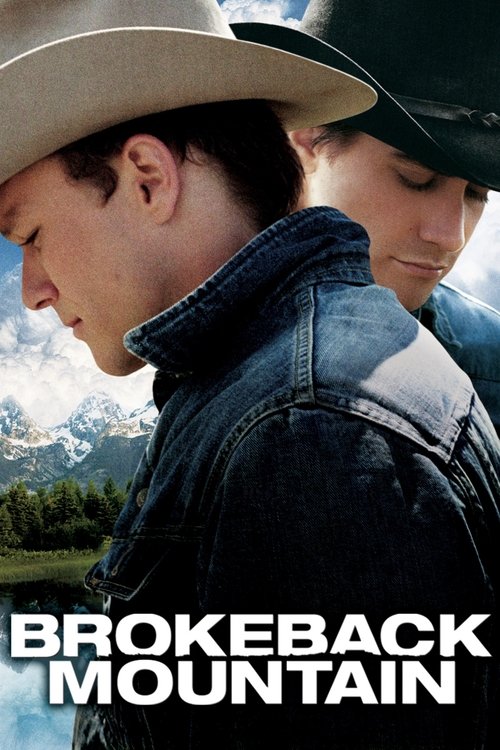
"Love is a force of nature."
Brokeback Mountain - Symbolism & Philosophy
Symbols & Motifs
The Intertwined Shirts
Symbolizes the union of souls and the hidden nature of their love. The shirts act as a physical surrogate for their relationship, preserving their scent and the memory of their first summer.
Ennis finds them in Jack's childhood closet. Originally, Jack had placed Ennis's shirt inside his own (Jack protecting Ennis). At the end, Ennis reverses them, placing Jack's shirt inside his own.
The Postcard of Brokeback Mountain
Represents an unattainable paradise and a tombstone for their love. It is the only physical evidence of the "world" they shared that can exist in the domestic sphere.
In the final scene, Ennis pins the postcard to the door of his trailer's closet, next to the shirts, creating a small, private shrine to his lost lover.
The Sheep
Symbolize vulnerability and the distraction of desire. The phrase "stemming the rose" (referring to the sheep) becomes a coded way to discuss their deviation from duty.
The characters are hired to watch the sheep, but their burgeoning relationship leads them to neglect the flock, mirroring how their love complicates their roles in society.
Philosophical Questions
Is societal law a denial of human nature?
The film pits the 'natural' freedom of the mountain against the 'artificial' constraints of the town. It asks if human nature is inherently freer than the social structures we build to contain it.
What is the true cost of an 'unlived life'?
Ennis chooses safety over happiness. The film explores the ethical and personal cost of this choice, questioning if a life saved through a lie is a life truly lived at all.
Core Meaning
The core of the film lies in the tragedy of the closet and the destructive power of internalized homophobia. Director Ang Lee uses the Western genre—traditionally a bastion of hypermasculinity—to explore the vulnerability and emotional isolation of men who are unable to speak their truth. The film suggests that the true tragedy isn't just the loss of a loved one, but the decades of wasted time and the psychological cage built by societal fear. It serves as a universal testament to the necessity of authentic living and the lingering pain of the "unlived life."