Brokeback Mountain
A sweepingly tragic neo-Western where repressed longing flickers like a campfire against the vast, unforgiving Wyoming wilderness, ultimately finding its home in the silent, intertwined fabric of two shirts in a closet.
Brokeback Mountain

Brokeback Mountain

"Love is a force of nature."

22 October 2005 Canada 134 min ⭐ 7.8 (7,352)
Director: Ang Lee
Cast: Heath Ledger, Jake Gyllenhaal, Michelle Williams, Anne Hathaway, Randy Quaid
Drama Romance
The Repression of Identity Nature as a Sanctuary The Myth of the American West Regret and the Passage of Time
Budget: $14,000,000
Box Office: $178,043,761

Overview

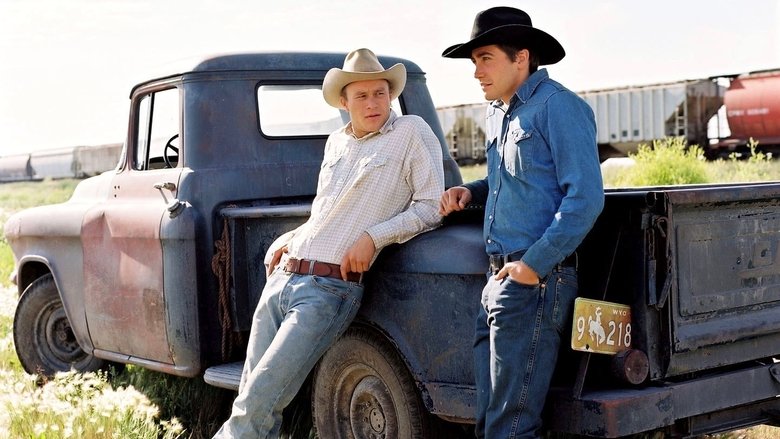
Set against the majestic but isolated landscape of 1963 Wyoming, Brokeback Mountain follows two young men, Ennis Del Mar and Jack Twist, who are hired as sheep herders for the summer. What begins as a silent, grueling job evolves into an unexpected and profound emotional and physical connection. Despite the depth of their bond, the realities of the conservative American West force them to part ways as the season ends, each returning to a life of traditional expectations, marriages, and labor.

The narrative spans two decades, tracing their infrequent reunions—clandestinely labeled as "fishing trips"—that serve as their only escape from the weight of their respective domestic lives. While Jack dreams of building a permanent life together on a ranch, Ennis is paralyzed by a deep-seated fear of the violent consequences that often befell those who defied social norms in rural America. The film is a quiet, devastating study of the cost of living a lie and the enduring power of a love that can never be fully realized.

Core Meaning

The core of the film lies in the tragedy of the closet and the destructive power of internalized homophobia. Director Ang Lee uses the Western genre—traditionally a bastion of hypermasculinity—to explore the vulnerability and emotional isolation of men who are unable to speak their truth. The film suggests that the true tragedy isn't just the loss of a loved one, but the decades of wasted time and the psychological cage built by societal fear. It serves as a universal testament to the necessity of authentic living and the lingering pain of the "unlived life."

Thematic DNA

The Repression of Identity 35%
Nature as a Sanctuary 25%
The Myth of the American West 20%
Regret and the Passage of Time 20%

The Repression of Identity

The film highlights how societal expectations and the threat of violence force individuals to bury their true selves. This is primarily seen through Ennis, whose childhood trauma regarding a hate crime makes him unable to accept a future with Jack, leading to a life of emotional starvation.

Nature as a Sanctuary

Brokeback Mountain itself serves as a liminal space where social laws are suspended. In the wilderness, the characters are free to be themselves, but this freedom is shown to be fragile and temporary, as they must always descend back into the "real world" of the plains.

The Myth of the American West

The film subverts the Cowboy archetype. By placing a queer romance at the heart of a Western, Lee deconstructs the traditional image of the rugged, solitary man, revealing that even the toughest figures are defined by a deep need for connection and intimacy.

Regret and the Passage of Time

Spanning twenty years, the movie emphasizes how quickly life passes while the characters wait for a "better time" that never arrives. The cyclical nature of their meetings highlights the stagnation caused by fear, ending in a profound sense of loss.

Character Analysis

Ennis Del Mar

Heath Ledger

Archetype: Tragic Protagonist
Key Trait: Deeply repressed and stoic

Motivation

Driven by a fear of violence and a sense of duty to his family, which prevents him from pursuing the life he truly wants.

Character Arc

Ennis moves from a state of guarded isolation to a brief, life-changing opening of his heart, only to spend the rest of his life retreating into repression. His final realization of his love comes only through the finality of Jack's death.

Jack Twist

Jake Gyllenhaal

Archetype: The Dreamer
Key Trait: Romantic and impulsive

Motivation

A desperate longing for permanence and a "ranch of their own" where they can live without fear.

Character Arc

Jack remains the constant pursuer of the relationship. Unlike Ennis, he is willing to risk societal fallout for a life together, but he eventually becomes embittered by Ennis's refusal to leave the closet.

Alma Beers

Michelle Williams

Archetype: The Betrayed Wife
Key Trait: Quietly observant and resilient

Motivation

The desire for a conventional, stable family life, which is undermined by Ennis's secret affair.

Character Arc

Alma begins as a hopeful bride but becomes a silent witness to her husband's secret. Her arc is one of mounting disillusionment and ultimate heartbreak as she realizes she can never fully reach her husband.

Symbols & Motifs

The Intertwined Shirts

Meaning:

Symbolizes the union of souls and the hidden nature of their love. The shirts act as a physical surrogate for their relationship, preserving their scent and the memory of their first summer.

Context:

Ennis finds them in Jack's childhood closet. Originally, Jack had placed Ennis's shirt inside his own (Jack protecting Ennis). At the end, Ennis reverses them, placing Jack's shirt inside his own.

The Postcard of Brokeback Mountain

Meaning:

Represents an unattainable paradise and a tombstone for their love. It is the only physical evidence of the "world" they shared that can exist in the domestic sphere.

Context:

In the final scene, Ennis pins the postcard to the door of his trailer's closet, next to the shirts, creating a small, private shrine to his lost lover.

The Sheep

Meaning:

Symbolize vulnerability and the distraction of desire. The phrase "stemming the rose" (referring to the sheep) becomes a coded way to discuss their deviation from duty.

Context:

The characters are hired to watch the sheep, but their burgeoning relationship leads them to neglect the flock, mirroring how their love complicates their roles in society.

Memorable Quotes

I wish I knew how to quit you.

— Jack Twist

Context:

Spoken during their final meeting in the mountains, Jack expresses his profound frustration with their decades-long secret affair.

Meaning:

Encapsulates the addictive and painful nature of a love that can neither be fully realized nor abandoned.

If you can't fix it, you've got to stand it.

— Ennis Del Mar

Context:

His personal philosophy, shared with Jack early on to explain why they can't be together openly.

Meaning:

Reflects the stoic resignation and survival instinct of the rural West, where suffering is accepted as inevitable.

Jack, I swear...

— Ennis Del Mar

Context:

The final line of the film, whispered to the intertwined shirts in his closet.

Meaning:

A vow of eternal fidelity and a belated apology for the fear that kept them apart.

Philosophical Questions

Is societal law a denial of human nature?

The film pits the 'natural' freedom of the mountain against the 'artificial' constraints of the town. It asks if human nature is inherently freer than the social structures we build to contain it.

What is the true cost of an 'unlived life'?

Ennis chooses safety over happiness. The film explores the ethical and personal cost of this choice, questioning if a life saved through a lie is a life truly lived at all.

Alternative Interpretations

The most discussed alternative interpretation involves Jack's death. While Lureen claims he died in a freak accident with a tire, Ennis imagines a brutal hate crime. Critics often debate whether Ennis's vision is the 'objective truth' or a manifestation of his own lifelong paranoia and guilt. Additionally, some viewers interpret Ennis not as strictly homosexual, but as 'Jack-sexual,' suggesting his attraction was unique to Jack rather than a broader identity, while others see him as a character struggling with bisexuality under extreme repression.

Cultural Impact

Brokeback Mountain was a watershed moment for LGBTQ+ representation in mainstream cinema. Released in 2005, it challenged the 'gay cowboy' stereotype and proved that queer narratives could be major box-office successes. It faced significant controversy, including being banned in some Middle Eastern countries and losing the Best Picture Oscar to Crash in what is often cited as one of the Academy's greatest snubs. Philosophically, it forced a global conversation about masculinity, homophobia, and the 'closet,' forever shifting how queer love is portrayed in the Western genre.

Audience Reception

Critics hailed the film as a masterpiece, particularly praising Heath Ledger's 'mumbled,' repressed performance. Audiences were deeply moved by the central tragedy, though it also became a target for conservative pundits and 'gay cowboy' jokes in pop culture. Over time, these jokes have faded, and the film is now universally recognized as a classic of American cinema, praised for its restraint, its breathtaking cinematography by Rodrigo Prieto, and its ability to humanize a marginalized experience for a global audience.

Interesting Facts

  • Heath Ledger and Michelle Williams fell in love on the set and had a daughter, Matilda, shortly after the film's release.
  • The film's sheep were a constant source of trouble; Ang Lee spent a whole day trying to get them to drink from a stream, only to learn sheep only drink from still water.
  • Anne Hathaway auditioned for her role with 'big princess hair' while taking a break from filming The Princess Diaries 2.
  • Heath Ledger was so committed to his role that he nearly broke Jake Gyllenhaal's nose during one of their more aggressive kissing scenes.
  • Despite being set in Wyoming, the film was shot almost entirely in the Canadian Rockies of Alberta due to budget constraints.
  • Heath Ledger famously refused to parody the film at the 2007 Oscars, stating the relationship between the characters deserved respect.

Easter Eggs

The Inversion of the Shirts

In Jack's closet, Ennis's shirt is inside Jack's, showing Jack 'protecting' Ennis. In the final scene, Ennis has flipped them so Jack's is inside his, symbolizing that Ennis has finally taken up the role of guarding Jack's memory.

The Subverted Gaze

In an early scene where Ennis is bathing, Jack is shown peeling a potato in the foreground without looking at him. This was a deliberate choice to avoid objectifying the characters and focus on their emotional connection.

The 'Earl' Backstory

The story Ennis tells about the man named Earl is a direct reference to a real-life murder that inspired author Annie Proulx to write the original short story.

⚠️ Spoiler Analysis

Click to reveal detailed analysis with spoilers

Frequently Asked Questions

Explore More About This Movie

Dive deeper into specific aspects of the movie with our detailed analysis pages

Comments (0)

Leave a comment

No comments yet. Be the first to share your thoughts!