Skip to content
Call of the Night
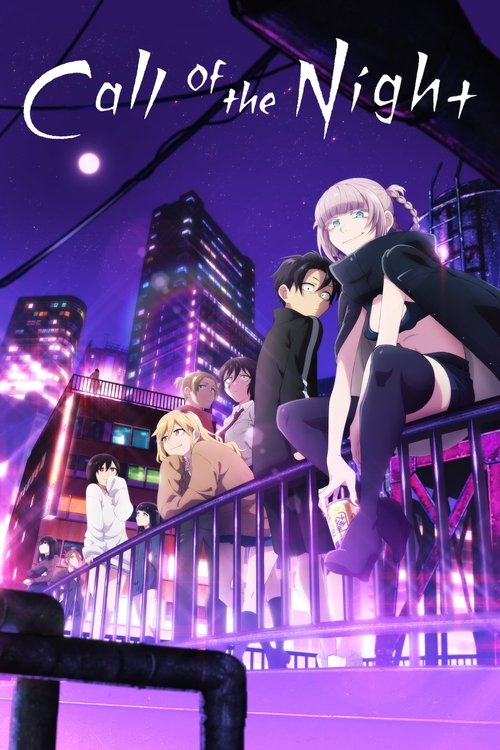
An intoxicating urban supernatural romance wrapped in nocturnal melancholy and electric liberation, capturing adolescent alienation through a visual neon dreamscape where midnight streets glow like underwater reefs beneath an infinite violet sky.
Call of the Night
Call of the Night

よふかしのうた

"A night of vibrant colors begins."

08 July 2022 — 19 September 2025 Japan 2 season 25 episode Ended 7.7 (174)

Cast: Gen Sato, Sora Amamiya, Miyuki Sawashiro, Koki Koyasu, Michiru Satou

Animation Sci-Fi & Fantasy Comedy Insomnia as Alienation and the Search for Meaning The Complexity and Cultivation of Love Escapism vs. Confrontation with Reality Non-Conformity and the Double Life

Call of the Night — Ending Explained

⚠️ Spoiler Analysis

The series unfolds several major narrative twists across both seasons:

  • The One-Year Conversion Limit: Kou discovers that human transformation is governed by a strict rule: if he fails to fall in love with Nazuna and undergo transformation within a year of his first bite, he becomes permanently immune to vampirism. Furthermore, vampire society executes humans who fail to convert to preserve secrecy.
  • Anko Uguisu's True Identity: The private investigator tracking vampires is revealed to be Kyoko Mejiro, a traumatized vampire hunter whose family fell apart when her father abandoned them for a vampire. Her mission to exterminate vampires dismantles Kou's romanticized view of nocturnal life.
  • Nazuna's Origin: Nazuna is not a turned human, but a natural-born half-vampire born to a vampire father and a human mother, Haru Nanakusa. Haru died during childbirth, leaving Nazuna with eternal youth and no human memories.
  • Kou's Half-Vampire Hybridization: Caught between his affection for Nazuna and his lingering human morality, Kou undergoes an incomplete conversion. He gains nocturnal combat powers, super-healing, and flight while remaining unaffected by sunlight.
  • The Tragedy of Kiku and Mahiru: Vampire Kiku Hoshimi learns that if a vampire falls in love with their victim, feeding results in mortality or mutual death. Seeking release from immortality, she and Mahiru pursue this bond, resulting in their tragic joint demise.
  • Series Finale: Learning that Nazuna falling completely in love could prove fatal if she drinks his blood, Kou and Nazuna abandon traditional transformation. Kou chooses to remain a half-vampire, and the two commit to an ongoing, affectionate relationship playing tag across Tokyo's rooftops.

Alternative Interpretations

The series lends itself to multiple critical interpretations:

  • Metaphor for Nightlife and Commodification of Intimacy: Nazuna's cuddle-buddy business and blood consumption can be viewed as reflections of urban nightlife work (such as host clubs or maid cafes), illustrating how alienated modern youth seek synthetic forms of affection to cope with isolation.
  • Queer and Countercultural Allegory: The nocturnal underground functions as a countercultural or queer sanctuary where outcasts escape rigid daylight cis-heteronormative and academic expectations to build chosen families and explore unconventional identities.
  • Half-Vampire as Liminal Adolescence: Kou's incomplete transition into a half-vampire mirrors the stage of adolescence itself—refusing both the soul-crushing conformity of adulthood and the detached amorality of full vampirism.

Explore More About This Movie

Dive deeper into specific aspects of the movie with our detailed analysis pages

Similar Movies