Full spoilers follow.
The premise as coercion. Mash is not a student; he is a hostage. The academy discovers a markless boy and offers his adoptive father Regro's safety in exchange for Mash becoming the Divine Visionary — the single most decorated student. Everything Mash does at Easton is done under duress, which recontextualizes his indifference to glory: he was never competing, he was paying a ransom.
Season 1 escalation. The school comedy is progressively invaded by the shadow organization headed by Innocent Zero. Episode 11 is the hinge: Lemon Irvine is abducted and Mash mounts a rescue, while Innocent Zero personally infiltrates the Magia Lupus base — the moment the series demonstrates that the villain can reach anywhere and that the academy's protections are decorative.
Season 1 finale. Episode 12, Mash Burnedead and the Magic Mirror, delivers the long-awaited fight with Abel Walker and the exposure of Mash's greatest secret. Mash overcomes Abel, but the more consequential payload is the revelation about his origin, which ties the markless boy directly to the antagonist's designs — the show's central irony being that the person the world wanted to erase turns out to be the one it cannot do without. The mirror motif is doing thematic work here: the device that shows a person their true self is aimed at the one character with no mark to define him.
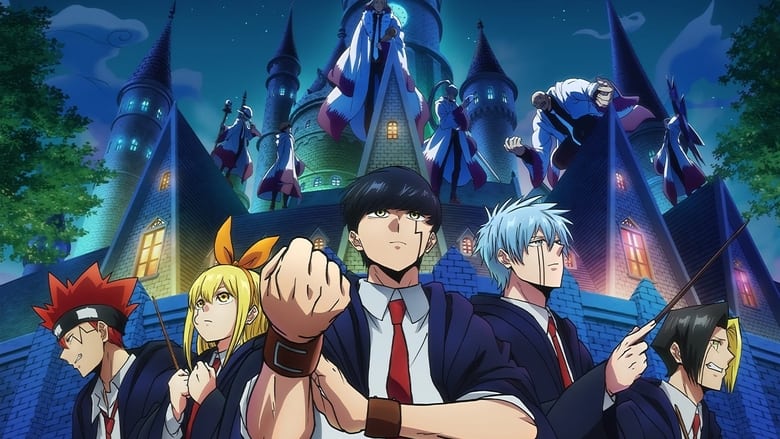
Season 2 — the exam. The Divine Visionary Candidate Exam converts the private ultimatum into a national spectacle, with Brad frantic that Mash's total lack of ambition will sink them both. Innocent Zero's Fangs use the exam as cover, and the supporting cast is finally separated and tested individually: Lance Crown fights the Third Fang, Wirth, and Mash faces the Second Fang, Abyss. The arc's real revelation is not any single twist but the confirmation that Mash's found family will each take on an opponent alone to protect the others — the ideological inverse of the villains' bloodline obsession.
The ending as it stands. The anime does not conclude. After the students celebrate their victory, Mash returns with cream puffs; a fly makes him sneeze, some land on Cell War, one of Innocent Zero's men, and when Mash asks for them back Cell War grinds them into the ground. That deliberately absurd provocation opens the next, far darker threat and ends the run on a cliffhanger with the series listed as returning. Retrospectively, the cream-puff gag turns out to be the show's entire moral architecture in miniature: the world offers Mash a crown and he is unmoved, and then someone steps on his dessert and the immovable object finally moves.