Skip to content
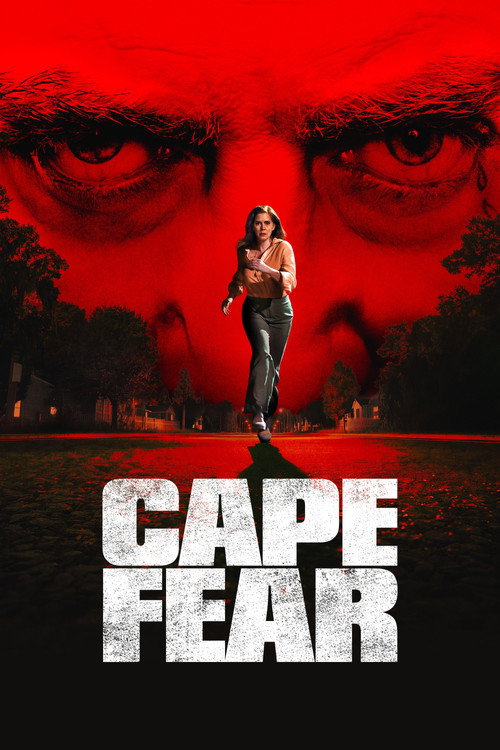
Cape Fear
Drenched in sweltering Southern Gothic dread and razor-sharp psychological terror, the series captures the dizzying vertigo of privilege unraveling as an inescapable, predatory storm breaches pristine glass walls.
Cape Fear

Cape Fear

"Do you feel safe?"

04 June 2026 — 30 July 2026 United States of America 1 season 10 episode Ended 7.2 (163)

Cast: Amy Adams, Javier Bardem, Patrick Wilson, Joe Anders, Lily Collias

Drama Crime Retributive Justice vs. Institutional Failure The Illusory Fortress of Wealth and Domesticity Digital Intrusion, Exploitation, and Modern Paranoia Generational Sin, Paternity, and Moral Inheritance The Blurred Boundary Between Victim and Monster

Overview

Created and showrun by Nick Antosca and executive produced alongside cinematic titans Martin Scorsese and Steven Spielberg, Apple TV+’s Cape Fear (2026) reimagines John D. MacDonald’s 1957 novel The Executioners and its celebrated 1962 and 1991 cinematic adaptations into an expansive 10-episode psychological thriller miniseries. Set amidst the humid, sun-dappled opulence of Savannah, Georgia, the story follows married defense attorney Anna Bowden (Amy Adams) and former prosecutor Tom Bowden (Patrick Wilson), a high-profile legal power couple whose idyllic suburban existence is fractured when Max Cady (Javier Bardem) is released after serving seventeen years in maximum-security prison.

Max Cady, possessing a lethal intellect honed through years of studying legal loopholes and human frailty, begins an escalating campaign of psychological, digital, and physical intimidation. Rather than resorting immediately to direct physical confrontation, Cady weaponizes institutional systems, modern technology, online grooming, and deep-seated familial fault lines to systematically dismantle the Bowden household from the inside out. He turns his sights not only on the parents but also on their vulnerable teenage children, Natalie (Lily Collias) and Zack (Joe Anders).

As the Bowdens discover that conventional law enforcement and restraining orders are powerless against a predator who operates meticulously along the margins of legality, the domestic facade of safety completely crumbles. Across ten tense, darkly operatic episodes, Cape Fear charts the descent of an affluent family forced to confront their past ethical compromises, escalating paranoia, and the primal lengths to which civilized people will go when trapped by an unstoppable nemesis with nothing left to lose.
Core Meaning

The core thesis of Cape Fear (2026) explores the fragility of institutional justice and the myth of domestic security in contemporary society. Creator Nick Antosca shifts the focus of the classic narrative from a simple clash between absolute good and external evil into an indictment of systemic compromise, class hubris, and psychological vulnerability.

The miniseries demonstrates that evil does not merely invade from the outside; it preys upon and exploits preexisting moral rot, suppressed secrets, and systemic deceit within respectable institutions and family structures. In a modern hyper-connected era, physical barricades and wealth offer no sanctuary against guilt, retribution, and technological invasion.

Thematic DNA

Retributive Justice vs. Institutional Failure 30%
The Illusory Fortress of Wealth and Domesticity 25%
Digital Intrusion, Exploitation, and Modern Paranoia 20%
Generational Sin, Paternity, and Moral Inheritance 15%
The Blurred Boundary Between Victim and Monster 10%

Retributive Justice vs. Institutional Failure

The narrative interrogates the legal system’s fundamental inability to deliver true moral closure. Anna Bowden and Tom Bowden represent the machinery of criminal law—plea bargains, tactical omissions, and bureaucratic victories—while Max Cady embodies the terrifying blowback of that system. As the series progresses, the Bowdens find that the procedural rules they used to build their careers now legally shield Cady while leaving their family utterly exposed, eventually driving them outside the law.

The Illusory Fortress of Wealth and Domesticity

Set against grand Savannah architecture, country club galas, and poolside cookouts, the series examines how modern wealth creates an illusion of immunity from consequence. Cady punctures this complacency not by storming the gates immediately, but by exposing the resentment, emotional detachment, and instability already brewing within the Bowden home.

Digital Intrusion, Exploitation, and Modern Paranoia

Unlike the 1962 and 1991 adaptations, the 2026 series infuses modern psychological warfare: catfishing, algorithmic manipulation, deepfake deceit, and viral surveillance. Cady weaponizes laptops, smartphones, and social isolation to invade the Bowdens’ private spaces, demonstrating that contemporary domestic boundaries are fundamentally porous.

Generational Sin, Paternity, and Moral Inheritance

The Bowden children, Natalie and Zack, bear the direct psychological brunt of their parents' hidden past and legal machinations. Throughout the show, questions of bloodlines, biological paternity, and corrupt familial legacies (extending to Cady's own toxic lineage with his father Robert and half-sister Crystal) highlight how unresolved guilt and trauma poison the next generation.

The Blurred Boundary Between Victim and Monster

As Cady pushes the family toward psychological collapse, the Bowdens resort to vigilantism, entrapment, and primal violence. The series systematically dismantles the moral superiority of the protagonists, questioning whether surviving an encounter with pure malice inevitably requires adopting its monstrous methods.

Character Analysis

Max Cady

Javier Bardem

Archetype: The Vengeful Shadow / Antiheroic Nemesis Key Trait: Predatory Charisma, Unpredictable, Physically Commanding, and Legally Sophisticated

Motivation

To exact calculated retribution and moral humiliation against Anna Bowden and her family, dismantling their domestic and professional lives from the inside out.

Character Arc

Released after 17 years for the alleged murder of his wife Melissa, Cady presents himself initially as an aggrieved, deeply religious, and reformed victim of judicial corruption. Over the series, his charismatic veneer peels away to expose a chillingly volatile, sadistic mastermind whose pursuit of "justice" transforms into scorched-earth annihilation of enemies and kin alike.

Anna Bowden

Amy Adams

Archetype: The Compromised Defender / Reluctant Warrior Key Trait: Steely Analytical Intellect, Hyper-Vigilant Resolve, Masked Southern Poise

Motivation

Family protection and survival, while confronting her past legal compromises and ensuring her family is shielded from Cady's wrath.

Character Arc

As Cady's original defense attorney who cut ethical corners to secure a plea deal 17 years prior, Anna transitions from polished, aristocratic composure into a fierce, calculating protector. Inverting the traditional role from previous film adaptations, she takes the offensive, investigating Cady's origins and orchestrating his legal and psychological entrapment.

All 5 characters and cast

Symbols & Motifs

The Cape Fear River & The Houseboat

Meaning:

The murky waters represent the subconscious depths of repressed guilt and primal chaos, while the secluded river houseboat serves as the crucible of the Cady family history and the site where civilized pretenses are drowned in violence.

Context:

Featured heavily in the late-season arc as the location where Anna tracks down Crystal Cady and where Max unleashes a fiery, homicidal purge of his own family.

The Swimming Pool

Meaning:

Symbolizes the Bowdens' curated, pristine veneer and domestic sanctuary, whose eventual desecration and blood-tainted water reflect their complete moral and psychological rupture.

Context:

Prominently featured in both the pilot's opening conversation about privilege and the finale's chaotic, life-or-death physical showdown.

Smartphones, Screens, and Live Streams

Meaning:

Instruments of modern dread that symbolize the complete erosion of privacy and vulnerability to manipulation in the digital era.

Context:

Used continuously throughout the series for psychological grooming, remote harassment, catfishing, and the devastating broadcast of confession tapes.

The Unopened DNA Envelope

Meaning:

Represents choice over genetic destiny—the conscious decision to prioritize chosen familial love and bonds over inherited biological trauma and unresolved doubt.

Context:

Appears in the closing moments of Episode 10 when Natalie chooses to set aside her paternity test results and join Tom at the dinner table.

The Looming Hurricane / Thunderstorm

Meaning:

Reflects the escalating psychological turmoil, moral tempest, and inevitable collision consuming both Cady and the Bowdens.

Context:

Used atmospherically throughout the escalating episodes, visually and sonically echoing the classic 1991 film's climactic weather motifs.

Memorable Quotes

Ever look around and wonder if we deserve all this?
— Anna Bowden

Context

Spoken to Tom while standing beside their opulent swimming pool in Season 1, Episode 1 ("Pilot / The Return").

Meaning

Captures the unspoken guilt, ethical compromises, and fragile privilege that underpin the Bowdens' affluent lifestyle before Cady returns to destroy it.

No.
— Tom Bowden

Context

Tom's blunt poolside reply to Anna's question about whether they deserve their wealth in Season 1, Episode 1 ("Pilot / The Return").

Meaning

Demonstrates the blind complacency, moral entitlement, and shallow self-assurance characteristic of the affluent elite.

All 5 quotes

Episode Highlights

The Intrusion

S1E1

Establishes the stark juxtaposition between the Bowdens' idyllic Savannah lifestyle and the morbid release of Max Cady after 17 years in prison.

Significance:

Immediately sets up the narrative engine of revenge, establishing the legal history between Anna and Cady and setting the escalating psychological stalker dynamic in motion.

Fever Dream

S1E4

An unsettling, pulp-infused hour where the Bowden home is subjected to psychological gaslighting and drug-induced disorientation, including son Zack's disturbing self-mutilation.

Significance:

Marks the breakdown of the domestic sanctuary, proving that Cady's threat is pervasive, non-linear, and capable of penetrating deep into the children's psyches.

Mongrel

S1E7

The turning point where the Bowdens abandon passive legal defense and initiate a dangerous offensive sting against Max, while Natalie departs on her own perilous road trip for answers.

Significance:

Shifts the dynamic from reactive victimization to active, extralegal aggression, signaling the family's willingness to cross ethical boundaries.

Los tiempos de Dios son Perfectos

S1E8

Cady goes on the counter-offensive with public allegations and legal maneuvers, pitting the Bowdens against law enforcement and public opinion while Natalie attempts a high-stakes confrontation.

Significance:

Subverts the Bowdens' standing in the community and highlights how Cady weaponizes religious and institutional optics to frame his targets as the true aggressors.

The Scar

S1E9

Anna travels directly to the Cape Fear River basin to confront Cady's half-sister Crystal (Juliette Lewis), unearthing the suppressed truth of the past while Max issues lethal orders to his operative Nevaeh.

Significance:

Uncovers the critical backstory surrounding the murder of Cady's wife and sets up the narrative convergence at the river basin.

The Executioners

S1E10

The explosive, blood-soaked climax featuring the houseboat arson, the public exposure of Cady's crimes, the life-or-death confrontation in the Bowden pool, and the unresolved paternity test.

Significance:

Concludes the series by subverting the traditional fatal ending of previous film adaptations, choosing institutional arrest over murder and leaving the family's biological lineage ambiguous.

Philosophical Questions

Can institutional legal systems deliver moral justice?

The series demonstrates how technical legalities and plea bargaining often fail both victims and defendants, leaving behind an institutional vacuum filled by retributive violence.

Is domestic security merely an illusion of privilege?

The Bowdens' wealth and security gates prove utterly ineffective against digital invasion, showing that domestic privacy is inherently permeable in a networked world.

Does defeating a monster necessitate becoming one?

By resorting to illegal traps, violence, and cover-ups to defend their home, the Bowdens confront the moral cost of their own survival and the erosion of their principles.

Does biology or devotion define family?

Through Natalie's choice at the finale's conclusion to set aside the paternity test, the narrative asks whether inherited trauma and bloodlines outweigh chosen parentage and love.

Alternative Interpretations

The miniseries invites multiple readings regarding its characters, genre, and thematic ambiguities:

Full ending explanation

Cultural Impact

The 2026 miniseries emerged during a cultural landscape defined by true-crime saturation, widespread distrust of legal systems, and acute anxiety surrounding digital surveillance. While the 1962 film reflected post-war anxieties about sexual predation and the 1991 film mirrored late-20th-century urban moral rot, the 2026 series updates the narrative for the digital era by illustrating how modern tools like catfishing, live streams, and online doxxing can be weaponized to shatter domestic tranquility.

Critically, the series sparked lively discussions over the modern television trend of expanding compact cinematic classics into 10-episode prestige television arcs. While polarizing in its pulpy pacing shifts, the production solidified Apple TV+’s reputation for lavish, star-driven psychological thrillers.

Audience Reception

Cape Fear received generally positive but polarizing reception, earning an aggregated Metacritic score of 68/100 and an estimated 75% Rotten Tomatoes approval rating.

Critics and viewers widely praised the tour-de-force performances of Javier Bardem—noted for his magnetic, menacing, and darkly humorous take on Max Cady—and Amy Adams' sharp, formidable portrayal of Anna Bowden. The lush Savannah cinematography, vibrant color palette, and Bernard Herrmann-inspired score by Jeff Russo were also highlighted for maintaining high atmospheric tension.

Conversely, the series drew criticism for a bloated runtime, with reviewers noting that stretching a taut two-hour premise into a 10-hour series resulted in uneven pacing and preposterous middle-chapter subplots. Some viewers were also alienated by sudden tonal shifts into extreme pulp, gratuitous violence, and surreal absurdity.

Interesting Facts

  • The series represents a historic producing partnership between Martin Scorsese and Steven Spielberg under Amblin Television and Sikelia Productions, working with showrunner Nick Antosca.
  • This project marks the third major screen adaptation of John D. MacDonald's 1957 novel The Executioners, reimagining the 1962 Gregory Peck film and Scorsese's 1991 blockbuster.
  • In an intentional break from both previous films—where Sam Bowden was the defense attorney—the series cast Amy Adams as the primary attorney Anna Bowden who represented Cady, placing a woman at the legal and strategic core of the conflict.
  • Exteriors were shot on location in Savannah, Georgia, utilizing its historic squares and Spanish moss to establish a humid Southern Gothic aesthetic, with interior and stage work produced across metro Atlanta.
  • Composer Jeff Russo composed the score, integrating and reimagining the iconic brass fanfare originally crafted by Bernard Herrmann for the 1962 film and adapted by Elmer Bernstein in 1991.
  • Directorial duties across the miniseries were spearheaded by acclaimed filmmakers including Morten Tyldum and Amanda Marsalis.

Easter Eggs

Juliette Lewis's Full-Circle Return

Juliette Lewis, who received an Academy Award nomination for playing the teenage daughter Danielle Bowden in Martin Scorsese's 1991 Cape Fear, appears in the series in a pivotal role as Max Cady's half-sister, Crystal Cady.

Wesley Strick Cameo

Wesley Strick, the screenwriter behind Scorsese's 1991 adaptation, makes a cameo appearance as an emergency room physician in the early episodes.

Literary Title Homage

The series finale is titled "The Executioners," serving as a direct homage to John D. MacDonald's original 1957 source novel.

Ron Perlman as Robert 'Bob' Cady

Veteran genre actor Ron Perlman portrays Max Cady's abusive patriarch, providing a grim reflection of the Southern Gothic roots of Max’s pathology.

Frequently Asked Questions

Explore More About This Movie

Dive deeper into specific aspects of the movie with our detailed analysis pages

Comments (0)

Leave a comment

No comments yet. Be the first to share your thoughts!

Similar Movies